
Social Media on the Blockchain
Blockchain Buzz
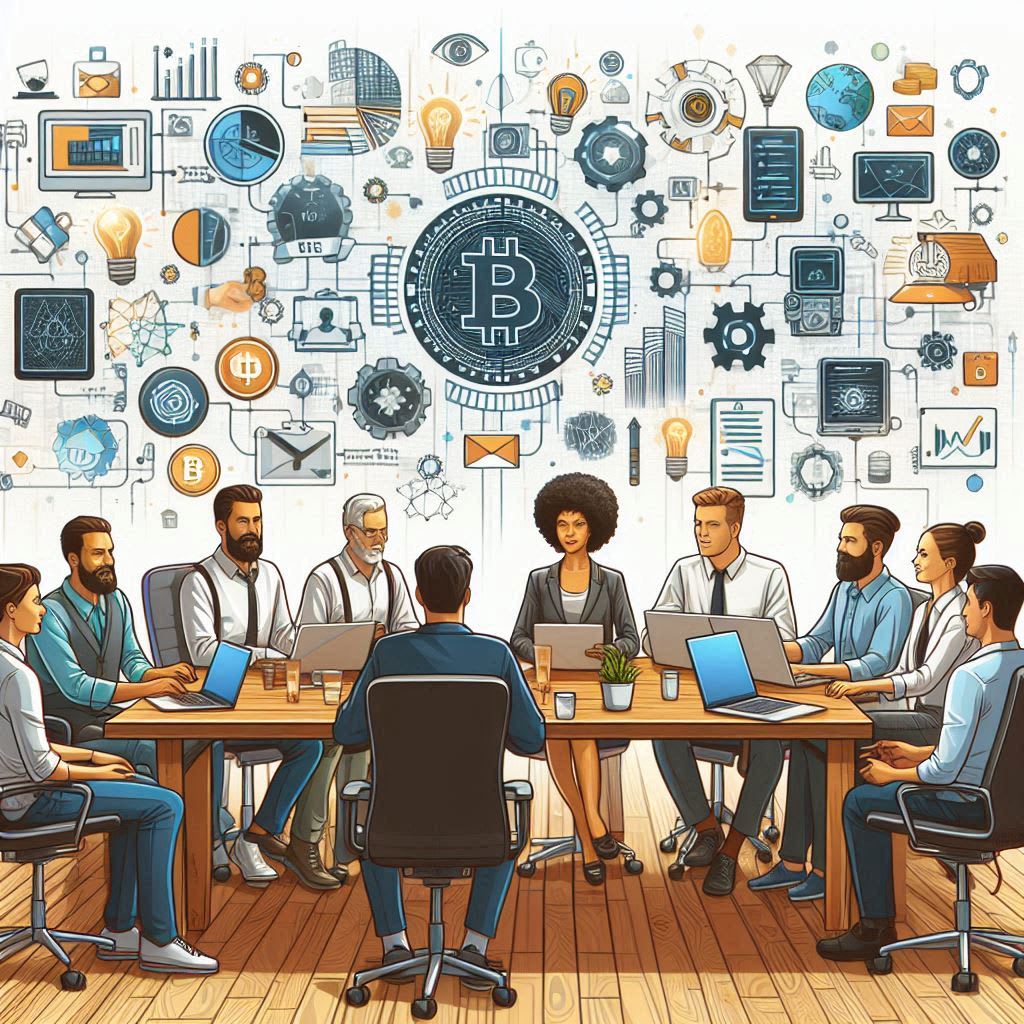
During the last ten years, blockchain technology has swept different industries, but one of the new areas to take up this technology involves social media. The idea of a decentralized, blockchain-based social network has gained significant popularity, while it also tries to provide answers to some of the urgent problems of the contemporary digital space. Issues ranging from privacy and censorship to content ownership are rapidly pushing blockchain as the next frontier for both developers and users alike.
The Rise of Decentralized Social Networks
Traditional social media, like Facebook, Instagram, and Twitter, are all based on centralized models in which a single entity or company owns the platform. In this respect, it has become fabulously profitable for corporations but comes with several drawbacks for users: data privacy concerns, censorship, monetizing of user content without decent compensation-all issues that seem to have been there from day one.
Blockchain promises turning this model on its head through platforms that are owned and governed by their users. In a decentralized social media, users have ownership of their data and content and are actively involved in governance based on community consensus. According to Felipe Erazo, an author for Cointelegraph, blockchain-based social networks "could change the narrative" on data ownership since users would be more in transparent control over how their information is used, stored, and shared. LA Speakers. He has also said that due to the very architecture of the blockchain networks, information is encrypted and kept on a number of nodes, which actually makes it much more difficult for any sort of centralized authority to manipulate or profit from user data.
Advantages of Blockchain-Based Social Media
Data Ownership and Privacy
Control over one's own data is one of the major benefits to blockchain in social media. Traditional platforms simply harvest a user's data with little to no consent and then sell it for their own profit. Blockchain-based platforms, on the other hand, would allow users to store that sensitive data in decentralized ledgers that cannot be accessed without express permission.
As Forbes contributor Bernard Marr says, "blockchain can secure user data and ensure it cannot be tampered with or monetized without explicit consent of the users"(TrendHunter.com). He believes that the secure and immutable nature of blockchain technology can restore trust in social media by preventing large-scale data breaches and unauthorized mining of data, as has plagued traditional networks.
Content Ownership and Monetization
Blockchain also has the power to disrupt how we create and monetize content. In traditional social media firms, the companies make a profit from user-generated content by selling advertisements and user data while passing on very little financial benefit to the creators. However, users can tokenize content over the blockchain networks, setting a direct connection between creators and their consumers. That means users could get paid cryptocurrency or digital tokens for posts, videos, or artwork. Decentralized platforms can enable a more equitable economic model for content creators according to social media entrepreneur and blockchain advocate Lior Yaffe. Indeed, as he writes, "Blockchain-based systems could offer token rewards for the valuable contributions, creating a more balanced and user-driven ecosystem"(LA Speakers). With this model, creators, not the platform, profit financially from their work.
Censorship Resistance
Another very controversial issue of traditional social media platforms is censorship. Be it a result of government involvement or the rules of the company, centralized platforms often suspend content that they regard as controversial or inappropriate. Blockchain-based social networks, due to their nature, are naturally censor-resistant and therefore do not suppress or cover up anything. This is so because no one owns the network, meaning the users cannot have any limitation imposed on their self-expression, including being banned or shadow-banned.
Writing on the issue for The Defiant, fintech reporter Matthew Leising says blockchain enables a freedom of speech that isn't available on a centralized platform. "In a decentralized system, it becomes impossible for a single entity to dictate what can or cannot be shared," He says this is useful on one hand with respect to free expression, but on the other hand, it may introduce its own set of problems with respect to misuse, such as the dissemination of misinformation and harmful content.
Challenges With Blockchain Social Media
Though the benefits which blockchain social media platforms have are attainable, there are several challenges nonetheless.
Scalability
While blockchain networks were safe and decentralized, it was difficult for them to provide scalability. The current blockchains, such as Ethereum, cannot support more than a couple of transactions per second. This amount is way below the capacity needed for millions of users. The challenge is huge for any blockchain-based social media that wants to scale up and stand shoulder to shoulder with the giants like Facebook or Twitter.
User Experience
The other challenge is the intricacy of blockchain technology: using digital wallets, managing private keys, and understanding smart contracts daunt the average user. Nowadays, social media is about ease of use. Simplification of the user experience will be key to mainstreaming the blockchain platforms.
According to blockchain researcher Kyle Torpey, what will further contribute to making decentralized social media work is improving the user experience. As Torpey goes on to say in his article for Bitcoin Magazine: "For blockchain-based social networks to go mainstream, they must abstract the underlying complexity of the technology and provide a seamless, intuitive experience for the end user" LA Speakers
Moderation and Governance
With the lack of a single controlling entity, moderation becomes an uphill task for decentralized social networks. This is a give-and-take situation; where there is no single controlling body, that means less constriction on content, while on the other hand, there is a vacuum where the policing of problematic or illegal content is concerned. Blockchain-based platforms will have to figure out ways of devising community-driven governance models that enable users to create rules collectively and enforce moderation.
Notable Blockchain Social Media Platforms
Several blockchain-based social media have already surfaced and proved the potential of decentralized networks. For example:
Mastodon: A decentralized, open-source social network that allows users to deploy their servers and manage personalized administration.
Steemit: One of the most popular platforms based on blockchain, Steemit rewards its users in cryptocurrency form for creating and curating content.
Minds: A blockchain decentralization of Facebook and Twitter architected to promote privacy, transparency, and free speech.
Social media on a blockchain-in itself-is a radical paradigm shift from the incumbent platforms by empowering digital identities with more control over data and content. Of course, much stands in the way-scalability, user experience, moderation-but one cannot deny the upside to decentralized social media. In the future, blockchain-integrated social media platforms will trend towards being more equitable, more transparent, and more user-centric.
Whether it revolutionizes the whole social media landscape, or whether it will scale down to a niche alternative, is a matter yet to be seen. Whatever the case, though, the decentralizing movement is growing, and its effects on digital communications are just now beginning.
About the Creator
Keep reading
More stories from Ukom Ntonghayobase and writers in Futurism and other communities.
Tech Titans Start Small
In a world of Amazon, Google, and Apple dominance, it is easy to think that success in technology requires starting big or having the deepest of pockets. Yet, contrary to popular belief, many of the most successful technology companies today began by targeting very small and often very narrow markets. These tech giants did not start off with ambitions of world domination; they started laser-focused, trying to solve one small problem exceptionally well. It was this finding and owning of a niche that presented them with a gateway to global success.
By Ukom Ntonghayobaseabout a year ago in Motivation
Why Is the B2B Payments Market Undergoing a Major Digital Transformation?
Business-to-business payments form the backbone of global trade and commerce. Every transaction between manufacturers, suppliers, distributors, wholesalers, and service providers depends on reliable payment systems. Unlike consumer payments, B2B payments often involve large transaction values, longer payment cycles, multiple approval layers, and complex documentation. Because of this complexity, B2B payments have traditionally relied on manual and paper-based processes.
By Rohit Shaha day ago in Futurism




Comments
There are no comments for this story
Be the first to respond and start the conversation.