

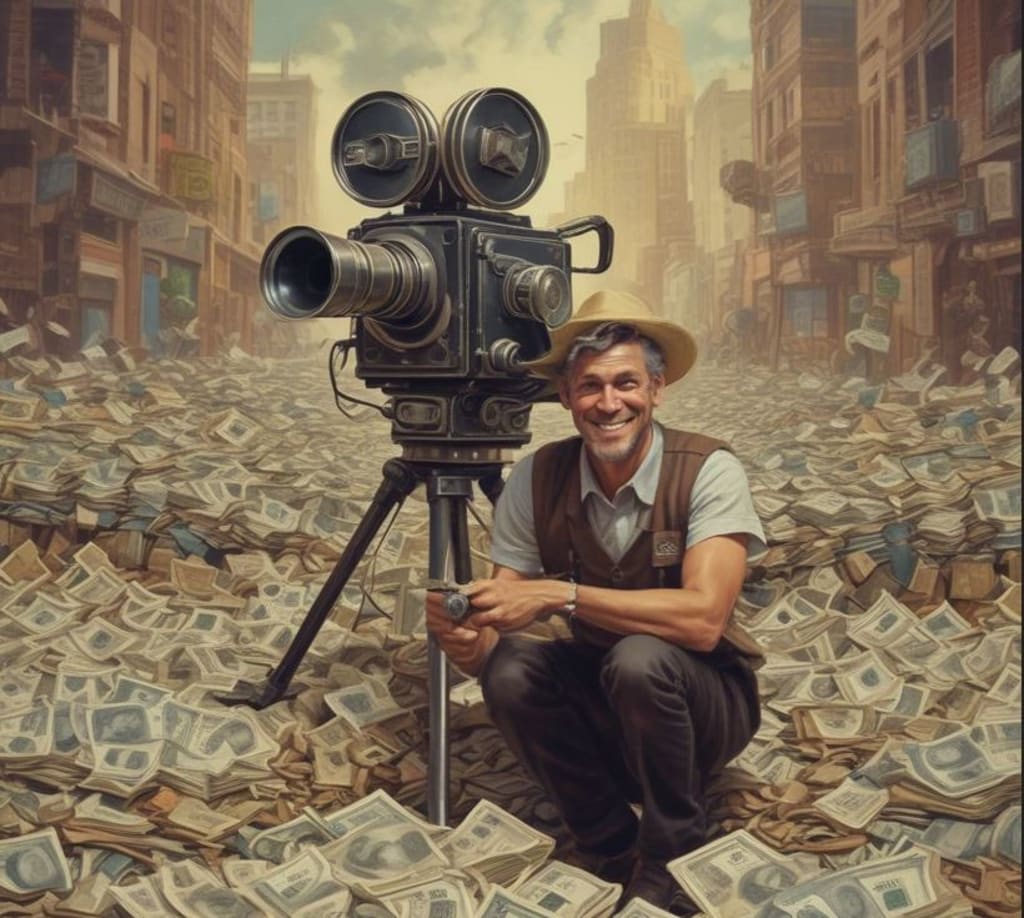
They look perfect, don’t they?
Good. Then I’m doing my job.
We were so happy when the AI industry fell. What was it with images of fingers, and scissors? Horrible results. All because those with the money didn’t want to pay artisans what they’re worth.
Sure, directors could make the images perfect. And let’s not get into what the porn industry did, increasing bust sizes and whatnot to make the impossible seem ordinary. I saw a lot of kids go to the hospital, trying to re-create what they saw on their vid sets. I also won’t go into the adults who thought they could outrun explosions, or dive into water to escape same. We saw plenty in the emergency room. All in the name of producers trying to sell fantasy as science, boosting their own fat wallets.
People maimed. People dead. For what? Perfection on the screen.
Of course it trickled into reality. The most clever one was the person who had a custom-built mannequin go to work for him. He controlled it from home, and basically worked remote. Oddity News reported that it prevented at least one break-in, since the sensors were programmed to activate and speak if something got within six feet when “unmanned.” Too bad it was so hideously expensive for everyone else, because it sure would cut down on the stress of work travel.
Holograms were fun for a while, but those soon got yanked when the actors themselves got supremely angry for unauthorized people hacking into the program and using their images for deepfakes. It was even more disturbing when someone rolled out real-dolls with their images and voices. So many people got good jobs by inspecting every single shipment above a certain size at every border, be it land, sea, or air.
And then the first EMP attack hit.
I felt sorry for those elderly who had robots as their companions; they grieved the loss like they were flesh and blood.
Some reservoirs of information were saved, but many normal things were lost. Contact information, recipes, websites. Emails, pictures, personal notes, avatars; digital remnants of everyday lives.
An interesting industry arose from those photonic ashes like the mythical phoenix: digital archeologists.
Some places were wiped completely, but there were repositories like the Wayback Machine that had better protection. Patience, persistence, and a touch of programming wizardry, and some things could be recovered. It is a fascinating process, but it still makes my head spin.
My brother is one of them. Of course the first thing he retrieved was almost all the data from his online games.
You can imagine what it was like for those of us in the medical industry, losing so many patients who were dependent on machines. Even the equipment that made the medicines was damaged, and most was beyond repair.
So much grief, so much gone. It was a time of profound sadness.
What does one do when nothing works?
Back to the old ways.
Purification centrifuges powered by dogs on things like turnspits. Horse-drawn carriages. People spinning and weaving their own clothing, though many went for felting processes instead. Leather done with old-fashioned tannic acid baths grew like a cottage industry – and were promptly kicked out to the country, with their strong smells. Paper making as well, and we sent letters again. Someone clever got the wind turbines working again, somehow, so we had some electronics again. Wood and coal stoves came back.
People paid attention to their houses and grounds again, and gardening became a thing of beauty and vanity.
The movie industry?
Oh, the show must go on, you know. Most of the elites’ money was erased, but of course they had the most paper money still stashed away to pay salaries. While the mints cranked out more, movie moguls flung it around like water, and yanked their old equipment out of storage. And museums.
But still, they kept their obsession with the perfect form for their inner fantasies.
It wasn’t like before, but they had the money to pursue it. It’s not that we needed it, but when do those marketing a dream ever ask their targets what they really want?
I’m not proud of it, but I had a nervous breakdown at the nurses’ station. I got some of the last of the old drugs, but it was intense therapy that helped to balance me before the supply dried up. I was secretly glad, because so many others needed meds more than I did.
I wasn’t flush with money like my brother became, so when a producer came sniffing around, waving stacks of cash, what was I going to do?
Because some of the new drugs… were more than a bit unethical. And the contracts were draconian.
They couldn’t use images, or holograms. But they could use body-modification techniques.
I got very good at injections. Swell this part, reduce that part. Melt the fat here and there, put filler here and there. Extra skin? Laser it off, or pull and clip it in such a way that it didn’t show in the scene. Corsets to hold it in place, wigs to hide scarring. Skin getting thinner with age? No problem, use this cream, making the epidermis more supple and elastic than it should ever be.
Old actors, long rejected for roles, came out of retirement in droves. They believed the cream was a fountain of youth. So many well-known names on the silver screen again. And the silver screens themselves were back.
When those poor actors realized the cost for all those body mods, it was far too late. Draconian contracts…
They were dying to be famous one last time.
They got their wish.
You either ran from the industry in horror, or you gravitated to it.
I tried to warn the young ones, but the stars in their eyes were bigger than their foresight. According to the old contracts, their DNA and image were their own: no cloning, no holograms, no using their image for anything else but promoting the movie. Even toys were a separate negotiation.
But their body, while filming?
I refused to do the body mod surgeries, to lengthen or shorten limbs. Or remove ribs, or ears and limbs for realistic post-fight and shooting scenes. Mostly they left organs alone; you can only do so much regeneration. They were replaced afterwards, so what was the big deal? Just a little pain that they themselves never felt.
But the skin? I got the best results, and my skills were in high demand.
The looks of horror on the actors’ faces when they realized what I’d tried to warn them about…
The glazed eyes of my dead patients were worse, so I continued. But I wore gloves to make sure I didn’t get that lotion on me.
I was never allowed to see the bodies, but whispers persisted, of actors who’d gotten the treatment one too many times, turning into a puddle of flesh that their skeletons could no longer sustain.
But oh, they looked beautiful, perfect, alive, when dancing on the silver screen.
About the Creator
Meredith Harmon
Mix equal parts anthropologist, biologist, geologist, and artisan, stir and heat in the heart of Pennsylvania Dutch country, sprinkle with a heaping pile of odd life experiences. Half-baked.
Keep reading
More stories from Meredith Harmon and writers in Futurism and other communities.
The Dark Side of AI Nobody Talks About
Artificial intelligence is often described as one of the greatest technological breakthroughs of the modern world. From helping doctors analyze medical data to allowing businesses to automate complex tasks, AI is rapidly becoming part of everyday life.
By Baseer Shaheen 4 days ago in Futurism



Comments (1)
A price I'm sure far too many would be willing to pay for 15 minutes of fame, or even glory eternal, whether there to witness it or not.