
Self-Driving Cars: What’s Next for the Vehicle Industry?
Advancements in Autonomous Technology: How AI is Shaping the Future of Self-Driving Cars

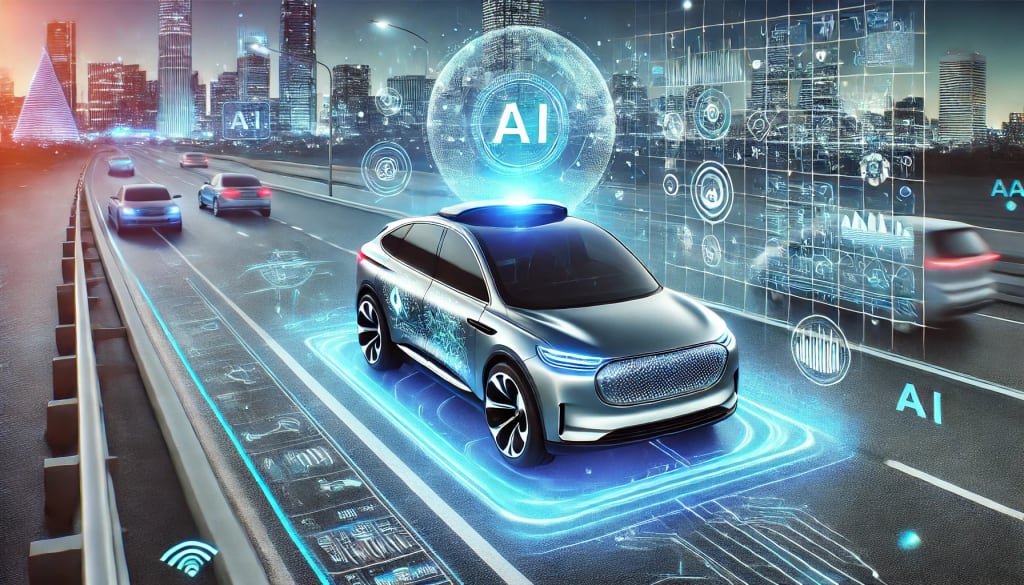
How AI is Revolutionizing the Future of Self-Driving Cars
The transport sector is on the cusp of a revolution with the advent of self-driving cars. These autonomous vehicles are going to revolutionize the way we think about daily commutes, road safety, and even city planning. But what does the future of the vehicle sector have in store, and how is AI leading the revolution?
The Era of Autonomous Vehicles: Self-Driving Cars
Imagine a world where you can sit back, relax, and enjoy your daily commute without the hassle of traffic or getting lost in complex road networks. This is no longer a fantasy – it's becoming a reality soon. Self-driving cars, or autonomous vehicles (AVs), use a combination of artificial intelligence (AI), machine learning, sensors, and sophisticated algorithms to drive themselves without human hands on the wheel. The technology is advancing at a breakneck pace, and some of the biggest automakers and tech giants are racing to be the first.
AI: The Intelligent Brain Behind the Wheel
Artificial Intelligence is at the core of autonomous cars. The secret to making a car "smart" enough to drive itself is in its ability to understand data from the world around it, make decisions in real time, and forecast outcomes of different situations. With the powers of machine learning, these cars are constantly refining their knowledge of road conditions, obstacles, and other cars, enabling them to travel safely and efficiently.
Advanced AI systems read information from cameras, radar, LiDAR, and other sensors mounted on the car. This gives the car a 360-degree view of the world and allows it to make decisions in the blink of an eye. The AI is also programmed to learn and adapt to different environments, such as crowded city streets or open highways with precision.
The Benefits of Self-Driving Cars
Self-driving cars have the potential to transform our world in many significant ways:
Increased Safety
The most persuasive argument for the development of self-driving cars is safety. Human error is responsible for most traffic accidents, but AI-powered cars have the potential to reduce accidents significantly by eliminating distractions, fatigue, and impaired driving.
Improved Convenience
Imagine a world where you don't have to drive, park, or worry about traffic. Self-driving cars have the potential to free up time for passengers, enabling them to do something else such as reading, working, or simply enjoy the ride on their way to work.
Environmental Impact
Self-driving cars have the potential to optimize driving behavior, reducing fuel consumption and emissions. Furthermore, when integrated with electric vehicle (EV) technology, self-driving cars have the potential to play a significant role in reducing carbon footprints.
Accessibility
Self-driving cars have the potential to greatly increase mobility for those who cannot drive due to age, disability, or other reasons. This can translate to increased independence and an improved quality of life for many.
The Road Ahead: Challenges to Overcome
While the future of self-driving cars is truly exciting, there are still many challenges to overcome. These include:
Regulation and Legislation
As autonomous cars become the standard, governments and regulatory bodies will have to create clear regulations and laws for road safety. This will be a worldwide effort, as AVs will be crossing boundaries.
Public Trust
Even with the progress in technology, most people are still not sold on driverless cars. Public understanding and greater transparency in describing how the cars work and how they are tested will be the key to building confidence and acceptance.
Ethical Concerns
AI systems are capable of making decisions in a life-and-death situation, and this is very serious stuff. How will an autonomous car make a decision in the event of a collision that cannot be avoided? These are questions that have to be answered sensibly and responsibly.
Infrastructure Development
For the complete potential of autonomous cars to be unleashed, infrastructure too needs to change. This includes the creation of smart cities with electronic road signs, vehicle-to-vehicle communication systems, and increased connectivity for smooth-flowing traffic.
Conclusion: A Transformational Shift in Mobility
The future of autonomous cars is bright. With the progress in AI and autopilot technology, we are slowly but surely moving toward a future where our cars can think, learn, and drive themselves. With the industry continuing to push boundaries, autonomous cars will be a leading driver in changing the face of transportation, safety, convenience, and even the environment.
But the change will require collaboration between technology companies, regulators, and the public to get past the challenges and ensure a smooth transition into the future of mobility. The road to fully autonomous cars may be long, but the destination is looking to be worth it.
By addressing the essence of innovation, safety, and the future of transportation, this article not only makes the topic informative but also engaging to read. The convergence of cutting-edge technology with practical applications makes it relevant and interesting, inviting readers to trace the exciting trajectory ahead for the vehicle industry.
About the Creator
Puneeth C Gowda
I am a passionate content creator with a background in mechanical engineering. I explore home improvement, study abroad insights, and the film industry.a, I share daily art content while crafting engaging stories that inspire and inform.
Keep reading
More stories from Puneeth C Gowda and writers in Futurism and other communities.
The Top Coding Languages to Learn in 2025
The Top Programming Languages to Learn in 2025: Master These Languages to Stay Ahead in the Tech Industry Technology is advancing at a pace like no other, and coding is now one of the most sought-after skills for professionals in almost every field. Whether you want to build a career in the tech industry or simply want to improve your current skills, learning the top programming languages is the key to staying ahead of the curve. In 2025, some programming languages are likely to rule the roost. Here's a summary of the top programming languages to learn and why mastering them will keep you ahead in the tech industry.
By Puneeth C Gowda12 months ago in Futurism
About Binding Prometheus
I want to start actively advocating on behalf of my own work, and the most valuable part of my canon is, without a doubt, Binding Prometheus, the play I have been working on since 2019 and only finished in 2023 as part of my MA. The play itself is an amalgamation of a million different inspirations. On one end, it evokes the Ancient Greek myth-play, deriving its own title from the earliest extant work of Western drama we have, Aeschylus’s Prometheus Bound. On the other end, it borrows significantly from the sci-fi bulwarks from over the years, namely Mary Shelley’s Frankenstein and Karel Capek’s Rossum’s Universal Robots. The play could be an episode of Black Mirror, I fear. I don’t know. I’ve only ever seen one episode of Black Mirror.
By Steven Christopher McKnight19 days ago in Futurism
Saudi Arabia Boiler Market: Clean Energy Transition, Vision 2030, Emission Control & Modern Heating Systems
Saudi Arabia's boiler market grows through Vision 2030-driven industrialization, with rising demand in petrochemicals and power plants. Innovations like energy-efficient and biomass-fired models support sustainability goals, while Aramco expansions boost adoption of advanced systems amid rapid infrastructure projects. According to IMARC Group's latest research publication, Saudi Arabia boiler market size reached USD 902.70 Million in 2024. The market is projected to reach USD 1,631.91 Million by 2033, exhibiting a growth rate (CAGR) of 6.10% during 2025-2033.
By Jeffrey Wilson7 days ago in Futurism



Comments (1)
thank you for the imaformation