
Seaweed Market Outlook: Sustainable Food Sources and Blue Economy Growth Opportunities
The seaweed market is experiencing strong growth, driven by rising demand for sustainable food ingredients, plant-based nutrition, and eco-friendly raw materials.

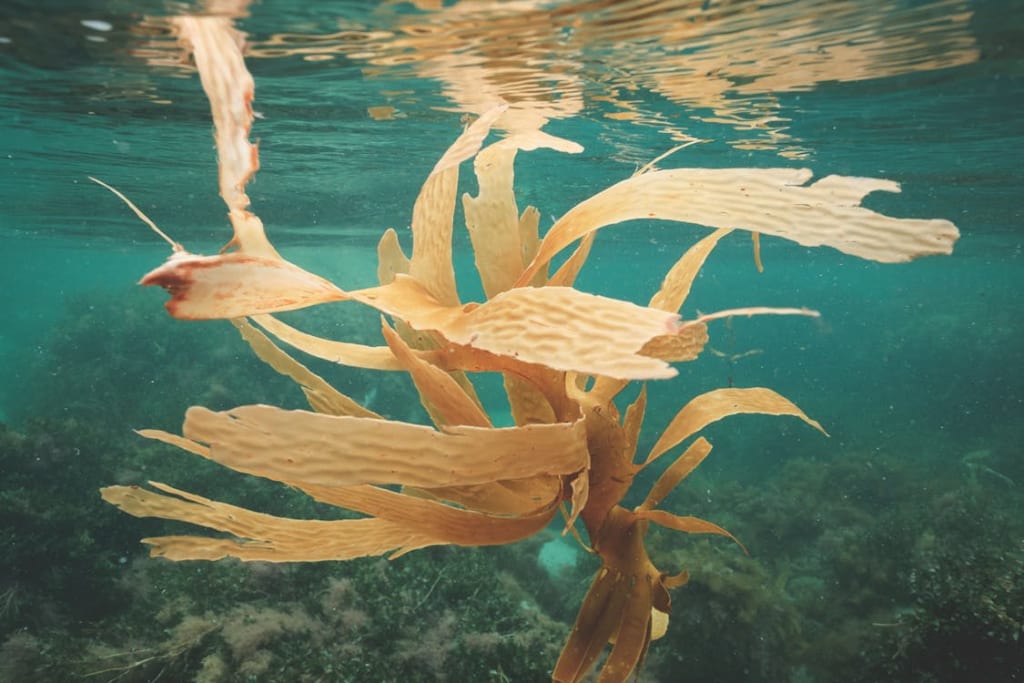
According to IMARC Group's latest research publication, The global seaweed market size was valued at USD 9.01 Billion in 2024. Looking forward, IMARC Group estimates the market to reach USD 18.36 Billion by 2033, exhibiting a CAGR of 8.17% from 2025-2033.
How AI is Reshaping the Future of Seaweed Market
- AI-Enabled Smart Seaweed Cultivation: Artificial intelligence is transforming seaweed farming through real-time monitoring of ocean conditions such as temperature, salinity, and nutrient density. AI-driven predictive models help farmers determine optimal harvesting periods and reduce crop losses caused by climate fluctuations. According to IMARC Group, “the seaweed market is experiencing steady growth driven by expanding applications in food, agriculture, and bio-based industries,” with technology integration improving yield efficiency and long-term sustainability.
- Intelligent Processing and Quality Control: AI-powered image recognition and automated grading systems are improving seaweed sorting, drying, and processing operations. These technologies detect impurities, moisture variations, and texture inconsistencies faster than manual inspection. The Food and Agriculture Organization (FAO) emphasizes that digital aquaculture tools enhance traceability and sustainable marine resource management. AI-driven quality optimization ensures compliance with international export standards while reducing waste and operational costs.
- Data-Driven Product Innovation and Demand Forecasting: AI analytics platforms analyze consumer trends, dietary shifts, and regional demand patterns to guide new product development. Companies are leveraging machine learning to expand into plant-based foods, nutraceuticals, and biodegradable packaging derived from seaweed extracts. IMARC Group notes that “growing consumer preference for natural and sustainable ingredients is supporting market expansion,” with AI strengthening strategic planning, pricing models, and supply chain forecasting.

Seaweed Industry Overview:
The seaweed sector is experiencing rapid transformation through offshore wind farm integration and mechanized tropical farming systems. Sea6 Energy launched the world's first large-scale mechanized seaweed farm in Indonesia, while North Sea Farm 1 completed commercial-scale harvests within offshore wind installations in the Netherlands. India's Blue Revolution scheme invested USD 86.8 million targeting 1 million tons annual production. Regulatory support through marine spatial planning and government-backed grants is accelerating aquaculture zone expansion, positioning seaweed as a strategic marine resource aligned with global sustainability goals.
Seaweed Market Trends & Drivers:
The explosive growth of plant-based food demand is fundamentally reshaping seaweed consumption patterns and commercial applications worldwide. Global consumers are embracing seaweed as a nutrient-dense alternative rich in vitamins, minerals, proteins, and dietary fiber that supports vegan, vegetarian, and flexitarian lifestyles. The World Bank's report identifies seaweed farming as a contributor to sustainable food security across ten emerging markets. Food manufacturers are developing innovative seaweed-based snacks, functional beverages, and enriched products meeting clean-label demands. Gimme Seaweed's Korean BBQ flavor launch reflects rising consumer interest in seaweed snacks expanding across major US retailers. Asian markets, particularly China and Japan, maintain strong traditional consumption, while European companies like Zalg and Neptune Eléments pioneer new seaweed-based food products catering to Western palates.
The pharmaceutical and cosmetics sectors are driving premium applications for seaweed-derived bioactive compounds with specialized functional properties. Carrageenan production dominates European markets as a natural thickening agent for food processing and dairy products, while alginate and fucoidan demonstrate promising wound-healing, antiviral, and anti-inflammatory properties attracting pharmaceutical development investments. South Korea's thriving cosmetics industry incorporates seaweed extracts into skincare formulations for hydration, anti-aging, and skin-soothing benefits, with K-beauty brands exporting globally and strengthening demand for high-quality, locally sourced seaweed. University research teams published comprehensive studies recognizing seaweed extracts as medicinal agents with commercial accessibility. Saudi Arabia's Vision 2030 targets USD 4 billion investment in fisheries, with KAUST leading biotechnology development for seaweed applications in pharmaceuticals, cosmetics, and food industries while training nationals in marine farming techniques.
Environmental sustainability initiatives and circular economy applications are expanding seaweed's role beyond traditional uses into bioplastics, biofuels, and wastewater treatment solutions. Bioplastic companies like Notpla secured USD 26.8 million funding developing seaweed-based packaging solutions, including cardboard coatings and detergent pods reducing plastic waste. Mexico received permits enabling companies to transform sargassum seaweed into commercial products including cosmetics, paints, and building materials, converting environmental challenges into economic opportunities. Seaweed's bioremediation capabilities gained traction, with companies like Seakura and RegenAqua pioneering macroalgae for wastewater treatment offering environmentally friendly pollution solutions. Integrated Multi-Trophic Aquaculture systems combine fish, shellfish, and seaweed cultivation, where waste products from one species provide nutrients for others, enhancing nutrient recycling and biodiversity while improving water quality and economic risk mitigation across aquaculture operations.
Leading Companies Operating in the Global Seaweed Industry:
- Acadian Seaplants Limited
- Cargill Incorporated
- DuPont de Nemours, Inc.
- Irish Seaweeds
- Leili
- Mara Seaweeds
- Qingdao Gather Great Ocean Algae Industry Group (GGOG)
Seaweed Market Report Segmentation:
By Environment:
- Aquaculture
- Wild Harvest
Aquaculture dominates with 97.4% market share, offering controlled conditions and optimized cultivation methods that result in greater productivity and efficiency compared to wild harvesting.
By Product:
- Red
- Brown
- Green
Red seaweed leads the market owing to its wide range of applications across food and beverages, pharmaceutical, and nutraceutical industries, serving as an important source of carrageenan.
By Application:
- Processed Foods
- Direct Human Consumption
- Hydrocolloids
- Fertilizers
- Animal Feed Additives
- Others
Regional Insights:
- North America (United States, Canada)
- Asia Pacific (China, Japan, India, South Korea, Australia, Indonesia, Others)
- Europe (Germany, France, United Kingdom, Italy, Spain, Russia, Others)
- Latin America (Brazil, Mexico, Others)
- Middle East and Africa
Asia Pacific dominates the global seaweed market with 63.0% market share, driven by its long history of seaweed cultivation and consumption, abundant coastal resources, favorable climatic conditions, and strong government support.
Recent News and Developments in Seaweed Market
- November 2024: CJ CheilJedang and Pulmuone announced investments in land-based seaweed cultivation as part of South Korea's government initiative to lower disease risk and counteract rising seawater temperature impacts. The program, launching in 2025, aims to boost seaweed availability through controlled environment agriculture reducing climate-related cultivation risks.
- October 2024: North Sea Farm 1 completed its first commercial-scale harvest at a five-hectare seaweed operation integrated within the Hollandse Kust Zuid offshore wind farm, located 18 kilometers off Scheveningen, Netherlands. The milestone demonstrates that seaweed production within offshore wind farms can be carried out commercially while enhancing marine biodiversity.
- October 2024: BASF partnered with Acadian Plant Health to expand seaweed-based biostimulant offerings for agricultural markets. The collaboration combines BASF's global distribution network with Acadian's expertise in seaweed extraction technology to deliver sustainable crop nutrition solutions supporting soil health and yield optimization for farmers worldwide.
- June 2024: Two companies in Quintana Roo, Mexico, received government permits to transform sargassum seaweed into commercial products including cosmetics, paints, sinks, and building materials. This initiative converts an environmental challenge into economic opportunities, reflecting Mexico's circular economy approach to marine biomass management and sustainable product development.
- March 2024: Sea6 Energy launched the world's first large-scale mechanized tropical seaweed farm off Ekas, Lombok, Indonesia. The facility spans one square kilometer and aims to produce biofertilizers and bioplastics promoting sustainability while creating local employment opportunities, representing a significant advancement in tropical seaweed cultivation technology and Blue Economy development.
Note: If you require specific details, data, or insights that are not currently included in the scope of this report, we are happy to accommodate your request. As part of our customization service, we will gather and provide the additional information you need, tailored to your specific requirements. Please let us know your exact needs, and we will ensure the report is updated accordingly to meet your expectations.
About the Creator
Michael Richard
Michael Richard is a Market Research Expert specializing in market intelligence, competitive analysis, and data-driven insights. He helps organizations understand trends and emerging opportunities through in-depth research.
Keep reading
More stories from Michael Richard and writers in Futurism and other communities.
Intravascular Warming Systems Market Outlook: Perioperative Care Advancements and Growth Opportunities
According to IMARC Group's latest research publication, The global intravascular warming systems market size reached USD 153.2 Million in 2024. Looking forward, IMARC Group expects the market to reach USD 194.8 Million by 2033, exhibiting a growth rate (CAGR) of 2.57% during 2025-2033.
By Michael Richarda day ago in Futurism
Stanislav Kondrashov Oligarch Series: Oligarchy and the Energy Infrastructures of the Future
If you want to understand where long-term wealth is heading, stop looking at headlines and start looking at infrastructure. Not the visible kind you pass on a motorway, but the invisible networks that keep your home powered, your business online, and your city functioning.
By Stanislav Kondrashov 6 days ago in Futurism
Caustic Soda Market Trends: Chlor-Alkali Demand, Industrial Applications & Forecast to 2034
Growing demand from aluminum refining, expanding pulp and paper production, and rising water treatment requirements are driving steady expansion in the caustic soda market, supported by industrial growth in textiles and chemicals, membrane cell technology adoption, and increasing environmental regulations favoring sustainable production methods. According to IMARC Group's latest data, the global caustic soda market size was valued at 84.4 Million Tons in 2025. Looking forward, IMARC Group estimates the market to reach 95.9 Million Tons by 2034, exhibiting a CAGR of 1.39% during 2026-2034. Asia-Pacific currently dominates the market.
By Suhaira Yusufa day ago in Futurism




Comments
There are no comments for this story
Be the first to respond and start the conversation.