
Saudi Arabia SUV Market: EV Integration, Urban Mobility & Market Forecast
How premium vehicle demand, advanced safety technologies, and expanding urban mobility infrastructure are driving innovation, consumer preference shifts, and market expansion across the Saudi Arabia sports utility vehicle market.
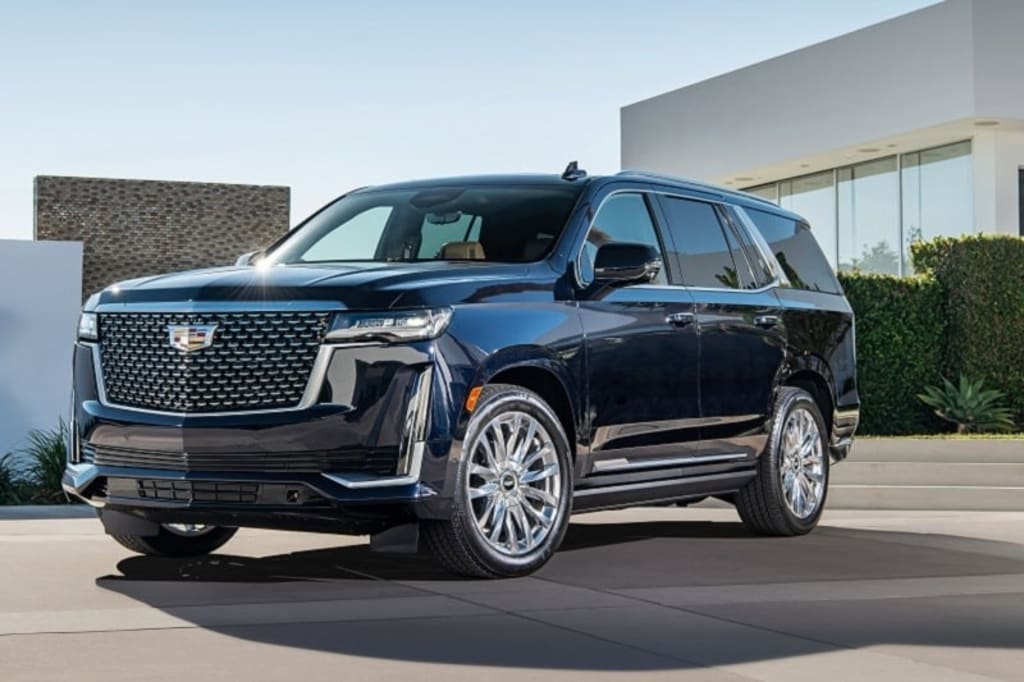
Growing urbanization, rising disposable incomes, and strong consumer preference for spacious, versatile vehicles are fueling demand for SUVs in Saudi Arabia, reinforced by expanding domestic automotive production under Vision 2030, favorable financing options, and the increasing popularity of family-oriented and adventure-ready models. According to IMARC Group's latest data, The Saudi Arabia sports utility vehicle market size reached USD 8,356.5 Million in 2025. Looking forward, IMARC Group expects the market to reach USD 11,971.8 Million by 2034, exhibiting a growth rate (CAGR) of 4.08% during 2026-2034.
The Saudi SUV market is experiencing robust expansion driven by changing lifestyle patterns, growing family sizes seeking spacious transportation, and the Kingdom's terrain that favors larger, capable vehicles. Consumer preferences are shifting toward SUVs for their practicality in urban settings and capability on desert roads, supported by competitive pricing from both established and emerging automakers. The market benefits from strong dealer networks, comprehensive after-sales service, and attractive trade-in programs that make upgrading to newer models more accessible. Major segments include compact SUVs for urban families, mid-size crossovers for versatility, and full-size luxury SUVs for premium buyers, with manufacturers emphasizing advanced safety features, connectivity options, and fuel efficiency to appeal to tech-savvy younger demographics.
Download the Sample Report to Understand Market Trends and Outlook
Saudi Arabia Sports Utility Vehicle Market Growth Drivers:
Vision 2030 Infrastructure Development and Automotive Localization
Saudi Arabia's Vision 2030 program has allocated over USD 5 billion toward establishing localized automotive production facilities, targeting output of 500,000 vehicles annually by 2030 according to the Ministry of Industry and Mineral Resources. Major infrastructure projects including NEOM, The Line, and Qiddiya are generating unprecedented transportation demand while attracting global automakers like Hyundai, Toyota, and Foxconn to establish regional operations. The Kingdom recorded more than 670,000 new vehicle registrations in 2023, with SUVs capturing an increasing share driven by improved road networks connecting urban centers to remote areas.
- Rising Household Income and Multi-Vehicle Ownership Trends
Female labor force participation climbed steadily after 2018, prompting households to transition from single to multi-car ownership patterns that favor SUVs for family transportation needs. Average per-capita income growth has expanded financing eligibility, with the Saudi Central Bank reporting substantial increases in corporate lending during March 2025 that support vehicle purchases. Urbanization projections estimate the urban population reaching 36 million, creating concentrated demand in cities like Riyadh, Jeddah, and Dammam where SUVs offer practical solutions for both daily commutes and weekend desert excursions. The expanding middle class increasingly views mid-sized SUVs as all-purpose vehicles suitable for school runs, shopping trips, and off-road adventures, while favorable fuel prices make operating larger vehicles economically viable compared to markets with higher energy costs.
- Advanced Technology Integration and Safety Feature Demand
Saudi consumer preferences, particularly among the tech-savvy youth who comprise over two-thirds of the population, increasingly align with Western market expectations for advanced connectivity, infotainment systems, and driving assistance features. The 2025 Nissan Patrol's introduction of innovations like biometric cooling, 28.6-inch horizontal displays, and smartphone integration exemplifies how manufacturers are competing on technology rather than just performance. Implementation of the Saudi CAFE regulation (SASO 2864:2021) mandates fuel efficiency standards that push automakers toward hybrid powertrains—Toyota's Land Cruiser 300 Hybrid combining a 3.5-liter twin-turbo V6 with electric motors demonstrates this shift. Digital retail platforms and AI-driven financing pre-approval are transforming the purchase journey, while comprehensive warranty programs and certified pre-owned initiatives reduce ownership concerns for first-time SUV buyers entering the market.
Saudi Arabia Sports Utility Vehicle Market Trends:
- Hybrid and Electric Powertrain Acceleration
Electric vehicle adoption is accelerating beyond initial projections, with a 33.5% increase in H1 2025 according to Focus2move, supported by local manufacturing partnerships like Ceer Motors and Lucid's Saudi production facilities. The Saudi Green Initiative targets three-tenths of vehicle sales as EVs by 2030, backed by plans for 100,000 charging stations nationwide per NEOM initiatives. However, internal combustion engines still account for 86.35% of sales, with hybrids serving as transitional options that balance performance demands with environmental goals. High ambient temperatures necessitate enhanced cooling systems and specialized battery chemistries that initially raise costs, yet OEMs are fast-tracking hybrid powertrains to pre-empt carbon tax escalation. Toyota's Land Cruiser 300 Hybrid, officially launching globally in 2026 with the UAE and Australia as lead markets, exemplifies premium manufacturers maintaining rugged capabilities while addressing sustainability expectations from affluent Saudi consumers.
- Chinese Brand Market Penetration and Competitive Pricing
Chinese automakers captured 5.3% combined market share in February 2025, led by Geely with 1,121 units sold, Jetour, Changan, and Haval establishing foothold in budget and mid-range segments. The Jetour T2 performed notably with 702 units, resonating with younger consumers through electrified powertrains optimized for camping, modern design language, and competitive pricing that undercuts established brands by 20-30%. Geely demonstrated exceptional 64.37% month-over-month growth in February 2025, while Jetour led consumer search interest with 15,959 queries indicating successful localized marketing campaigns. These brands have secured 14.2% share in the SAR 50,000-80,000 budget segment and 8.9% in the SAR 120,000-150,000 mid-range, though they remain absent above SAR 150,000 where Japanese and Korean manufacturers dominate. Rapid dealer network expansion, aggressive warranty offerings, and adaptation to local service expectations position Chinese SUVs as disruptive forces reshaping competitive dynamics.
- Digital Transformation and Subscription-Based Ownership Models
Online automotive platforms are fundamentally changing how Saudis research and purchase SUVs, with most consumers beginning their journey digitally before visiting showrooms. Syarah's considerable Series C investment underwrites AI-driven price valuation tools and nationwide reconditioning centers, while platforms like Motor Souq aggregate 120+ dealers for transparent comparison shopping. BMW's January 2024 launch of a fully integrated digital retail platform across the GCC enables customers to configure, finance, and purchase vehicles entirely online, reducing traditional sales cycle friction.
Recent News and Developments in Saudi Arabia Sports Utility Vehicle Market
- February 2025: Toyota led the Saudi market with 14,570 units sold in February 2025, capturing 20.20% market share, with eight Toyota SUV models ranking in the top 20 sellers including the iconic Land Cruiser reinforcing the brand's exceptional influence among Saudi consumers.
- January 2025: Wallan Trading Company introduced the 2025 Lotus Emeya electric hyper-GT in Riyadh, showcasing cutting-edge technologies aimed at building customer trust in premium electric SUV segments while providing capabilities for future autonomous driving.
Note: If you require specific details, data, or insights that are not currently included in the scope of this report, we are happy to accommodate your request. As part of our customization service, we will gather and provide the additional information you need, tailored to your specific requirements. Please let us know your exact needs, and we will ensure the report is updated accordingly to meet your expectations.
About the Creator
Shubham Sharma
Market research enthusiast sharing insights on global industries, emerging trends, growth opportunities, and data-driven analysis across diverse markets.
Keep reading
More stories from Shubham Sharma and writers in Futurism and other communities.
Saudi Arabia Electric Buses Market: Green Mobility, Public Transport Electrification & Growth Outlook
Government investments in zero-emission public transport, Vision 2030 sustainability goals, and mega-projects like NEOM and Red Sea are driving electric bus adoption, supported by expanding charging infrastructure, fleet electrification initiatives, and partnerships with global manufacturers. According to IMARC Group's latest data, The Saudi Arabia electric buses market size reached USD 564.3 Million in 2025. Looking forward, IMARC Group expects the market to reach USD 2,909.4 Million by 2034, exhibiting a growth rate (CAGR) of 19.99% during 2026-2034.
By Shubham Sharma 5 days ago in Futurism
Ranking in ChatGPT: The New Goal of Expert SEO Services in 2027
For decades, digital visibility followed a simple rule: if your website ranked high on search engines, users would find you. Businesses invested heavily in search engine optimization, chasing page-one rankings and carefully studying algorithm updates.
By Jane Smith5 days ago in Futurism
Building an EV from a Classic Car
Building an EV from a Classic Car: The Smart Architecture Behind Carmoddy Introduction Converting a 1992 Ford Escort into an electric vehicle sounds complex, but the Carmoddy project demonstrates elegant engineering: smart component reuse. Rather than inventing new solutions, this conversion leverages proven Nissan Leaf technology with millions of miles of real-world validation—offering green energy enthusiasts a practical blueprint for their first EV conversion.
By Josh Harvey7 days ago in Futurism
The Salt in her Voice
The myth says mermaids sing to lure sailors to their death. But why? The ocean is huge. Only 5 percent has been discovered by man. Why would a creature of the sea with that much space to roam ever care about the fate of men on ships? The answer, as it turns out, is not a simple one at all. The truth about the myth is older than the tides. Long ago before the first ship ever cut across the surface, the sea made a pact with the sky. The sky would take the souls of the drowned. Anyone who died in storms or any quiet accidents of the deep would have their soul lifted upward to the Heavens while the bodies would remain below, feeding the oceans endless hunger. The greedy sea however wanted more souls than the sky would claim. So it created mermaids. It gave them beautiful voices woven from currents and moonlight. It commanded them to sing. "Bring forth the ones who float where they should sink." it instructed them. So they did. They never killed out of malice but out of obligation. They sung to summon, not to seduce. A mermaid's voice could loosen the tether between the body and soul, making any man step willingly into the water. The sea would take the body and the sky would take the soul. Balance maintained.
By Sara Wilson6 days ago in Fiction



Comments
There are no comments for this story
Be the first to respond and start the conversation.