
Saudi Arabia Commercial Vehicle Industry Overview: Market Developments & Growth Forecast
How Government Infrastructure Projects Are Accelerating the Saudi Arabia Commercial Vehicle Market

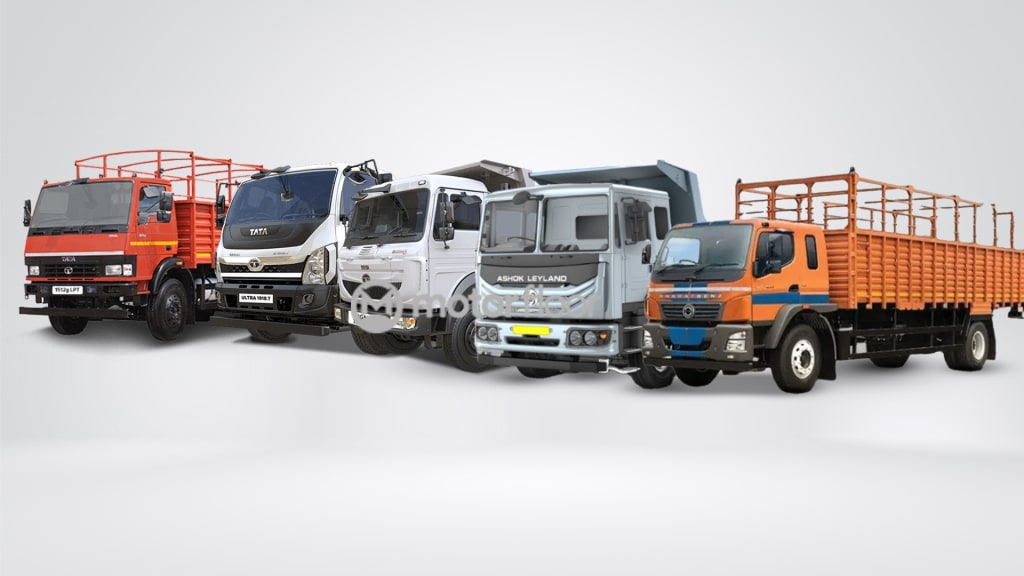
The Saudi Arabia commercial vehicle market size reached USD 7.50 Billion in 2024. Looking forward, IMARC Group expects the market to reach USD 10.99 Billion by 2033, exhibiting a growth rate of 3.90% during 2025-2033.
How AI is Reshaping the Future of Saudi Arabia Commercial Vehicle Market
- Predictive Maintenance Systems: AI algorithms reduce vehicle downtime by 25% through real-time performance monitoring. Fleet managers receive automated alerts before failures occur, cutting maintenance costs and improving operational reliability across logistics networks.
- Autonomous Vehicle Pilots: Saudi Arabia launched Robotaxis in Riyadh covering 13 pickup points across seven zones, targeting 25% autonomous goods transport by 2030. WeRide completed regulatory approvals for the Kingdom's first officially licensed autonomous commercial operations.
- Fleet Management Optimization: Telematics platforms integrate IoT sensors with AI-driven analytics for route planning, fuel efficiency tracking, and driver behavior monitoring. Fleet management market projected to reach USD 0.49 billion, growing at double digits.
- Traffic and Route Intelligence: AI analyzes real-time traffic data, weather conditions, and historical patterns to suggest optimal delivery routes. Systems adapt throughout the day, reducing fuel consumption and improving delivery timelines for commercial fleets.
- Digital Twin Technology: Advanced analytics create virtual replicas of vehicle performance for predictive modeling. NEOM integrates digital twins with smart logistics, automation, and zero-emission mobility solutions across industrial complexes and manufacturing facilities.
Explore Verified Market Data and Forecasts in a Sample Report
Saudi Arabia Commercial Vehicle Market Trends & Drivers
Mega-infrastructure projects under Vision 2030 are fundamentally reshaping commercial vehicle demand across Saudi Arabia. NEOM alone requires massive fleets of heavy-duty trucks for construction materials, with Ma'aden's mining expansions demanding continuous ore and overburden haulage using above-40-ton tippers. The Riyadh Metro Project—one of the Middle East's largest—created immediate need for feeder bus networks across six lines spanning 176 kilometers, earning Guinness recognition as the world's longest driverless train. Road expansion exceeded 3,500 kilometers during 2024-2025, accommodating tri-drive tractor configurations up to 85 tons gross weight. King Salman International Airport construction, Jeddah Central development, and the Red Sea tourism complex each generate substantial logistics requirements. Saudi Arabia plans four NEOM airports supporting sustainable aviation, while the Haramain high-speed train connecting Mecca and Medina at 300 km/h demonstrates the Kingdom's transportation transformation. These giga-projects create sustained demand for Volvo, Mercedes-Benz, and MAN vehicles specifically engineered for harsh desert conditions, positioning commercial vehicles as critical enablers of national infrastructure ambitions.
E-commerce explosion and logistics modernization are driving unprecedented light commercial vehicle demand across the Kingdom. Saudi Arabia's e-commerce sector recorded 10% year-on-year growth in Q4 2024, reaching 40,953 registered businesses with Riyadh leading at 16,834 enterprises. This surge creates massive last-mile delivery requirements for vans and pickup trucks—light commercial vehicles now represent over 41% of total market share. Logistics facilities increased 267% since 2021, with the Eastern Province hosting 6.3 million square meters of warehouse space. Companies need delivery fleets supporting fast, reliable customer expectations while optimizing warehousing, inventory movement, and cross-regional distribution. Toyota Hilux, Ford, and Nissan pickups dominate because of their dual urban-off-road utility, affordability, and strong resale values. SMEs favor these models for crew transport and light materials, while government agencies adopt double-cab configurations with telemetry for bulk procurement. Fleet operators increasingly deploy telematics for route optimization, digital tachograph validation, and driver fatigue monitoring—technologies that improve delivery timelines and service consistency across Saudi Arabia's vast geographic expanse.
Environmental regulations and financing innovations are accelerating fleet electrification despite cost challenges. The government's diesel price reform raised pump prices 44% year-on-year to SAR 1.66 per liter, making older Euro 3 engines—which consume 8-10% more fuel than Euro 6 models—economically unviable. This price pressure combined with the five-year import age ceiling forces fleet upgrades toward cleaner technologies. Electric commercial vehicle market valued at USD 1.69 billion is projected to reach USD 2.40 billion as Riyadh targets 30% vehicle electrification, with thousands of fast-charging points planned across 1,000 locations. SAPTCO and Jeddah Bus Project launched pilot operations of zero-emission buses, while Royal Commission for Riyadh City deployed electric buses targeting 25% clean transport modal shift. Enhanced financing options through Budget Saudi Arabia's SR455 million Auto World acquisition and expanding leasing programs make premium vehicles more accessible. Public-private partnerships drive airport projects like Prince Mohammed bin Abdulaziz International—the Middle East's first PPP airport—while government support for local assembly creates competitive pricing. Fleet modernization combines environmental compliance, operational cost savings, and technology-driven efficiency improvements.
Saudi Arabia Commercial Vehicle Market Industry Segmentation
The report has segmented the market into the following categories:
Vehicle Body Type Insights:
- Buses
- Heavy-Duty Commercial Trucks
- Light Commercial Pick-Up Trucks
- Light Commercial Vans
Propulsion Type Insights:
- Hybrid and Electric Vehicles
- Fuel Category: BEV, FCEV, HEV, PHEV
- ICE
- Fuel Category: CNG, Diesel, Gasoline, LPG
Regional Insights:
- Northern and Central Region
- Western Region
- Eastern Region
- Southern Region
Competitive Landscape
The competitive landscape of the industry has also been examined along with the profiles of the key players.
Recent News and Developments in Saudi Arabia Commercial Vehicle Market
- May 2025: Victory Saudi Arabia launched its 2026 next-generation 2-ton diesel commercial trucks at an event in Riyadh, in partnership with dealer Motiat Alkhair, featuring fuel-efficient 4-cylinder engines and bold SUV-inspired designs tailored for the Kingdom's evolving transport needs.
- July 2025: Transport Minister Saleh Al-Jasser launched WeRide's Robotaxi pilot in Riyadh—a milestone for developing smart, safe transportation networks. The 12-month pilot operates across King Khalid International Airport and city highways with onboard safety officers.
- February 2024: Budget Saudi Arabia received approval from the Kingdom's competition authority for its acquisition of Auto World, a car leasing and maintenance company valued at SR455 million, expanding fleet financing options nationwide.
- January 2025: Isuzu introduced its S&E Series heavy-duty truck in Riyadh, emphasizing region-specific cooling systems and durability enhancements designed specifically for Saudi desert operating conditions.
Note: If you require specific details, data, or insights that are not currently included in the scope of this report, we are happy to accommodate your request. As part of our customization service, we will gather and provide the additional information you need, tailored to your specific requirements. Please let us know your exact needs, and we will ensure the report is updated accordingly to meet your expectations.
About the Creator
Abhay Rajput
I am working in market research company that provides market and business research intelligence across the globe.
Keep reading
More stories from Abhay Rajput and writers in Futurism and other communities.
GCC Used Car Market Analysis: Industry Overview, Key Players & Future Outlook
According to IMARC Group's latest research publication, GCC used car market size reached USD 24.5 Billion in 2025. The market is projected to reach USD 49.2 Billion by 2034, exhibiting a growth rate of 8.05% during 2026-2034.
By Abhay Rajputa day ago in Futurism
About Binding Prometheus
I want to start actively advocating on behalf of my own work, and the most valuable part of my canon is, without a doubt, Binding Prometheus, the play I have been working on since 2019 and only finished in 2023 as part of my MA. The play itself is an amalgamation of a million different inspirations. On one end, it evokes the Ancient Greek myth-play, deriving its own title from the earliest extant work of Western drama we have, Aeschylus’s Prometheus Bound. On the other end, it borrows significantly from the sci-fi bulwarks from over the years, namely Mary Shelley’s Frankenstein and Karel Capek’s Rossum’s Universal Robots. The play could be an episode of Black Mirror, I fear. I don’t know. I’ve only ever seen one episode of Black Mirror.
By Steven Christopher McKnight29 days ago in Futurism
Edible Packaging Market: Seaweed, Starch & Protein-Based Materials & Growth Outlook
According to IMARC Group's latest research publication, global edible packaging market size reached USD 1,015.58 Million in 2024. Looking forward, IMARC Group expects the market to reach USD 1,670.18 Million by 2033, exhibiting a growth rate (CAGR) of 5.1% during 2025-2033.
By sujeet. imarcgroup2 days ago in Futurism




Comments
There are no comments for this story
Be the first to respond and start the conversation.