

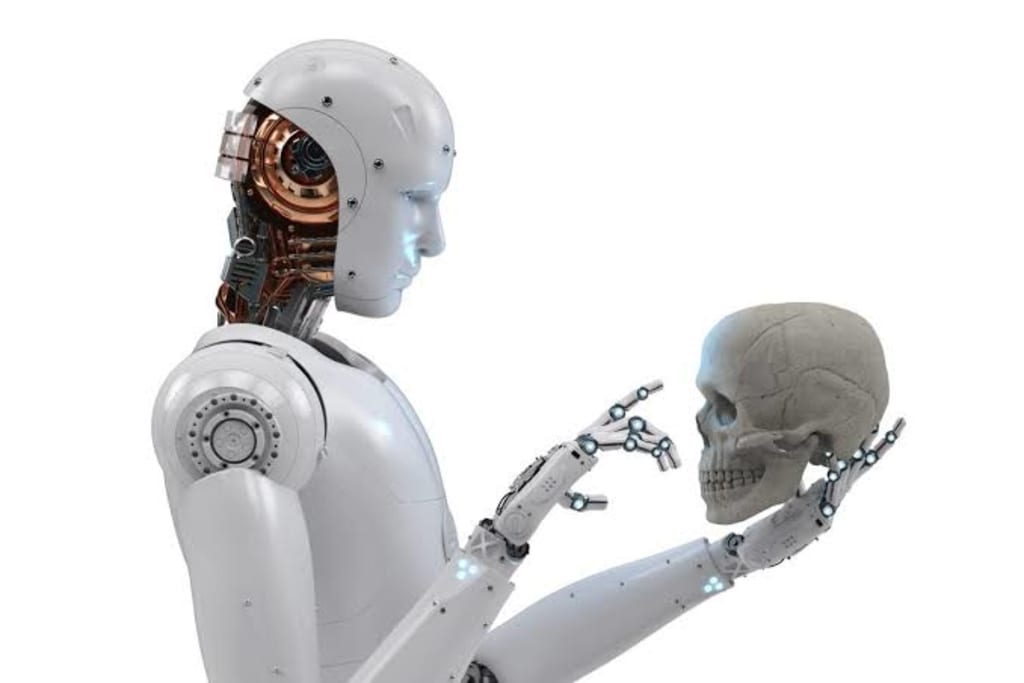
The future of robots is very promising, as advancements in technology continue to make robots more capable and versatile. We can expect to see robots becoming more common in various industries, including manufacturing, healthcare, and transportation.
In the manufacturing industry, robots are already being used for tasks such as assembly, painting, and packaging. In the future, we can expect to see even more advanced robots capable of performing complex tasks and working alongside humans in collaborative environments.
In healthcare, robots are being used for tasks such as surgery and rehabilitation, and we can expect to see even more advanced robots in the future that can assist with a wide range of medical procedures and tasks.
In transportation, autonomous vehicles are already becoming more common, and we can expect to see even more advanced forms of transportation in the future, including self-driving cars, drones, and even flying cars.
Overall, the future of robots is very exciting, and we can expect to see robots becoming an increasingly important part of our lives in the years to come. However, there are also important ethical and social considerations to be taken into account as we integrate robots into our society.
It's important to clarify that robots are not capable of taking over humans or replacing them entirely. Robots are designed and programmed by humans, and their capabilities are limited by their programming and hardware.
However, there are concerns about the impact of automation and robotics on employment and the economy. As robots become more advanced and able to perform tasks that were previously done by humans, there may be a shift in the types of jobs that are available and the skills that are required. This could lead to job displacement in certain industries, and could require workers to acquire new skills and adapt to changing job requirements.
Another concern is the potential for robots to be used in military applications, which could lead to the development of autonomous weapons that could make decisions and take actions without human intervention. This raises ethical concerns about the use of force and the potential for unintended consequences.
It's important for society to carefully consider the implications of robotics and automation, and to develop policies and regulations that ensure that these technologies are used in ways that benefit humanity and minimize negative impacts. While robots and automation will undoubtedly have a significant impact on the future, it's up to humans to ensure that this impact is a positive one.
It's important to note that the relationship between humans and robots is not necessarily one of competition or opposition. Instead, humans and robots can work together to accomplish tasks more efficiently and effectively than either could alone.
That being said, if the goal is to ensure that humans remain in control of decision-making and maintain a prominent role in the workforce, there are several ways in which humans can stay ahead of robots:
Focus on skills that are uniquely human: While robots can perform repetitive tasks and solve certain types of problems more quickly and accurately than humans, there are many skills that are uniquely human, such as creativity, emotional intelligence, and critical thinking. By developing these skills, humans can ensure that they have a valuable role in the workforce that robots cannot replicate.
Embrace lifelong learning: The pace of technological change is rapid, and it's likely that many jobs will be automated in the coming years. To stay ahead of the curve, humans should embrace lifelong learning and continually develop new skills that are in demand.
Foster a culture of innovation: Humans have the ability to innovate and create new technologies that can improve our lives and enhance our productivity. By fostering a culture of innovation, we can ensure that we are the ones driving technological progress and shaping the future.
Maintain control over decision-making: While robots can perform certain tasks more quickly and accurately than humans, they lack the ability to make decisions based on ethical considerations, social norms, and values. By maintaining control over decision-making and ensuring that robots are programmed to adhere to ethical and moral principles, humans can ensure that they remain in control of the direction of technological progress.
About the Creator
Ibad Usman
Professionalism is an illusion, being Passionate is the key.
Keep reading
More stories from writers in Futurism and other communities.
About Binding Prometheus
I want to start actively advocating on behalf of my own work, and the most valuable part of my canon is, without a doubt, Binding Prometheus, the play I have been working on since 2019 and only finished in 2023 as part of my MA. The play itself is an amalgamation of a million different inspirations. On one end, it evokes the Ancient Greek myth-play, deriving its own title from the earliest extant work of Western drama we have, Aeschylus’s Prometheus Bound. On the other end, it borrows significantly from the sci-fi bulwarks from over the years, namely Mary Shelley’s Frankenstein and Karel Capek’s Rossum’s Universal Robots. The play could be an episode of Black Mirror, I fear. I don’t know. I’ve only ever seen one episode of Black Mirror.
By Steven Christopher McKnight25 days ago in Futurism
Digital Map Market Size and Forecast 2026–2034: Powering the World’s Location-Driven Future
Digital Map Market Outlook 2026–2034 The global Digital Map Market is entering a decisive decade of expansion as location intelligence becomes a foundational layer of the digital economy. According to Renub Research, the market is projected to grow from US$ 6.63 billion in 2025 to US$ 16.92 billion by 2034, registering a strong CAGR of 10.97% from 2026 to 2034.
By jaiklin Fanandisha day ago in Futurism
The Path to Salvation
The late autumn evening air filled the monk's lungs, but it wasn't the season that chilled his bones. The heavy-handed presence of evil he had sensed upon entering the woods surrounding this mountain village had not bothered to conceal itself from him.
By Made in DNA4 days ago in Fiction




Comments
There are no comments for this story
Be the first to respond and start the conversation.