
Rising Demand for Minimally Invasive Procedures Driving the Global Anastomosis Devices Market
The global anastomosis devices market is growing steadily, driven by the rising demand for minimally invasive surgical procedures and improved patient outcomes.

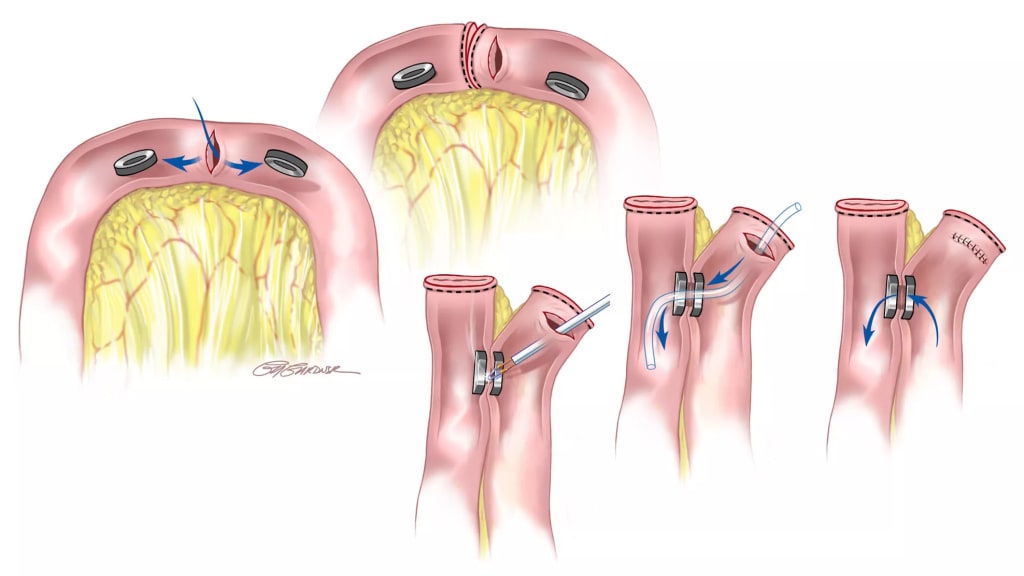
According to IMARC Group's latest research publication, The global anastomosis devices market size reached USD 3.6 Billion in 2024. Looking forward, IMARC Group expects the market to reach USD 6.4 Billion by 2033, exhibiting a growth rate (CAGR) of 6% during 2025-2033.
How AI is Reshaping the Future of Anastomosis Devices Market
- Predictive Surgical Planning and Risk Assessment: AI algorithms analyze patient-specific data including tissue thickness, vascular patterns, and medical histories to predict optimal device selection and anastomosis techniques. Machine learning models assess individual surgical risk factors, enabling surgeons to customize approaches for each patient's unique anatomy and minimize complications.
- Real-Time Device Performance Monitoring: AI-powered sensors embedded in surgical staplers provide instant feedback on tissue compression, staple formation quality, and potential leak pathways during procedures. These smart systems alert surgeons to suboptimal conditions, allowing immediate adjustments that reduce anastomotic leaks by up to 47% compared to traditional devices.
- Robotic-Assisted Anastomosis Automation: Autonomous surgical robots equipped with AI complete microvascular anastomoses with 90% accuracy matching experienced surgeons. These systems reduce surgeon fatigue-related errors, standardize suture placement, and decrease procedure times from 27 minutes to 18 minutes while maintaining consistent quality across complex vascular reconnections.
Anastomosis Devices Industry Overview
The anastomosis devices sector is experiencing transformation driven by surgical volume growth and technological breakthroughs. Between 40-50 million surgical procedures occurred across the United States annually, with anastomotic interventions required in approximately 52% of gastrointestinal and cardiovascular cases. The sector benefits from rising chronic disease prevalence, with 200 million people globally living with coronary artery disease and 20 million new cancer diagnoses in 2022 requiring surgical treatment. Advanced stapling systems now deliver 47% fewer leak pathways, while magnetic compression technologies eliminate retained foreign materials entirely, representing fundamental shifts from traditional manual techniques that have dominated for over 40 years.
Anastomosis Devices Market Trends & Drivers
Surge in minimally invasive and robotic-assisted surgery adoption is reshaping device demand patterns across surgical specialties. Nearly 58% of gastrointestinal and cardiovascular procedures now utilize minimally invasive techniques, requiring specialized anastomosis devices compatible with laparoscopic and robotic platforms. Robotic surgical systems have demonstrated autonomous completion of small-bowel anastomoses with precision matching human surgeons, while reducing operative fatigue and standardizing outcomes. Hospitals report 90% adoption rates of automated devices in developed markets, with disposable systems capturing 86.4% market share due to infection prevention protocols. This technological shift delivers shorter hospital stays, faster recovery times, and reduced postoperative complications, driving consistent growth in advanced device procurement across 72% of major hospital systems implementing standardized training protocols.
Rising burden of chronic diseases requiring surgical intervention continues accelerating device utilization across multiple patient populations. Cardiovascular diseases account for 27% of UK deaths annually, with coronary artery bypass grafting representing 400,000 procedures yearly in the United States alone—each requiring precise vascular anastomoses. Colorectal cancer incidence reached 183,911 cases across North America in 2022, with 87% concentrated in the United States, where anastomotic leak mortality rates range between 10-15%. The global geriatric population is projected to expand from 761 million in 2021 to 1.6 billion by 2050, with one in six people worldwide aged 65 or older experiencing increased surgical needs for gastrointestinal disorders, cardiovascular ailments, and oncological conditions that necessitate reliable anastomosis solutions throughout their care journey.
Innovation in bioabsorbable materials and magnetic compression technologies is revolutionizing anastomotic technique fundamentals and safety profiles. Bioabsorbable staplers and clips dissolve naturally post-healing, eliminating permanent foreign material complications while specialized surgical sealants provide protective layers reducing leak risks. Magnetic compression anastomosis systems utilizing self-forming magnets create serosa-to-serosa connections without staples or sutures, with all magnets expelled naturally within 20 days while demonstrating comparable or superior burst pressure versus conventional stapled anastomoses. Clinical trials show 18% increased adoption of sutureless magnetic rings, with automated stapler shipments rising 34% as devices featuring enhanced leak prevention technologies gain regulatory approvals. Over 61% of hospitals prefer single-use devices for high-risk procedures, while 47% of recent clinical trials focus on next-generation techniques including automated suturing systems backed by nine peer-reviewed studies across seven countries spanning 46,000 patients.
Leading Companies Operating in the Global Anastomosis Devices Industry
- Artivion Inc.
- B. Braun Melsungen AG (B. Braun Holding GmbH & Co. KG)
- Becton, Dickinson and Company
- Getinge AB
- Intuitive Surgical Inc.
- Johnson & Johnson
- Meril Life Sciences Pvt. Ltd.
- Peters Surgical
- Synovis Micro Companies Alliance Inc. (Baxter International Inc.)
Anastomosis Devices Market Report Segmentation
By Type:
- Surgical Staplers (Manual, Powered)
- Surgical Sutures [Absorbable Sutures (Synthetic Sutures, Natural Sutures), Non-absorbable Sutures (Polypropylene, Nylon, Stainless Steel, Others)]
- Automated Suturing Devices (Disposable, Reusable)
- Surgical Sealants and Adhesives [Natural/Biological (Fibrin-based, Collagen-based, Albumin-based), Synthetic and Semisynthetic (PEG Hydrogel-based, Cyanoacrylate-based, Others)]
Surgical staplers represent the largest segment, favored for efficiency, precision, and ability to reduce operative time and postoperative complications compared to traditional suturing techniques.
By Application:
- Gastrointestinal Surgeries
- Cardiovascular and Thoracic Surgeries
- Others
Cardiovascular and thoracic surgeries hold the largest share due to high prevalence of cardiovascular diseases requiring precise vessel reconnection, with innovations in automated and minimally invasive devices driving adoption.
By End User:
- Hospitals
- Ambulatory Surgical Centers and Clinics
- Others
Hospitals represent the leading segment due to high surgical volumes and advanced facilities supporting complex procedures requiring anastomosis devices.
Regional Insights:
- North America (United States, Canada)
- Asia Pacific (China, Japan, India, South Korea, Australia, Indonesia, Others)
- Europe (Germany, France, United Kingdom, Italy, Spain, Russia, Others)
- Latin America (Brazil, Mexico, Others)
- Middle East and Africa
North America exhibits clear dominance due to advanced healthcare infrastructure, high surgical volumes, and strong presence of leading medical device manufacturers.
Recent News and Developments in Anastomosis Devices Market
- May 2024: Ethicon, a Johnson & Johnson MedTech company, launched the ECHELON LINEAR Cutter in the United States, the industry's first linear cutter combining 3D-Stapling Technology and Gripping Surface Technology. Backed by rigorous testing, the device delivered 47% fewer leaks at the staple line compared to traditional staplers, helping reduce surgical risks. Its unique design allows surgeons to lock or separate device halves for greater control during anastomosis procedures in colorectal surgery, where weak connections can lead to serious complications with mortality rates between 10-15%.
- June 2025: GI Windows Surgical received FDA 510(k) clearance for its Flexagon Self-Forming Magnets and associated laparoscopic and endoscopic delivery systems. This magnetic compression anastomosis technology represents the first significant breakthrough in anastomosis creation in over 40 years, enabling sutureless, staple-free procedures that leave no foreign material behind. Clinical evidence to date reports no leaks, bleeds, or obstructions attributed to the magnetic technique, with all magnets expelled naturally within 20 days while demonstrating comparable structural integrity to conventional stapled anastomoses.
- August 2025: GI Windows Surgical secured additional FDA 510(k) clearance for the Otoloc Access System, which controls and captures the enterotomy between two self-forming magnets, allowing for immediate lumen creation. This innovation enables surgeons to perform enteral bypass procedures unique to magnetic compression technology, providing radial support to enterotomies while facilitating immediate flow through the anastomosis. The system is designed to reduce operative time, standardize anastomotic techniques, and minimize complications in minimally invasive and endoluminal surgery.
- January 2023: Lydus Medical obtained FDA 510(k) clearance for its Vesseal microvascular anastomosis suture deployment system, designed for standardized omni-vessel anastomoses. The device enables symmetrical placement of eight micro-sutures at the anastomosis site, mimicking the skill set and dexterity needed for microsurgical procedures. Vesseal addresses the time and labor-intensive nature of manual microvascular anastomoses, which require long learning curves and great surgical dexterity, supporting applications in breast reconstruction, head and neck reconstruction, surgical lymphedema treatment, and vascular access for hemodialysis.
Note: If you require specific details, data, or insights that are not currently included in the scope of this report, we are happy to accommodate your request. As part of our customization service, we will gather and provide the additional information you need, tailored to your specific requirements. Please let us know your exact needs, and we will ensure the report is updated accordingly to meet your expectations.
About the Creator
James Whitman
With years of experience in analyzing global industries, I specialize in delivering actionable market insights that help businesses stay ahead in an ever-changing landscape.
Keep reading
More stories from James Whitman and writers in Futurism and other communities.
Gene Synthesis Market Outlook: Biotechnology Advancements and Growth Opportunities
Rising demand for synthetic genes in drug discovery, vaccine development, and genetic research is driving growth in the gene synthesis market. Expanding applications in synthetic biology, personalized medicine, and industrial biotechnology support adoption. According to IMARC Group's latest research publication, The global gene synthesis market size was valued at USD 2.41 Billion in 2024. Looking forward, IMARC Group estimates the market to reach USD 9.60 Billion by 2033, exhibiting a CAGR of 15.75% from 2025-2033.
By James Whitman2 days ago in Futurism
Turbocompressors Industry Landscape: Technology Advancements & Growth Potential
According to IMARC Group's latest research publication, the global turbocompressors market size reached USD 20.99 Billion in 2024. Looking forward, IMARC Group expects the market to reach USD 33.74 Billion by 2033, exhibiting a growth rate of 5.14% during 2025-2033.
By sujeet. imarcgroupabout 19 hours ago in Futurism
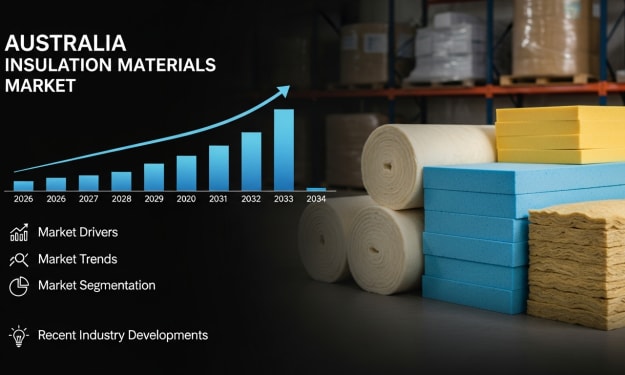
Australia Insulation Materials Market: Demand Growth, Energy Efficiency & Construction Expansion
According to IMARC Group, the Australia insulation materials market was valued at USD 2.22 Billion in 2025 and is projected to reach USD 4.01 Billion by 2034, growing at a compound annual growth rate (CAGR) of 6.80% during 2026–2034. This robust growth trajectory reflects insulation’s evolving role within Australia’s construction and energy-efficiency ecosystem. Once treated as a secondary building component, insulation materials are now recognized as essential infrastructure for reducing energy consumption, improving thermal comfort and meeting sustainability targets. Rising construction activity, stricter energy-performance regulations and large-scale retrofit programs are accelerating adoption across residential, commercial and industrial buildings throughout Australia. As energy costs increase and climate variability intensifies, insulation has become a strategic investment rather than a compliance obligation.
By Shrestha Roy2 days ago in Futurism
Analyse this!
Wanna know how to improve your writing? There is a simple, quick, tried and tested method. Tried and tested by who? By me, as it happens, and I can guarantee that it will work for you. I know what I am talking about. Not always, of course, but certainly in this case.
By Raymond G. Taylor3 days ago in Writers



Comments
There are no comments for this story
Be the first to respond and start the conversation.