
Residential Battery Market Insights: Home Energy Resilience, Cost Declines & Forecast to 2034
How rising electricity costs, rooftop solar adoption, and home energy storage systems are transforming residential power management and household energy resilience worldwide.

Rising electricity costs, an accelerating shift to rooftop solar, and growing anxiety about grid reliability are all pushing homeowners toward energy storage solutions. According to IMARC Group's latest data, The global residential battery market size was valued at USD 17.4 Billion in 2025. Looking forward, IMARC Group estimates the market to reach USD 44.0 Billion by 2034, exhibiting a CAGR of 10.90% from 2026-2034.
The residential battery market has moved well beyond its early-adopter phase and is now a mainstream component of the global clean energy transition. Homeowners are pairing lithium-ion storage systems with rooftop solar installations at record rates in the United States alone, 11% of solar-equipped homes now include a battery. Core demand stems from the need for backup power during outages, the desire to cut electricity bills by storing cheap off-peak energy, and growing awareness of environmental responsibility. Key segments include lithium-ion batteries, lead-acid systems, and emerging chemistries, spanning power ratings from 3 kW residential starters to 10 kW-plus whole-home systems, with both standalone and solar-integrated configurations gaining traction worldwide.
Residential Battery Market Growth Drivers:
- Rising Adoption of Renewable Energy Sources
Rooftop solar is scaling fast, and homeowners need somewhere to store all that extra generation. As of 2022, around 130 GW of residential photovoltaic systems had been installed globally—roughly 25 million units, per IEA data. In the United States, about 11% of solar-equipped homes have already paired their systems with a battery. When the sun sets or clouds roll in, a properly sized storage system keeps power flowing from energy collected earlier. That direct, tangible utility—lights on, fridge running, EV charged—is driving rapid residential battery uptake across all major markets worldwide.
- Escalating Electricity Costs and Grid Unreliability
Rising electricity bills and unpredictable grid outages are pushing more homeowners to take energy management into their own hands. In the United States, the National Centers for Environmental Information recorded over 24 weather-related disaster events in 2024, each causing more than USD 1 billion in losses, stressing grids from Texas to the Northeast. States like California and Texas have experienced repeated, high-profile failures. A home battery lets consumers store cheap off-peak electricity and deploy it during high-rate periods, combining resilience with real cost savings—a compelling double benefit that's resonating across income brackets.
Claim Your Free "Residential Battery Market" Insights Sample PDF
- Supportive Government Policies and Incentives
Governments worldwide are putting concrete money behind residential energy storage to hit their clean energy targets. The US Federal Investment Tax Credit substantially reduces upfront costs for homeowners pairing solar with storage. India's Union Budget 2023-24 earmarked battery storage projects exceeding 4,000 MWh of capacity. In Europe, Germany, Italy, and other nations have created feed-in tariff programs and direct grants that make storage genuinely affordable for average households. These aren't token gestures—they're structured to change the economics of home energy storage at scale, and they're working, with adoption rates climbing steadily in every incentivized market.
Residential Battery Market Trends:
- Dramatic Decline in Lithium-Ion Battery Costs
The economics of home battery storage have changed fundamentally over the past decade. BloombergNEF data shows lithium-ion battery pack prices fell 89% between 2010 and 2020, dropping from USD 1,100 per kWh to just USD 137 per kWh. That trajectory has continued since, making systems that once required a significant financial leap increasingly accessible to middle-income households. Improved manufacturing processes, growing competition among global producers, and economies of scale in cell production have all contributed. What was once a product for wealthy early adopters is fast becoming a mainstream home improvement purchase across developed and emerging markets.
- Integration with Smart Homes and Electric Vehicle Ecosystems
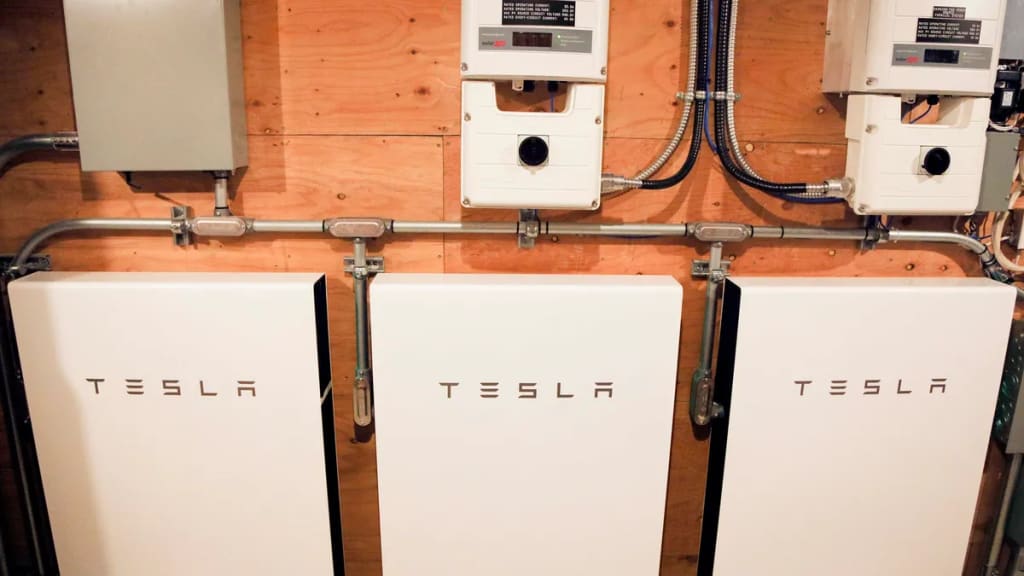
Residential batteries are evolving from standalone backup devices into the hub of a connected home energy system. Tesla has integrated its Powerwall 3 with home solar, smart electrical panels from SPAN, and EV chargers—allowing homeowners to manage generation, storage, and consumption from one app. The practical benefit is real: a homeowner can charge their EV overnight using stored solar energy, then draw on the battery during peak-rate morning hours, all automatically. As smart home adoption grows, the residential battery increasingly sits at the center of that ecosystem, adding functionality that standalone alternatives simply cannot match.
- Growth of Virtual Power Plants and Grid Services Revenue
Residential batteries are beginning to function as distributed grid assets, not just personal backup units. Texas-based Base Power installs and operates home batteries, offering residents backup power while simultaneously deploying those batteries for grid balancing services—a model that attracted a USD 1 billion Series C investment round. California's Public Safety Power Shutoff programs have similarly incentivized homeowners to contribute stored energy back to the grid during emergencies. This evolution from isolated home device to networked grid resource creates new revenue streams for homeowners and signals a structural shift in how utilities and battery operators think about distributed storage.
Recent News and Developments in Residential Battery Market
- June 2025: Tesla neared completion of its first LFP battery cell manufacturing facility in North America, located in Nevada, targeting approximately 10 GWh of initial annual production capacity. Output is designated primarily for stationary storage products—Powerwalls and Megapacks—marking a significant step toward US battery supply chain independence and lower-cost residential storage systems for homeowners.
- March 2025: LG Energy Solution secured a 4 GWh ESS battery supply contract with Delta Electronics for residential buildings across the United States, representing a substantial commitment to scaling domestic home energy storage deployment and positioning both companies to capitalize on rising demand for behind-the-meter residential solutions.
- September 2025: US residential battery storage installations grew 132% year-over-year in Q2 2025, reaching 608 megawatts deployed in a single quarter, according to the American Clean Power Association and Wood Mackenzie's Q2 Energy Storage Monitor. California, Arizona, and Illinois led growth as attachment rates with new solar installations hit record highs and higher-capacity systems gained greater market share among homeowners.
Note: If you require specific details, data, or insights that are not currently included in the scope of this report, we are happy to accommodate your request. As part of our customization service, we will gather and provide the additional information you need, tailored to your specific requirements. Please let us know your exact needs, and we will ensure the report is updated accordingly to meet your expectations.
About the Creator
Andrew Sullivan
Hello, I’m Andrew Sullivan. I have over 9+ years of experience as a market research specialist.
Keep reading
More stories from Andrew Sullivan and writers in Futurism and other communities.
Solar-Powered UAV Market Trends: Sustainable Aviation, Ultra-Light Designs & Industry Forecast to 2033
Rising demand for unmanned aerial surveillance, growing defense modernization programs, and the push for sustainable aviation solutions are powering the solar-powered UAV market forward. According to IMARC Group’s latest data, the global solar-powered UAV market size reached USD 401.0 Million in 2024. Looking forward, IMARC Group expects the market to reach USD 867.3 Million by 2033, exhibiting a CAGR of 8.5% during 2025–2033.
By Andrew Sullivanabout 14 hours ago in Futurism
How Market Structure and Utility Influence Long-Term Crypto Valuations?
As the cryptocurrency market matures, discussions around value are becoming more nuanced. Early market cycles were often driven by speculation and short-term narratives, but today’s environment reflects a growing emphasis on structure, utility, and sustainability. Investors and observers alike are paying closer attention to how blockchain projects fit into broader economic and technological systems.
By Muhammad Talha Ahmad2 days ago in Futurism
The Pride Flag and the Diversion
For nearly a decade, the LGBTQIA Pride Flag rippled in the wind at Christopher Park, a kaleidoscope of color staked into the soil of America’s first national monument to LGBTQIA+ liberation. That flag came down this week. Federal officials, citing new guidance from the Trump Administration, silently lowered the rainbow flag from its pole across the street from the Stonewall Inn. The birthplace of the modern gay rights movement now flies only the United States flag.
By Tim Carmichael7 days ago in Pride




Comments
There are no comments for this story
Be the first to respond and start the conversation.