
Rebuilding Lost Cities: How AI Brings Ancient Worlds Back to Life
Exploring How Artificial Intelligence Is Revolutionizing Archaeology and Cultural Preservation.


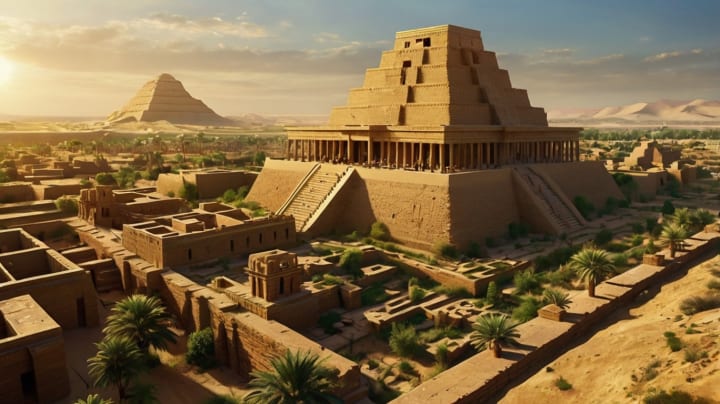
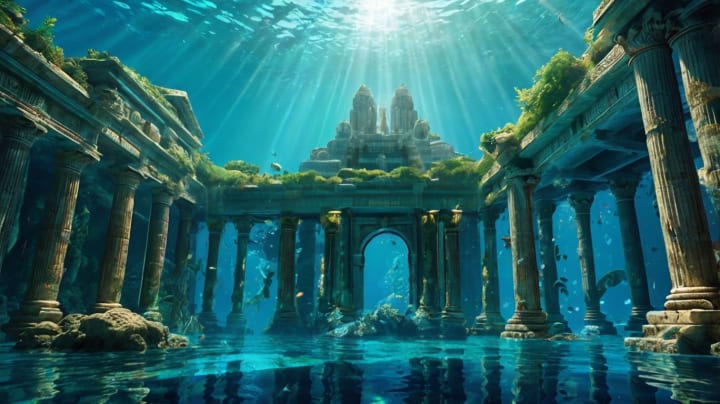
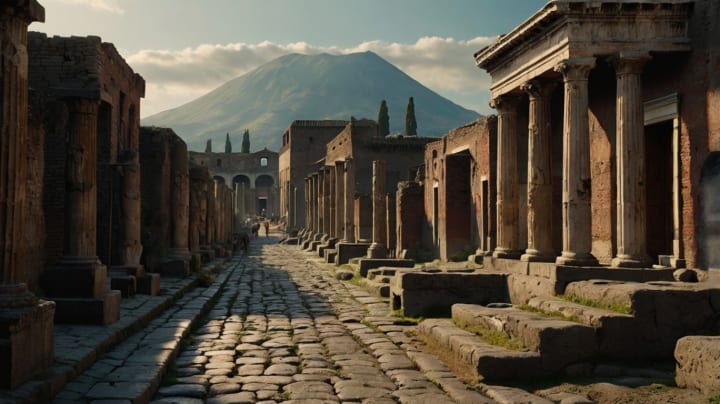
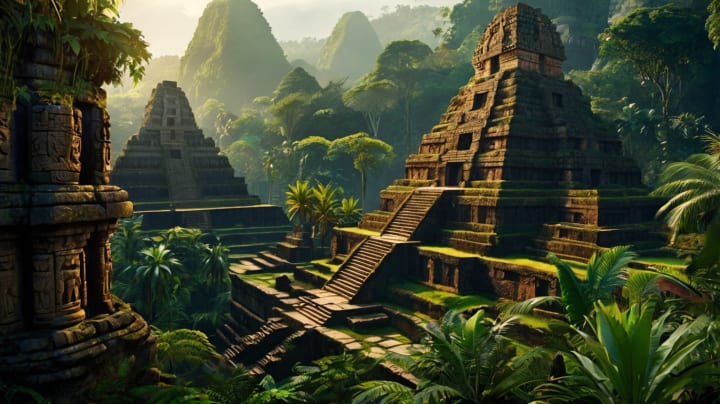
In every culture, there are whispers of vanished places — great cities swallowed by time, buried under ash, or lost to legend. Their names echo across centuries: Atlantis, the fabled utopia beneath the sea; Pompeii, entombed by volcanic fury; Babylon, a cradle of civilization; and El Dorado, the golden dream hidden in dense forests.
We’ve read about them, studied their remnants, even mythologized their meanings. But what if we could see them again — not through historical blueprints alone, but through the lens of imagination powered by artificial intelligence?
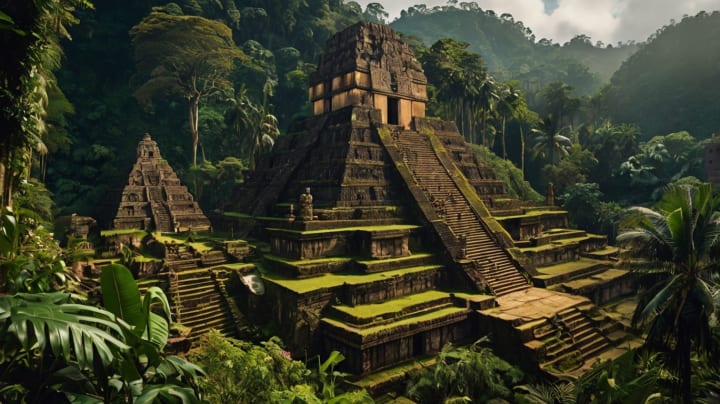
In this era of AI-generated art, a fascinating possibility has emerged: breathing visual life into what no longer exists — or perhaps never did. With platforms like Leonardo Ai, artists and technologists are collaborating to rebuild history’s forgotten chapters, not as replicas, but as rich, creative reimaginings.
The Allure of the Forgotten
Lost cities have always sparked curiosity. They carry the weight of stories — of innovation, collapse, hope, and mystery. Babylon stood as an empire’s jewel, its Hanging Gardens a marvel of ancient engineering. Pompeii’s tragic preservation offers a glimpse into Roman life in a single frozen moment. Atlantis, whether metaphor or memory, symbolizes humanity’s longing for perfection — and our fear of its loss.
These cities are not just historical artifacts. They are metaphors for our own impermanence.
AI art allows us to touch those metaphors in new ways. By inputting fragments of history, cultural symbolism, and artistic imagination, we can render images that feel both futuristic and ancient — bridges between what we know and what we long to understand.
Are We Honoring or Altering the Past?
This kind of work naturally raises ethical questions: Are we preserving the memory of these places, or romanticizing them beyond recognition? Are we contributing to cultural understanding — or blurring the truth?
The answer lies in intent.
When done responsibly, AI-generated interpretations of ancient places don’t pretend to replace history. They expand our engagement with it. They invite people — especially younger generations — to ask questions, to explore, and to care. A digital painting of El Dorado may not be fact, but it can serve as a doorway into indigenous myths, colonial histories, and lost wisdom.
A New Kind of Exploration
Though these cities may never be physically rebuilt, they continue to live in books, ruins, oral traditions, and cultural memory. AI becomes a medium — not for rewriting the past, but for re-experiencing it.
We’re not seeking to discover the exact layouts or materials. We’re exploring atmosphere, essence, and emotion. We’re weaving together threads from archaeology, literature, folklore, and imagination to reawaken interest in what time has obscured.
These are not perfect recreations. They are visual hypotheses — poetic suggestions that invite us to look again, and look deeper.
Why It Matters
In a world racing toward the future, remembering where we came from is an act of grounding. Reimagining lost cities through AI reminds us that human creativity is not bound by time. Just as ancient architects once dreamed of sky gardens and golden temples, we now use code and algorithms to dream in return.
And maybe, in doing so, we honor those who came before — not by restoring their world, but by acknowledging its continued influence in ours.
This piece is part of Visual Minds — a newsletter exploring the intersection of AI and art. Subscribe to stay curious, creative, and one step ahead in the evolving design world.
Conclusion
In the silent ruins and half-remembered myths of lost cities, we find more than history — we find reflections of ourselves. Through the lens of AI, these echoes are no longer confined to dusty archives or speculative texts; they are brought into view with light, color, and texture, igniting wonder in a new generation of explorers.
This isn’t about replacing the past — it’s about reconnecting with it, using technology as a bridge between ancient memory and modern imagination. With each render, each prompt, we’re not just illustrating forgotten places — we’re engaging in a dialogue with time.
Because in the end, whether through stone or pixel, what endures is the human desire to remember, reimagine, and rebuild.

About the Creator
Dishmi M
I’m Dishmi, a Dubai-based designer, writer & AI artist. I talk about mental health, tech, and how we survive modern life.
Subscribe for healing advice, human stories & future thoughts!
Reader insights
Outstanding
Excellent work. Looking forward to reading more!
Top insights
Easy to read and follow
Well-structured & engaging content
Excellent storytelling
Original narrative & well developed characters
Expert insights and opinions
Arguments were carefully researched and presented
Eye opening
Niche topic & fresh perspectives
Heartfelt and relatable
The story invoked strong personal emotions
Masterful proofreading
Zero grammar & spelling mistakes
On-point and relevant
Writing reflected the title & theme
About Binding Prometheus
I want to start actively advocating on behalf of my own work, and the most valuable part of my canon is, without a doubt, Binding Prometheus, the play I have been working on since 2019 and only finished in 2023 as part of my MA. The play itself is an amalgamation of a million different inspirations. On one end, it evokes the Ancient Greek myth-play, deriving its own title from the earliest extant work of Western drama we have, Aeschylus’s Prometheus Bound. On the other end, it borrows significantly from the sci-fi bulwarks from over the years, namely Mary Shelley’s Frankenstein and Karel Capek’s Rossum’s Universal Robots. The play could be an episode of Black Mirror, I fear. I don’t know. I’ve only ever seen one episode of Black Mirror.
By Steven Christopher McKnight17 days ago in Futurism
Smart Toys Market Size to Surpass USD 60.0 Billion by 2033 on Interactive Learning Demand & Market Outlook
According to IMARC Group's latest research publication, the global smart toys market size reached USD 18.1 Billion in 2024. Looking forward, IMARC Group expects the market to reach USD 60.0 Billion by 2033, exhibiting a growth rate (CAGR) of 13.52% during 2025-2033.
By Suhaira Yusuf5 days ago in Futurism



Comments
There are no comments for this story
Be the first to respond and start the conversation.