
Radiation Curable Coatings Market: UV/EB Innovations, Durability & Cost Efficiency
Radiation curable coatings market is driven by rapid curing, low VOC emissions, and rising demand across automotive, electronics, and packaging sectors.

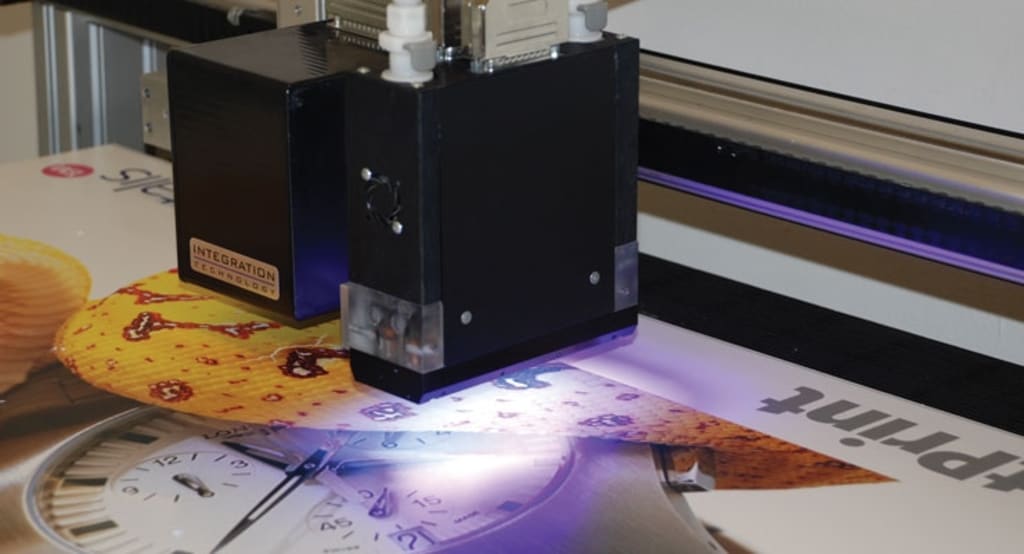
According to IMARC Group's latest research publication, the global radiation curable coatings market size reached USD 8.8 Billion in 2025. Looking forward, IMARC Group expects the market to reach USD 12.3 Billion by 2034, exhibiting a growth rate (CAGR) of 3.86% during 2026-2034.
How AI is Reshaping the Future
- Predictive Quality Control and Defect Detection: AI-powered computer vision analyzes coating surfaces in real-time, identifying micro-defects, color inconsistencies, and thickness variations with precision surpassing manual inspection, ensuring consistent quality across high-speed production lines.
- Smart Curing Parameter Optimization: Machine learning algorithms continuously monitor UV intensity, exposure time, substrate temperature, and environmental conditions to automatically adjust curing parameters, reducing energy consumption by approximately 15% while maintaining optimal coating performance.
- Automated Formulation Development: AI analyzes vast databases of chemical compositions, performance data, and customer requirements to predict optimal coating formulations, accelerating new product development cycles and reducing costly trial-and-error experimentation significantly.
- Supply Chain Intelligence and Demand Forecasting: Advanced analytics predict raw material requirements based on production schedules, market trends, and historical consumption patterns, helping manufacturers maintain optimal inventory levels and reduce photoinitiator and oligomer waste.
Industry Overview
The radiation curable coatings sector is experiencing robust expansion driven by stringent environmental regulations targeting VOC emissions. In January 2024, Beckers partnered with ArcelorMittal to pioneer electron beam curing for pre-painted steel in construction applications, marking the coil coating industry's first commercial EB-cured paint. In July 2024, PPG launched its DURANEXT portfolio featuring comprehensive UV and EB curable coatings specifically engineered for metal coil applications. The British Coatings Federation reports significant VOC emission reductions across UK coating industries, while approximately 35% of manufacturers are engaging in strategic partnerships to enhance product portfolios and accelerate technological integration, reshaping the competitive landscape through collaborative innovation.
Request a Sample Report with Updated Data & Forecasts
Market Trends & Drivers
Environmental regulations are fundamentally transforming coating technology adoption across industries worldwide. The European Union's REACH regulation and the U.S. Clean Air Act mandate strict VOC emission limits, with one major European automotive manufacturer achieving a 30% emissions reduction after switching to UV-curable coatings for vehicle interiors. Government initiatives like the UAE's Green Economy program targeting 35% carbon emission reductions and China's Made in 2025 strategy are accelerating sustainable coating adoption. In September 2023, Evonik introduced TEGO RC 2000 LCF, a UV LED-curable coating made from recycled silicone feedstock that reduces carbon footprints while meeting expanding sustainability goals.
Advanced electronics manufacturing is driving unprecedented demand for high-precision radiation-curable coatings across multiple applications. India's electronics sector is expanding at 26% annually, projected to reach USD 500 billion by 2039, creating massive requirements for protective coatings on printed circuit boards, electronic components, and consumer devices. UV and EB curing technologies deliver exceptional performance for touchscreen anti-fingerprint coatings, while offering antimicrobial properties essential for medical device applications. The automotive industry produced 10.2 million vehicles in the United States during 2024, with manufacturers increasingly adopting radiation-cured coatings for superior scratch resistance, chemical durability, and accelerated production cycles.
Continuous innovation in curing technologies and formulation chemistry is expanding application possibilities across diverse substrates and industries. UV-LED curing systems deliver energy savings while eliminating volatile organic compounds and hazardous air pollutants, with manufacturers reporting compelling return on investment through optimized production and cost savings. Nanotechnology integration enhances scratch resistance and antimicrobial capabilities, particularly valuable for electronics and medical devices. Allnex's EBECRYL bio-based acrylates derived from renewable soybean oil offer sustainable alternatives without compromising durability or performance.
Leading Companies
• 3M Company
• Akzo Nobel N.V.
• Allnex (PTT Global Chemical Public Company Limited)
• Ashland Global Specialty Chemicals Inc.
• Axalta Coating Systems Ltd.
• BASF SE
• DIC Corporation
• Dymax Corporation
• Evonik Industries AG
• Momentive Performance Materials Inc.
• PPG Industries Inc.
• The Sherwin-Williams Company
Market Segmentation
By Ingredient:
- Oligomers
- Monomers
- Photoinitiators
- Additives
Oligomers represent the largest class with around 35.8% market share in 2025.
By Type:
- Ultraviolet Curing, Electron Beam Curing
- Ultraviolet curing leads with around 77.6% market share in 2025.
- By Application:
- Paper and Film, Printing Inks, Plastics, Wood, Glass, Others
- Printing inks lead with around 32.3% market share in 2025.
- Recent News and Developments
• April 2025: Evonik Coating Additives launched TEGO Wet 288, a substrate wetting additive for waterborne and radiation-curing formulations with superior wetting and food contact compliance.
• April 2025: IPG Photonics partnered with AkzoNobel to integrate laser curing technology, enabling selective high-speed curing that cuts time and energy use across EMEA markets.
• April 2025: IST America showcased FREEcure technology at RadTech 2025, offering high-performance curing without photoinitiators or nitrogen inerting.
• March 2025: Hubergroup presented bio-based UV oligomers made from sugar alcohols at the European Coatings Show 2025, offering 50% bio-based carbon content.
About the Creator
sujeet. imarcgroup
With 2 years of hands-on experience at IMARC Group, I have conducted in-depth market research and analysis across diverse industries including technology, healthcare, agriculture, and consumer goods.
Keep reading
More stories from sujeet. imarcgroup and writers in Futurism and other communities.
Acoustic Camera Market: Sound Visualization Technology, Noise Mapping & Industrial Diagnostics
According to IMARC Group's latest research publication, the global acoustic camera market size reached USD 237.96 Million in 2024. Looking forward, IMARC Group expects the market to reach USD 534.54 Million by 2033, exhibiting a growth rate (CAGR) of 9.32% during 2025-2033.
By sujeet. imarcgroup2 months ago in Futurism
Your Face is Getting a Major Upgrade: 5 Game-Changing Features Coming to Meta Ray-Ban Display
When the $800 Meta Ray-Ban Display glasses hit the market in October, they felt like a prop pulled straight from a high-budget sci-fi thriller. For the early adopters who secured a pair, the experience of a heads-up display (HUD) glowing within their field of vision was nothing short of exhilarating. However, as with many first-generation devices, the initial thrill was tempered by a lingering sense that we were wearing a high-tech prototype—one that excelled at snapping photos and answering voice queries but remained largely tethered to a static, limited framework.
By Tech Horizonsa day ago in Futurism
Australia Pro AV Market: Hybrid Work Demand, Digital Signage & Smart AV Technologies
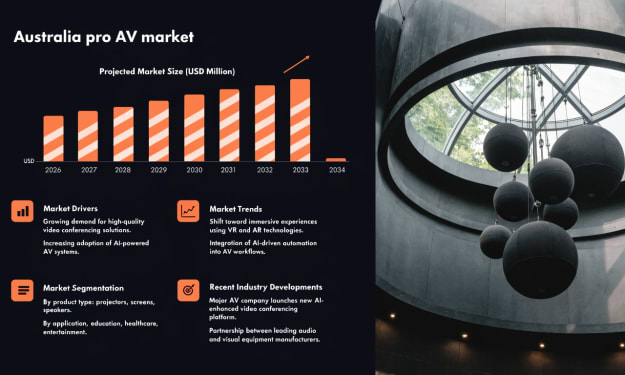
According to IMARC Group, the Australia pro AV market reached a value of USD 93.9 Million in 2025 and is projected to reach USD 133.6 Million by 2034, growing at a compound annual growth rate (CAGR) of 3.88% during 2026–2034. The market is expanding as organizations increasingly adopt advanced audiovisual solutions to support communication, collaboration and digital engagement. Hybrid work environments are encouraging businesses to invest in video conferencing systems, smart displays and integrated collaboration platforms that connect remote and in-office teams. At the same time, industries such as retail, hospitality and tourism are investing in digital signage to improve customer engagement and brand communication. As companies focus on creating interactive and technology-driven environments, professional AV solutions are becoming essential tools for modern workplaces, entertainment venues and commercial spaces across Australia.
By Kevin Cooper7 days ago in Futurism
My First Time Skiing and I Got Lost, Alone, in the French Alps
Looking back, I can trace some of my life’s biggest adventures to a simple action from my sister. She’d introduced me to Tommy (a very long time ago), a colleague of hers, who had overshared his penchant for Italian-looking women, and I ticked that box.
By Chantal Christie Weiss3 days ago in Humans



Comments
There are no comments for this story
Be the first to respond and start the conversation.