
Pentaquarks and Tetraquarks Discovered
The Large Hadron Collider announced the discovery, but how important is it?

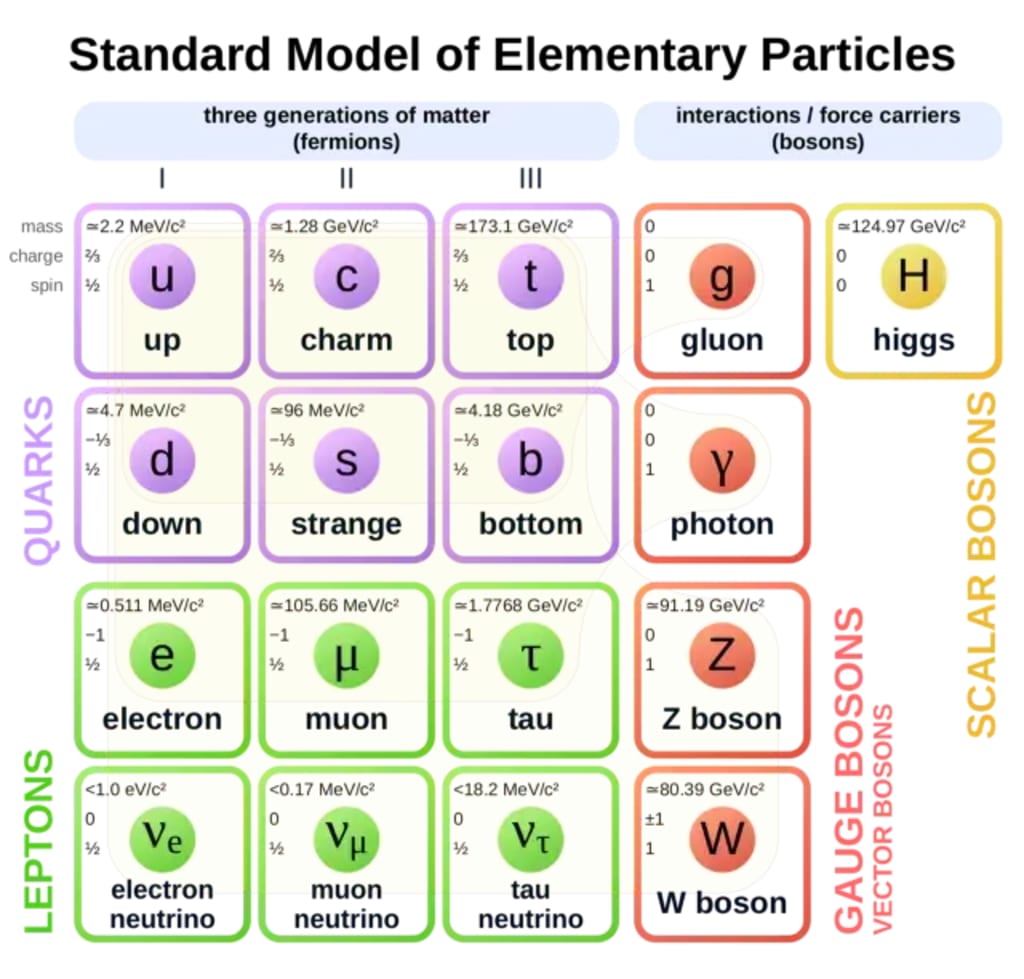
Three new exotic particles
Three new exotic particles have just been discovered — certainly not something that happens every day.
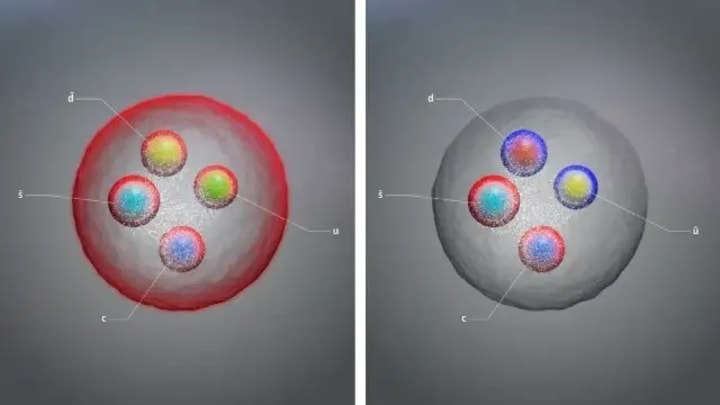
But this week (July 5, 2022), on the 10th anniversary of the announcement of the discovery of the Higgs Boson (the so-called God Particle), the LHCb Collaboration reported the observation of a strange pentaquark, a doubly charged tetraquark and its neutral partner.
Atoms contain smaller particles called neutrons and protons, which are made up of three quarks each. These new discoveries go beyond that.
What does it mean?
These latest finds takes the total number of particles discovered at LHCb to 21. That's Large Hadron Collider 'b' in case you were wondering. The LHCb experiment is one of eight particle physics detector experiments collecting data at the Large Hadron Collider at CERN.
The implications are that there are now enough of these particles to start organising them into a table, much as is done with chemical elements in the periodic table. Such a table would be a step towards creating a theory and set of rules governing exotic mass in this strange sub-atomic world.
“Finding new kinds of tetraquarks and pentaquarks and measuring their properties will help theorists develop a unified model of exotic hadrons, the exact nature of which is largely unknown,” said LHCb spokesperson Chris Parkes. “It will also help to better understand conventional hadrons.” — Phys.org
And these discoveries my help us understand more about the formation of our universe — and that’s something I puzzle about every day. From nothing we came, suddenly, just like that?
I hate singularities.
Scientific excitement
Each particle that was discovered is unique, but researchers are excited about the qualities of the three new finds.
The new pentaquark decays into particles that none of the others produce, while the two tetraquarks have the same mass (one is neutral), suggesting they may be the first known pair of exotic structures.
There’s very little doubt that these particles ‘exist’ — if only in peculiar circumstances and for only very brief moments in time— just a hundred thousandth of a billionth of a billionth of a second.
The finding has a statistical significance of 15 standard deviations, way beyond the 5 standard deviations that are required to claim the observation of a particle in particle physics (‘5-sigma’ — 5σ). That’s extremely high confidence.
Binding speculation
It’s not clear how these exotic particles are structured. In particular, the nature of the binding forces is not understood.
“The strong force is extremely difficult to calculate, and we don’t have firm predictions of how the exotic pentaquarks and tetraquarks are built,” says Prof Chris Parkes of Manchester University. “But we hope that by finding out about them we can develop theories that enable us to understand them better.” — BBC
Various interpretations have been proposed, including tightly bound pentaquark or tetraquark states as well as loosely bound molecular baryon-meson or meson-meson states.
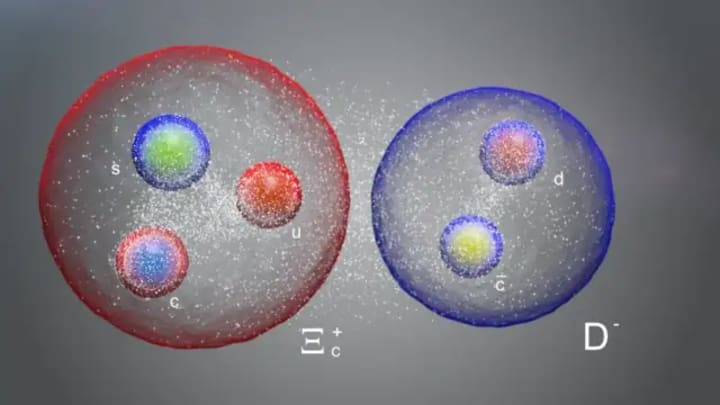
And we can expect more
On the ten-year anniversary of the Higgs discovery this result reminds us of the diversity and importance of results produced by the LHC experiments. For example, already 66 hadrons have been discovered at the LHC, of which 59 by LHCb. We can look forward to many more discoveries in Run 3. — CERN
This hidden world is becoming ever more complicated, and to visualise it the researchers are having to invent more diagrams. I know what a Feynman diagram is (which I can just about grasp), but now we have Dalitz plots.
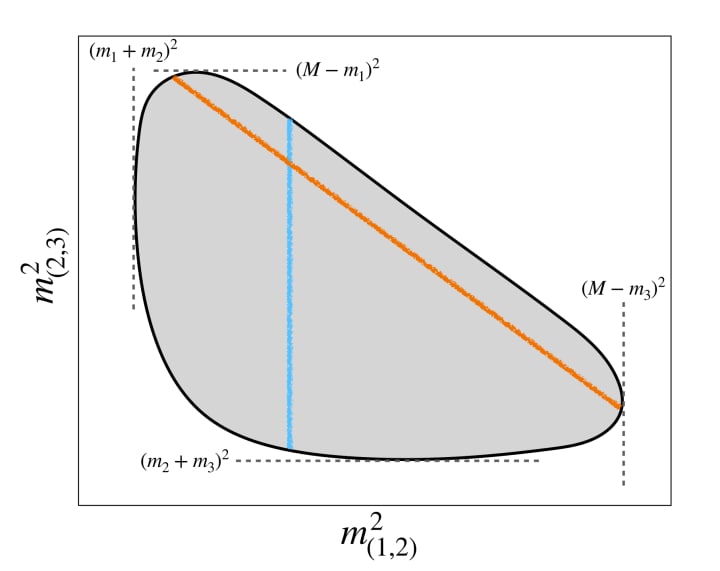
More particles, more diagrams. I love science but it’s all getting too deep for me.
I’ll just go back to puzzling about Day 1 of 7. Or take up animism and pray to my ancestors.
Let there be light.
I need some.
You can find the full details and a lots of data in the CERN announcement.
***
This story was first published in Medium on 10 July 2022
About the Creator
James Marinero
I live on a boat and write as I sail slowly around the world. Follow me for a story diet of Tech, AI, Geopolitics and more as the world is rapidly changing. I also write techno thrillers, with six to my name. More of my stories on Medium
Keep reading
More stories from James Marinero and writers in Futurism and other communities.
Largest Detected Cosmic Explosion 8 Billion Light Years Away
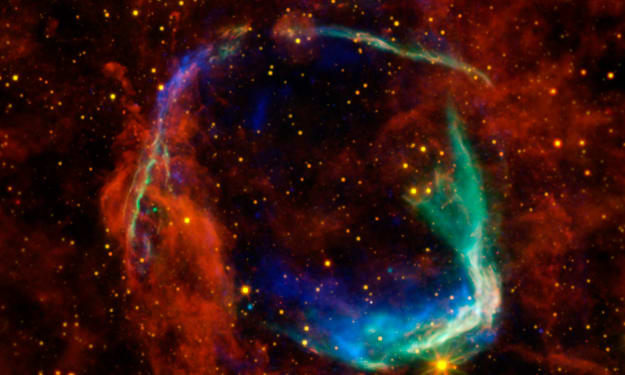
The headline image is of the oldest documented observation of a supernova (related to but not the subject of this story). This image combines data from four space telescopes to create a multi-wavelength view of all that remains of RCW 86, the oldest documented example of a supernova. Chinese astronomers witnessed the event in 185 A.D., documenting a mysterious "guest star" that remained in the sky for eight months. X-ray images from NASA's Chandra X-ray Observatory and the European Space Agency's XMM-Newton Observatory were combined to form the blue and green colors in the image. The X-rays show the interstellar gas that has been heated to millions of degrees by the passage of the shock wave from the supernova. Public Domain, Source: https://www.nasa.gov/multimedia/imagegallery/image_feature_2173.html
By James Marinero3 years ago in Futurism
AI Agents Market to Hit USD 139.12 Billion By 2033
AI Agents Market Overview The global AI Agents Market is experiencing strong expansion as organizations adopt intelligent automation tools capable of performing complex tasks with minimal human intervention. The market is projected to reach USD 139.12 Billion by 2033, rising from USD 3.66 Billion in 2023, which reflects a significant CAGR of 43.88% during 2024 to 2033. In 2023, North America accounted for the leading regional position, capturing more than 37.92% of the total market share and generating approximately USD 1.3 Billion in revenue. The rapid adoption of artificial intelligence, increasing enterprise automation initiatives, and expansion of cloud computing infrastructure are contributing to this strong market growth.
By Roberto Crum5 days ago in Futurism
Apple’s 2026 Reshuffle: 4 Surprising Shifts Redefining the Post-Ive Era
1. The "New" Apple Takes Shape The ghost of Jony Ive has finally left the building. Apple just concluded a "Big Week" that saw the release of seven distinct products—ranging from the breakthrough MacBook Neo to the M4 iPad Air and AirTag 2—but the real story isn't the hardware. It is the names on the leadership page.
By Tech Horizons3 days ago in Futurism
The BAFTA Awards
By now, in a stunning departure from recent years, most of the world is aware of what happened at the BAFTA film awards. Social Media Headlines will tell you the bare bones: that John Davidson, a Tourette's Syndrome advocate, shouted a racial slur at two Actors of Colour, Michael B Jordan and Delroy Lindo.
By Natasja Rose7 days ago in Psyche



Comments
There are no comments for this story
Be the first to respond and start the conversation.