
Pandemic 2.0: Silent Mutation
“A new virus spreads without symptoms. One scientist races against time before it’s too late.”

In the quiet corridors of the Global Infectious Disease Institute, Dr. Mira Hassan sat hunched over a microscope. It had been three years since the COVID-19 pandemic had officially ended, and the world had moved on. Masks had vanished, hand sanitizers collected dust, and vaccine passports had become relics of a paranoid past. But Mira hadn’t moved on. She knew better.
Her research team in Lahore had been tracking a peculiar cluster of respiratory infections in a rural village near the Indus River. What disturbed her wasn’t how sick people were—it was that they weren’t sick at all. No symptoms. No fevers. No coughs. But every blood sample told the same story: viral RNA replication, immune suppression, and silent transmission. Something was evolving. Quietly. Dangerously.
The Silent Invader
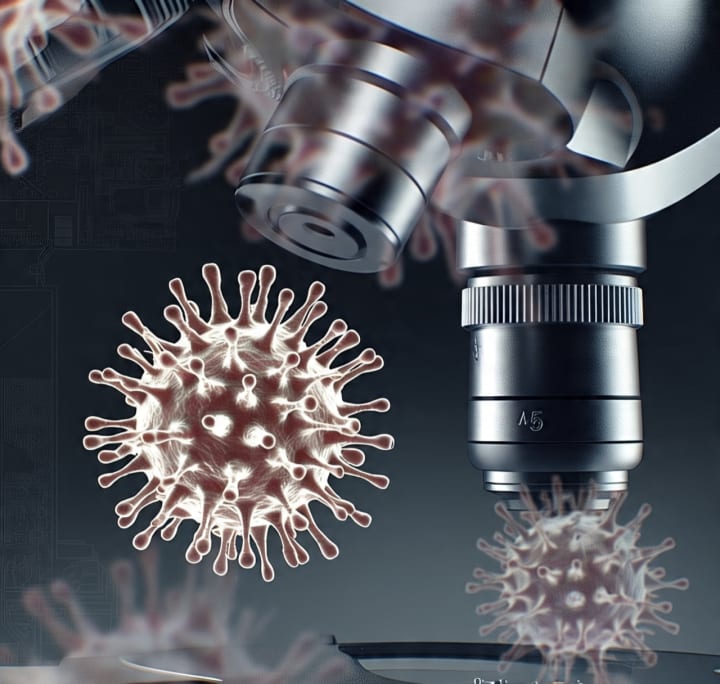
They called it VX-24—a mutated strain of an old bat coronavirus. Unlike its infamous predecessor, VX-24 didn’t make people feel ill. Instead, it hijacked the immune system slowly, allowing the virus to embed in the lungs and neurological tissue while the host felt perfectly fine.
It was the perfect virus.
Mira’s heart raced. The transmission rate was staggering—every infected person could pass it to five others before showing even mild fatigue. And by the time any symptom appeared, the virus had already crossed borders.
The World Shrugs
Mira sent warnings to the World Health Organization. Silence. She emailed CDC partners. “We’re monitoring,” they replied vaguely. The world didn’t want to hear about another pandemic.
“People won’t panic for something they can’t see,” her colleague Dr. Farid said grimly, reviewing the rising cases on his laptop. “They need coffins, not spreadsheets.”
But the numbers were growing. Hospitals in Nepal, Kenya, and rural Brazil were seeing sudden spikes in autoimmune flare-ups, strokes, and heart inflammation in people with no previous illness. VX-24 wasn’t just spreading—it was reprogramming bodies from the inside out.
The Leak
Desperate, Mira went rogue.
She uploaded all her data to an anonymous online forum for medical whistleblowers. A viral Reddit post titled “The Next Pandemic is Already Here — And You Won’t Even Feel It” exploded overnight.
Journalists reached out. A documentary filmmaker offered to fly to Lahore. The Pakistani government warned her to stop spreading panic. But the dam had already broken.
Public health agencies across the world were now forced to acknowledge the existence of VX-24. The headlines screamed:

“The Invisible Virus”
“Pandemic 2.0 May Have Already Started”
“How a New Mutation Escaped Detection”
Race Against Silence
VX-24 wasn’t killing fast—but it was killing smart. It targeted vulnerable organs quietly and bypassed traditional tests. It triggered long-term health breakdowns that mimicked autoimmune diseases or aging.
Mira led a global task force via virtual war rooms. They deployed AI-powered tracking apps, wastewater surveillance, and rapid molecular diagnostic kits. Countries reinstated travel alerts. But the question remained: could they stop it before it embedded itself worldwide?
Hope in Delay
A breakthrough came in the form of a nanomedicine antiviral patch developed by a Kenyan biotech startup. It neutralized the virus before replication. Combined with a tailored mRNA vaccine, it showed promise. Mira’s team worked night and day, her lab becoming a global hub of urgency.
By the time WHO declared VX-24 a “Level 5 Threat,” millions had been exposed—but thanks to early interventions, the damage was limited.
The world dodged a bullet. But Mira knew the bullet was still in the chamber.
A Warning We Must Not Ignore
“The virus was silent, but our silence nearly killed us.”
That was Mira’s closing line at the World Health Summit in Geneva.
VX-24 proved that pandemics won’t always scream before they strike. Some will whisper, hide, evolve — and count on our ignorance.
The next time the world may not be so lucky.
🔍 Why This Story Matters Today
Health surveillance must evolve beyond symptoms and hospitalizations.
Silent mutations are real and likely to rise due to climate shifts, urbanization, and zoonotic exposure.
Public trust in science is fragile—but essential.
Stay alert. Ask questions. And never forget: silence is not safety.
About the Creator
Keep reading
More stories from Salman Ahmad and writers in Futurism and other communities.
The Time Traveler's Dilemma
Dr. Emma Taylor had spent years studying the mysteries of quantum mechanics, and finally, she had cracked the code. She stood at the threshold of a new era, ready to revolutionize the field of time travel. With a deep breath, she stepped into the time machine, set the coordinates, and disappeared into the past.
By Salman Ahmad8 months ago in Fiction
Australia Auto Parts Aftermarket Market: Vehicle Parc Growth, Replacement Demand & E-commerce Channels
According to IMARC Group, the Australia auto parts aftermarket market reached USD 10,456.2 Million in 2025 and is projected to grow to USD 16,137.8 Million by 2034, exhibiting a compound annual growth rate (CAGR) of 4.79% during 2026–2034. The steady expansion of the market reflects the growing vehicle parc, increasing average vehicle age, and rising demand for maintenance and replacement components across Australia. As consumers extend vehicle lifespans and prioritize cost-effective repairs, aftermarket suppliers are benefiting from sustained parts replacement cycles. Simultaneously, the rapid rise of digital retail channels is transforming purchasing behavior, strengthening Australia auto parts aftermarket market share across both traditional and online distribution platforms.
By Shrestha Roy5 days ago in Futurism
Achieving Energy Independence in NSW: Solar and Battery Solutions for Your Home
For many homeowners in New South Wales, rising electricity prices and growing awareness of environmental issues are driving interest in energy independence. More and more families are exploring how solar panels and battery storage can help them take control of their energy use, save money, and reduce their reliance on the grid.
By SolarLover5 days ago in Futurism
📢 Raise Your Voice Thread: 03/05/2026
Our “Raise Your Voice Threads” are hosted most alternating Thursdays at 12PM ET to offer creators more avenues to uncover exceptional stories on Vocal. As we are continuously searching for fresh creators and inspiring stories, this thread provides an opportunity to exchange and discuss the stories that have moved and motivated us on Vocal.
By Raise Your Voice by Vocala day ago in Resources


Comments
There are no comments for this story
Be the first to respond and start the conversation.