
NASA Has Made Its Decision Here Is the Most Realistic Sci-Fi Movie to Represent the Future
The Most Realistic Sci Fi Movies To Represent The Future

NASA Has Made Its Decision Here Is the Most Realistic Sci-Fi Movie to Represent the Future
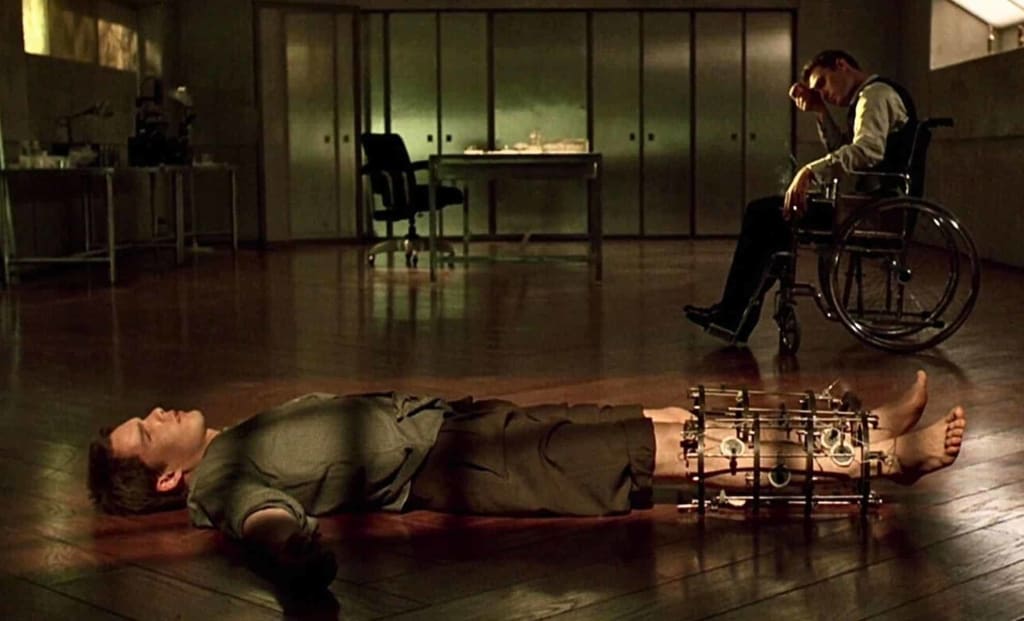
In 2011 NASA compiled a list of the most scientifically accurate science fiction films ever made. Among them Gattaca (1997) stood out as the most realistic portrayal of the future. More than a decade later its vision of a society dominated by genetic engineering remains hauntingly relevant. Science fiction has long been a genre that oscillates between pure fantasy and insightful predictions about the future. While some films rely heavily on visual spectacle and improbable scenarios others manage to balance scientific accuracy with compelling narratives. Recognizing this NASA brought together experts from its Jet Propulsion Laboratory to evaluate science fiction films based on their scientific plausibility. The results placed Gattaca at the top followed by Contact (1997) and Metropolis (1927). Meanwhile blockbusters like Armageddon (1998) and 2012 (2009) were dismissed as scientifically inaccurate. What sets Gattaca apart from other science fiction films is its eerily plausible vision of a world where genetic engineering dictates social hierarchy. Directed by Andrew Niccol the film presents a future in which children are no longer conceived naturally but designed in laboratories. Parents select desirable traits for their offspring ensuring that they are free from hereditary diseases and genetic imperfections. Those who are born naturally without genetic enhancements are considered inferior and are systematically denied opportunities. This dystopian world is not ruled by artificial intelligence or extraterrestrial forces but by the very science that humanity is actively developing today.
The film follows Vincent Freeman played by Ethan Hawke who is born naturally in a world dominated by genetically enhanced individuals. Labeled as an In Valid due to his imperfect DNA he is barred from pursuing his dream of becoming an astronaut. Determined to defy this fate, Vincent assumes the identity of a genetically superior individual Jerome Morrow played by Jude Law. Through sheer determination and deception he navigates a world designed to exclude him challenging the notion that genetics alone should determine one's destiny. The themes explored in Gattaca have only become more relevant over time. The advancements in genetic editing particularly with technologies like CRISPR have brought humanity closer to a world where altering DNA is not just a possibility but an ethical dilemma. Scientists have already edited human embryos to remove genetic diseases raising concerns about the potential for designer babies. The film’s premise no longer feels like distant fiction but an impending reality. Beyond its scientific accuracy Gattaca serves as a cautionary tale about the ethical implications of genetic discrimination. In the film genetic profiling dictates every aspect of life from career prospects to personal relationships. Those with superior genes are given privileged positions while those deemed genetically flawed are relegated to menial roles. The story forces the audience to question whether a society driven by genetic perfection is truly desirable or whether it erodes the very essence of human ambition and resilience.
Another reason why Gattaca remains so impactful is its focus on human determination. Despite living in a society that values DNA over individuality Vincent proves that perseverance and intelligence can overcome genetic limitations. His journey is a powerful reminder that success is not solely determined by biological factors but by personal ambition and effort. NASA's endorsement of Gattaca as the most scientifically realistic sci fi film highlights the significance of its themes. Unlike movies that depict grandiose space battles or catastrophic asteroid collisions Gattaca presents a subtle yet deeply unsettling vision of the future one that feels increasingly possible. It addresses the consequences of scientific advancements and forces us to reflect on the moral boundaries we are willing to cross. As technology progresses the questions raised by Gattaca become more pressing. Will genetic enhancements lead to a utopia of disease free individuals or will they create an even greater social divide. Will natural born individuals face discrimination in a world obsessed with genetic perfection? The film does not provide clear answers but serves as a warning about the potential consequences of unchecked scientific progress. In a world where genetic engineering is no longer just a theory but an emerging reality Gattaca stands as a timeless masterpiece. It challenges us to consider the ethical ramifications of our scientific pursuits and reminds us that human potential cannot be reduced to a string of genetic codes. More than two decades after its release Gattaca remains a powerful and thought provoking vision of the future one that may be closer than we think.
About the Creator
Adnan Rasheed
Author & Creator | Writing News , Science Fiction, and Worldwide Update| Digital Product Designer | Sharing life-changing strategies for success.
Keep reading
More stories from Adnan Rasheed and writers in Futurism and other communities.
Amazon Robots Take Over UK Warehouses End of Human Jobs Begins?
In a transformative move, Amazon has officially deployed its next generation Amazon robots across key UK fulfillment centers, signaling a dramatic shift in warehouse operations. This rollout is more than just a technological upgrade it's the foundation for a future where human labor is no longer central to logistics. These robots, powered by cutting edge artificial intelligence, are designed to perform tasks that were once the sole domain of warehouse workers.
By Adnan Rasheed8 months ago in Futurism
Quantum Networking Market to Reach US$ 19.406 Million By 2033
Quantum Networking Market Overview The Global Quantum Networking Market is projected to reach approximately USD 19,406 Million by 2033, increasing from USD 647.4 Million in 2023, reflecting a strong CAGR of 40.50% during the forecast period from 2024 to 2033.
By Roberto Crum5 days ago in Futurism
The Forsyth House Fire
Since 1851, Forsyth House has stood on the corner of Union Street and Gordon Street in the heart of Glasgow. Its iconic, or was... because on Sunday 8th of March, 2026, a fire broke out in a small, seemingly un-named shop in the building and tore all that history down. As I write, the rubble is still unsettled and the street is still blocked off. Central Station is quiet on the upper level, and around 30 small businesses have quite literally gone up in smoke.
By S. A. Crawford3 days ago in The Swamp


Comments (1)
What a realistic and great movie! Great work!