
NASA Detects Potentially Life-Supporting Atmosphere on Exoplanet LHS 1140 b
A New Frontier: Uncovering the Secrets of a Distant World with the James Webb Space Telescope
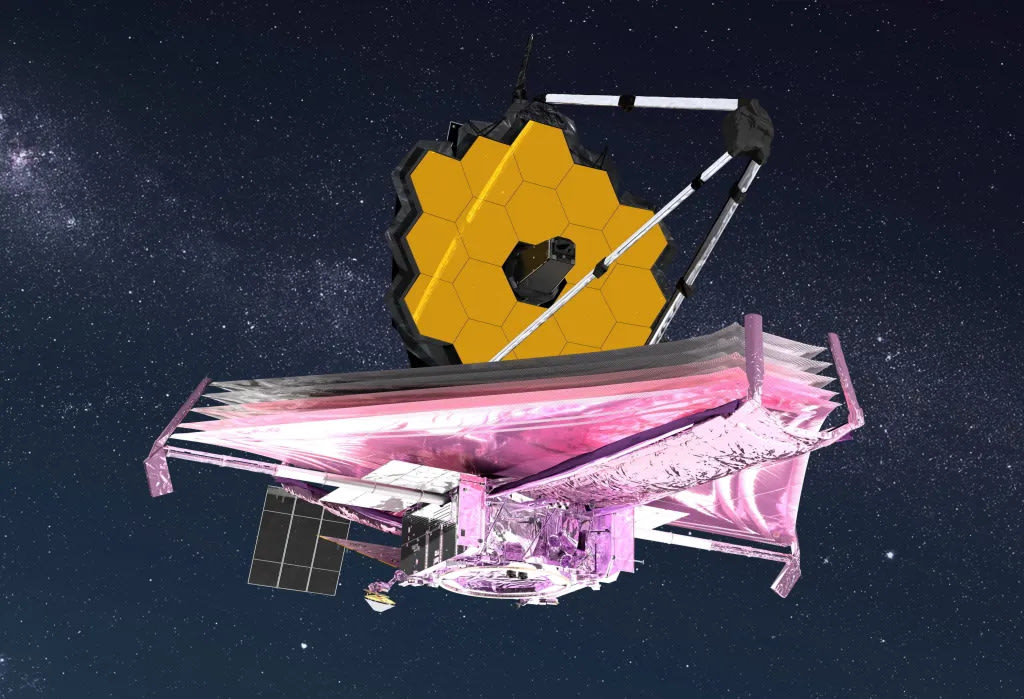
James Webb Space Telescope Unveils Promising Signs
NASA’s James Webb Space Telescope (JWST) has made a ground-breaking discovery by detecting what could be distinct signs of life on an exoplanet located nearly 50 million light-years away. The exoplanet, named LHS 1140 b, resides in the constellation Cetus and has been identified as "potentially habitable" by researchers from the Universities of Michigan and Montreal.
Signs of Oceans and Atmosphere
Analyzing data from late 2023, the researchers flagged potential oceans and atmospheric sources on LHS 1140 b. Lead author Charles Cadieux emphasized the planet's significance, stating, “Of all currently known temperate exoplanets, LHS 1140 b could well be our best bet to one day indirectly confirm liquid water on the surface of an alien world beyond our solar system.” This statement underscores the immense potential of LHS 1140 b in the ongoing search for life beyond Earth.
The discovery was made possible by the advanced capabilities of the JWST, which is equipped with high-powered optical instruments designed to observe distant celestial objects with unprecedented clarity. The telescope’s ability to detect subtle variations in light allows scientists to infer the presence of various elements and compounds, making it an invaluable tool in the hunt for habitable exoplanets.
Physical Characteristics of LHS 1140 b
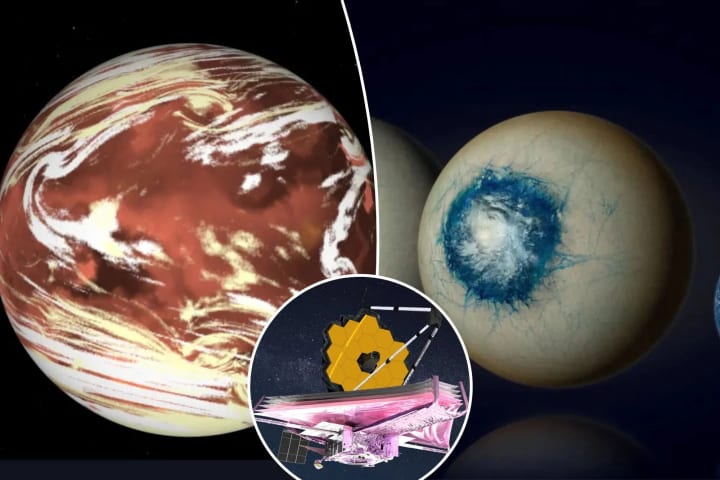
NASA describes LHS 1140 b as a rocky world, approximately 1.73 times the radius of Earth and 5.6 times its mass. Its appearance is said to resemble a blend of Mars and Jupiter, with a reddish hue and swirling cloud patterns. This unique combination of characteristics makes LHS 1140 b a fascinating subject for further study. The planet’s large mass suggests a substantial gravitational pull, which could play a crucial role in retaining an atmosphere capable of supporting life.
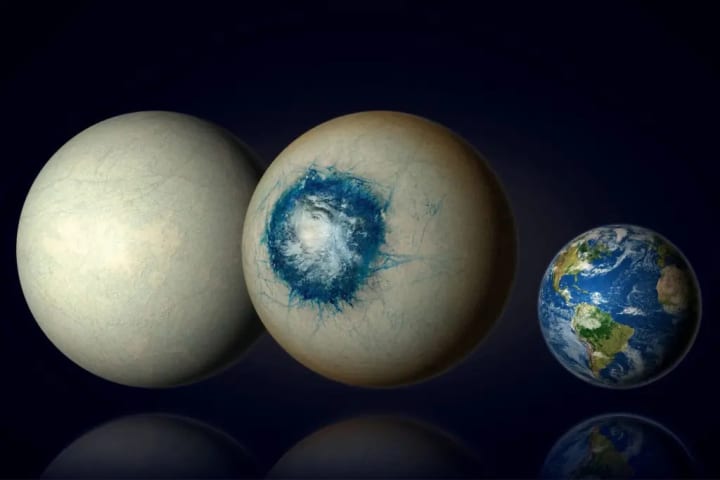
Fellow researcher Ryan MacDonald noted that this discovery marks the first hint of an atmosphere on a rocky or icy exoplanet beyond our solar system. If water exists on LHS 1140 b, it is likely beneath a dense and frozen surface, akin to the ice planet Hoth from “Star Wars.” The prospect of subsurface oceans is particularly intriguing, as similar environments on Earth, such as the ice-covered lakes of Antarctica, are known to harbor microbial life.
Atmospheric and Habitability Potential
LHS 1140 b lies within the “Goldilocks Zone” of its star, which is about one-fifth the size of our sun. This ideal distance allows for temperatures that can support liquid water, potentially comprising 20% of the planet’s mass. The concept of the Goldilocks Zone is crucial in the search for habitable planets, as it denotes the range of distances from a star where conditions are just right for liquid water to exist on a planet's surface.
The exoplanet’s atmosphere might share traits similar to Earth’s, including the presence of nitrogen. “Our initial reconnaissance of LHS 1140 b with JWST has revealed this to be perhaps the best habitable zone exoplanet currently known for atmospheric characterization,” MacDonald added. Nitrogen is a key component of Earth’s atmosphere and plays a vital role in maintaining a stable climate and supporting life. The potential presence of nitrogen on LHS 1140 b hints at the possibility of similar atmospheric processes occurring there.
Technological and Scientific Milestones
The JWST’s detection of a potentially life-supporting atmosphere on LHS 1140 b represents a major milestone in the field of exoplanetary science. This achievement is a testament to the advances in technology and observational techniques that have been made in recent years. The ability to analyze the atmospheric composition of distant planets opens up new avenues for understanding the diversity of planetary environments in our galaxy.
The discovery also highlights the importance of international collaboration in the pursuit of scientific knowledge. Researchers from the Universities of Michigan and Montreal worked together to interpret the data from the JWST, combining their expertise to draw meaningful conclusions about LHS 1140 b’s potential habitability.
Future Observations Needed
While the findings are promising, further JWST observations are required to confirm the nitrogen-rich atmosphere and search for other gases. The discovery of LHS 1140 b represents a major milestone in the quest for extraterrestrial life. “We might just have found evidence of air on this world,” MacDonald concluded, highlighting the exciting potential of this newfound exoplanet.
Future missions and telescopes, such as the planned Habitable Exoplanet Observatory (HabEx) and the Large UV/Optical/IR Surveyor (LUVOIR), will build on the JWST’s findings, providing even more detailed observations of exoplanets like LHS 1140 b. These missions aim to directly image Earth-like exoplanets and analyze their atmospheres for signs of habitability and life.
Implications for the Search for Life
The detection of a potentially habitable atmosphere on LHS 1140 b has profound implications for the search for life beyond our solar system. It suggests that there may be many more such planets in our galaxy, waiting to be discovered and studied. Each new finding brings us closer to answering one of humanity’s oldest questions: Are we alone in the universe?
The discovery of LHS 1140 b also underscores the importance of continued investment in space exploration and research. As our technological capabilities expand, so too does our ability to explore and understand the cosmos. The potential for finding life on other planets fuels our curiosity and drives scientific innovation, inspiring future generations to look to the stars in search of answers.
Conclusion
The James Webb Space Telescope’s detection of a potentially life-supporting atmosphere on LHS 1140 b marks a significant step forward in the search for habitable exoplanets. With its promising signs of water and a nitrogen-rich atmosphere, LHS 1140 b stands out as one of the most intriguing candidates for further study. As we continue to explore the universe, discoveries like this remind us of the endless possibilities that lie beyond our own planet and the importance of our quest to understand the cosmos.
About the Creator
Keep reading
More stories from Ravi Singh and writers in Futurism and other communities.
Exploring the Wonders of a Triple-Star System with NASA
Hubble Space Telescope Unveils New Insights NASA's Hubble Space Telescope continues to captivate space enthusiasts with its ground breaking discoveries. Since its launch in 1990, Hubble has provided us with a window into the universe, capturing stunning images and data that have significantly reshaped our understanding of the cosmos. From the breathtaking pillars of gas and dust in the Eagle Nebula to distant galaxies billions of light-years away, Hubble's contributions to astronomy are unparalleled. Recently, Hubble has set its sights on a new celestial marvel—a triple-star system that promises to deepen our knowledge of stellar formation and protoplanetary disks.
By Ravi Singh2 years ago in Futurism
Building Smarter Businesses with Enterprise Software Solutions
In the digital age, businesses are constantly looking for smarter ways to operate, compete, and grow. With increasing competition and rapidly evolving technologies, traditional business tools are no longer enough to manage complex operations. This is where enterprise software solutions play a vital role. By integrating processes, improving data management, and automating workflows, enterprise software is helping organizations become more efficient and future-ready.
By Celine Dion4 days ago in Futurism
Honey Market Worth USD 15.4 Billion by 2033 at 5.2% CAGR
Overview The Global Honey Market is on a robust growth path, projected to expand from USD 9.3 billion in 2023 to approximately USD 15.4 billion by 2033. This represents a steady compound annual growth rate (CAGR) of 5.2% over the forecast period.
By Hayden Kulas3 days ago in Futurism



Comments
There are no comments for this story
Be the first to respond and start the conversation.