
Musk says Tesla's Optimus humanoid robots affected by China's export curbs on rare earths
Tesla’s Ambitious Robot Project Faces Setbacks as China’s Rare Earth Export Curbs Disrupt Supply Chains

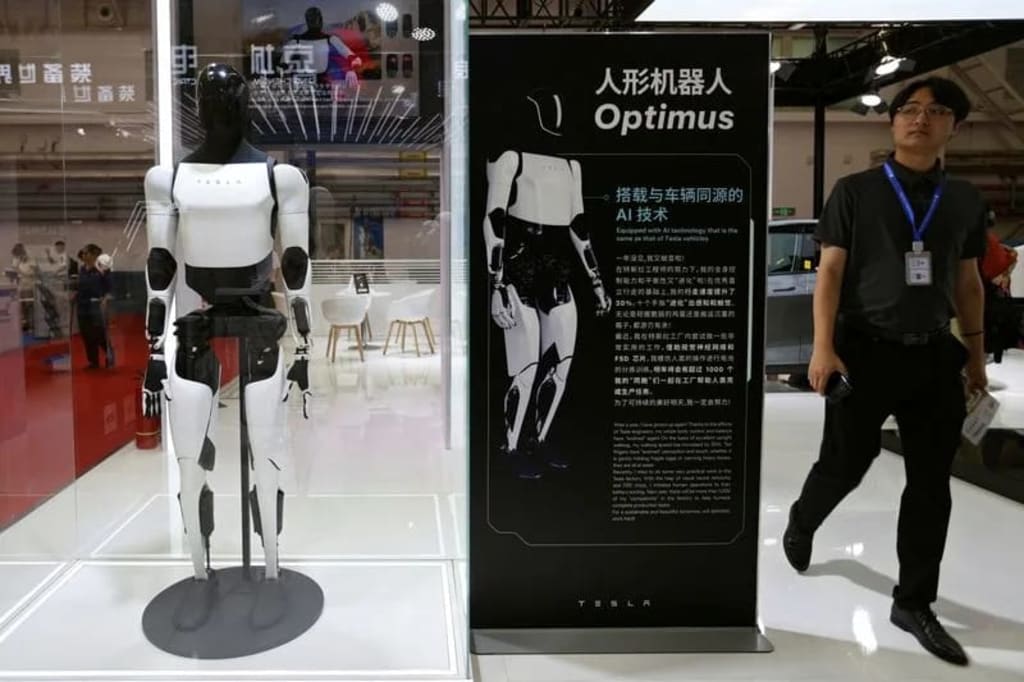
Musk says Tesla's Optimus humanoid robots affected by China's export curbs on rare earths
Tesla’s Ambitious Robot Project Faces Setbacks as China’s Rare Earth Export Curbs Disrupt Supply Chains
Tesla’s Optimus humanoid robots which have been a part of Elon Musk’s ambitious vision for AI and robotics are facing unexpected challenges due to China’s recent export restrictions on rare earth elements. These elements are vital in the production of many high tech products including electric vehicles (EVs) and robotics. China’s new export policies which affect the supply chain of rare earth materials particularly magnets have put a strain on Tesla’s plans to scale up production of its humanoid robots in the coming years.
China’s Export Restrictions and Their Impact on Tesla’s Supply Chain
In April 2025 China a leading global supplier of rare earth elements imposed tighter export controls on these critical materials particularly focusing on rare earth magnets which are integral to Tesla’s robots. These materials are crucial for producing electric motors and other key components in both Tesla’s vehicles and Optimus robots. With China being a dominant player in the rare earth market the export curbs have sent shockwaves across various industries, including robotics and EV manufacturing.
China’s new policy requires exporters to obtain a special license from the Ministry of Commerce, a process that can take weeks or even months. This extended waiting period has already begun to delay Tesla’s ability to procure the necessary rare earth components for the production of its robots. The curbs are part of a broader geopolitical strategy where China is responding to trade tensions, particularly with the United States. As Tesla sources a significant portion of its rare earth materials from China the export restrictions are creating a bottleneck in the company’s production pipeline.
Tesla’s Response to the Export Curbs
Elon Musk the CEO of Tesla has publicly addressed the issue acknowledging that the curbs on rare earth exports have had a significant impact on the production timeline of Tesla’s Optimus robots. Musk reassured that Tesla is not using the rare earth magnets in any military applications emphasizing that their primary use is in the robotics and electric vehicle sectors. Despite this Tesla is facing delays due to the complex and opaque nature of China’s licensing process which has created uncertainty around how long it will take to receive approval for the required exports. To address these supply chain disruptions Tesla is looking for alternative sources of rare earth materials. Musk and his team have begun discussions with suppliers outside of China including countries in Africa Australia and the United States to secure access to rare earth elements. However establishing new supply chains takes time and effort and the global nature of the rare earth market means that Tesla will still be reliant on China for a significant portion of its raw materials.
Innovating Beyond Rare Earths
As Tesla works through these logistical challenges the company is also pushing forward with research and development to reduce its reliance on rare earth elements. Tesla’s engineers are exploring ways to create more sustainable manufacturing processes including the use of alternative materials that are less dependent on rare earths. This strategy could help the company mitigate the risks associated with sourcing these critical materials from geopolitically unstable regions.
The company is also exploring new manufacturing techniques and more efficient methods of recycling rare earths from older products. These efforts are part of Tesla’s broader commitment to sustainability which aligns with Musk’s vision of a future where technology and environmental responsibility go hand in hand. By reducing the need for rare earths Tesla hopes to overcome future supply chain disruptions and maintain a steady production rate for its Optimus robots.
Implications for the Robotics and EV Industries
The export restrictions imposed by China have far-reaching implications for the robotics and electric vehicle industries. As global demand for electric vehicles and robotics grows the need for rare earth materials will continue to increase. Companies like Tesla which rely heavily on these materials must now navigate the complexities of international trade policies and geopolitical tensions that could affect their supply chains. This situation also highlights the strategic importance of rare earth elements in the 21st century. These materials are critical not only for electric vehicles and robotics but also for renewable energy technologies such as wind turbines and solar panels. As the global shift towards clean energy accelerates securing access to rare earths will become increasingly vital.
Looking Forward: The Future of Tesla’s Optimus Robots
Despite the current setbacks Tesla remains committed to its vision of developing and deploying humanoid robots on a large scale. The company’s goal is to have mass production of Optimus robots underway by 2025 but this timeline may need to be adjusted due to the current supply chain disruptions. Tesla’s ability to secure alternative sources of rare earths and develop new technologies will be crucial in determining the success of the Optimus project. The ongoing developments in China’s rare earth policies will likely influence the broader robotics and electric vehicle industries as well. As companies seek to secure access to these critical materials they will have to reassess their strategies and diversify their supply chains to reduce dependency on a single source. China’s export curbs on rare earth elements have presented a significant challenge for Tesla’s Optimus humanoid robots potentially delaying production and limiting supply. However Tesla’s proactive approach to securing alternative sources and reducing reliance on rare earths through innovation offers hope for overcoming these challenges. As the company navigates this complex situation the outcome of its efforts will be closely watched as it could shape the future of both the robotics industry and the global supply chain for critical materials.
About the Creator
Adnan Rasheed
Author & Creator | Writing News , Science Fiction, and Worldwide Update| Digital Product Designer | Sharing life-changing strategies for success.
Keep reading
More stories from Adnan Rasheed and writers in Futurism and other communities.
NASA's Oldest Active Astronaut Returns to Earth on 70th Birthday
NASA's Oldest Active Astronaut Returns to Earth on 70th Birthday In an inspiring milestone for both human achievement and the spirit of exploration, NASA’s oldest active astronaut, Don Pettit, returned safely to Earth on April 20, 2025 — the very day he turned 70. The historic event marked the end of a seven-month mission aboard the International Space Station (ISS), and solidified Pettit’s legacy as one of NASA’s most experienced and dedicated spacefarers.
By Adnan Rasheed9 months ago in Futurism
About Binding Prometheus
I want to start actively advocating on behalf of my own work, and the most valuable part of my canon is, without a doubt, Binding Prometheus, the play I have been working on since 2019 and only finished in 2023 as part of my MA. The play itself is an amalgamation of a million different inspirations. On one end, it evokes the Ancient Greek myth-play, deriving its own title from the earliest extant work of Western drama we have, Aeschylus’s Prometheus Bound. On the other end, it borrows significantly from the sci-fi bulwarks from over the years, namely Mary Shelley’s Frankenstein and Karel Capek’s Rossum’s Universal Robots. The play could be an episode of Black Mirror, I fear. I don’t know. I’ve only ever seen one episode of Black Mirror.
By Steven Christopher McKnight18 days ago in Futurism
Global Printer Market Size and Forecast, 2025–2033
Introduction: Printing in the Age of Digital Everything In an era dominated by cloud computing, paperless workflows, and digital archives, one might assume that printers are rapidly becoming obsolete. Yet, the global printer market tells a very different story. Despite the accelerating pace of digital transformation, printers continue to play a vital role in business operations, education, healthcare, logistics, and industrial manufacturing. From high-speed office multifunction printers to specialized industrial label printers and additive manufacturing equipment, the modern printer has evolved far beyond its traditional role.
By Aaina Oberoi5 days ago in Futurism



Comments
There are no comments for this story
Be the first to respond and start the conversation.