
Microsoft confirms that the latest Windows PC update cannot be canceled
Microsoft has confirmed that its latest Windows update rollout will not offer users the ability

In a move that’s stirred concern among PC users worldwide, Microsoft has confirmed that its latest Windows update rollout will not offer users the ability to opt out or cancel the installation. The announcement, made through a recent support document and clarified in community forums, reveals a shift in Microsoft’s update strategy—one that prioritizes security and performance at the cost of user flexibility.
What's going on with a forced update? The update in question is part of Microsoft's efforts to streamline Windows 11 and ensure consistency across supported devices. According to the company, systems that meet hardware requirements and are running outdated or unsupported versions of Windows will automatically receive the new update. Users will only be able to temporarily postpone it before the system installs it automatically; they will not be able to defer, delay, or cancel it. Although the Windows ecosystem is not new to the practice of forcing updates, Microsoft's most recent stance suggests a firmer stance. New features, system enhancements, and crucial security updates are included in this update to enhance the user experience and safeguard against new threats. However, the lack of a user override has sparked a debate about control, transparency, and trust.
Microsoft's Argumentation Microsoft argues that this decision is required to preserve the Windows ecosystem's health. It is considered essential to ensure that all users are running the most recent, secure version of the operating system due to the rapid evolution of malware and the growing number of cyber threats. A spokesperson for Microsoft stated, “We understand that users value control, but we also have a responsibility to ensure a consistent and secure experience for all. Automatic updates help protect devices from vulnerabilities that may be exploited in unsupported versions.”
From Microsoft's point of view, updates are now more than just add-ons to features; they are essential infrastructure components. Unpatched vulnerabilities and fragmented systems can result from users being able to avoid updates indefinitely, which could have an impact not only on individual users but also on the entire networked community. User Reactions and Concerns
Users have expressed dissatisfaction with the lack of options, despite the rationale. Many people's workflows are disrupted by forced updates, especially when they cause unexpected restarts or compatibility issues with previously installed applications. Some users say that they were in the middle of important work when their system updated without any warning. Privacy advocates have also raised flags. Automatic updates can potentially install telemetry features or other changes that users have not explicitly agreed to, increasing concerns about data collection and software transparency.
Additionally, users in enterprise environments worry about how forced updates might impact custom setups or critical software integrations. Even though business editions of Windows typically offer update management policies that are more adaptable through the use of Windows Server Update Services (WSUS) or Group Policy, some smaller businesses and remote employees may still be affected. What Users Can Do
Microsoft offers a brief postponement window and options to schedule restart times, despite the fact that the update cannot be canceled. Users are encouraged to regularly back up their data and keep their systems updated to minimize the risk of compatibility issues.
For advanced users, tools such as Windows Update Blocker or third-party patch management systems can temporarily delay updates, but these workarounds are not officially supported and may become ineffective over time.
In the end, the safest route remains planning for updates rather than resisting them. Keeping software drivers up to date, enabling notifications, and setting active hours can all help reduce the likelihood of disruption. A Trend Toward Less Control?
This most recent policy update is in line with a larger trend in the tech industry, which is that businesses are placing an increasing emphasis on centralized control for consistency, security, and support efficiency. While this approach has merits, it often comes at the cost of user autonomy.
For the time being, Microsoft has a clear position: keeping users safe sometimes requires difficult choices, even if they are unpopular. The update is coming, and regardless of whether users like it or not, it will remain.
About the Creator
srinivas
Hi, I’m Srinivas, a content writer who specializes in clear, engaging, and SEO-friendly writing that connects brands with their audience.
Let me know if you want it more casual, niche-specific, or customized for a particular platform.
About Binding Prometheus
I want to start actively advocating on behalf of my own work, and the most valuable part of my canon is, without a doubt, Binding Prometheus, the play I have been working on since 2019 and only finished in 2023 as part of my MA. The play itself is an amalgamation of a million different inspirations. On one end, it evokes the Ancient Greek myth-play, deriving its own title from the earliest extant work of Western drama we have, Aeschylus’s Prometheus Bound. On the other end, it borrows significantly from the sci-fi bulwarks from over the years, namely Mary Shelley’s Frankenstein and Karel Capek’s Rossum’s Universal Robots. The play could be an episode of Black Mirror, I fear. I don’t know. I’ve only ever seen one episode of Black Mirror.
By Steven Christopher McKnight24 days ago in Futurism
ATM Managed Services Market Size and Forecast 2025–2033
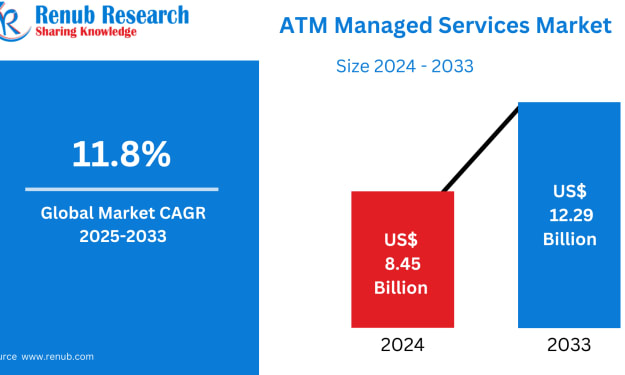
Global ATM Managed Services Market Outlook The global ATM Managed Services Market is entering a phase of steady and technology-driven expansion as banks and financial institutions worldwide shift toward outsourcing non-core operations. According to Renub Research, the market is projected to grow from US$ 8.45 billion in 2024 to US$ 12.29 billion by 2033, registering a compound annual growth rate (CAGR) of 4.25% from 2025 to 2033.
By Aaina Oberoi3 days ago in Futurism
Affection and Healing for Yourself
During the night of the last quarter moon, I gathered my ritual supplies. I carefully handled the chunk of black tourmaline that would protect me from your overall negative and narcissistic energy. I carefully walked the house with my stick of selenite in hand, asking the universe to cleanse our working space.
By Alisha Wilkins ✒️🦋🖋️5 days ago in Fiction



Comments
There are no comments for this story
Be the first to respond and start the conversation.