
Materials Used in Tension Insulators and Their Impact on Performance
Materials tension insulators and their impact


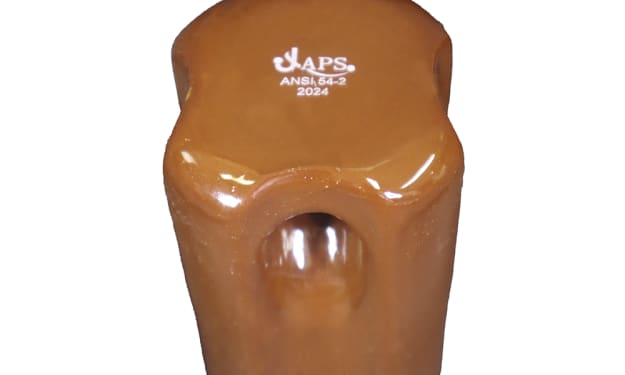
Tension insulators play a fundamental role in the stability and safety of power lines, as they withstand significant mechanical loads while ensuring effective insulation. The choice of materials in their manufacturing directly influences their performance, durability, and resistance to environmental factors. Below, we analyze the main materials used in tension insulators and their impact on operational performance.
1. High-Performance Polymers
High-performance polymeric insulators have gained popularity due to their excellent insulation capability and reduced weight. Made from silicone and epoxy resins, these materials offer high resistance to contamination and adverse weather conditions.
Impact on Performance:
- Greater resistance to moisture and corrosion.
- Reduced maintenance costs due to self-cleaning properties.
- Increased flexibility and resistance to mechanical impacts.
2. Tempered Glass
Tempered glass insulators are known for their high mechanical strength and ability to maintain stable performance over time. This material is highly resistant to temperature changes and provides excellent electrical insulation.
Impact on Performance:
- Less degradation over time.
- Easy failure detection due to its fracturable design.
- High resistance to mechanical pressure and electrical stress.
3. Ceramic and Porcelain
High-voltage porcelain insulators have traditionally been used in power grids due to their thermal and mechanical stability. They are composed of clay, feldspar, and quartz, giving them a dense and resistant structure.
Impact on Performance:
- Excellent behavior in high-temperature conditions.
- High dielectric strength to prevent electrical discharges.
- Greater weight and fragility compared to modern materials.
4. Fiberglass Composites
Reinforced fiberglass insulators combine mechanical strength with excellent dielectric performance. They are widely used in transmission systems due to their ability to withstand high tensions without compromising safety.
Impact on Performance:
- High strength-to-weight ratio.
- Reduced risk of fracture compared to porcelain.
- Longer lifespan and greater resistance to harsh environments.
Conclusion
The selection of materials in "high-quality tension insulators insulators plays a crucial role in determining the performance, safety, and efficiency of modern electrical networks. Traditional materials such as porcelain and glass have been widely used for decades due to their excellent stability, durability, and resistance to environmental factors. These materials provide reliable insulation properties, making them a standard choice for various electrical applications. However, despite their proven effectiveness, they come with certain limitations, such as higher weight, fragility, and maintenance requirements.
In contrast, advanced materials such as polymers and fiberglass have gained increasing popularity in recent years due to their superior mechanical strength, lightweight nature, and exceptional resistance to harsh environmental conditions. These modern insulating materials have revolutionized the electrical industry by offering numerous advantages over traditional ceramic and glass insulators. Among their key benefits are enhanced durability, greater flexibility, and a significantly reduced risk of breakage, making them highly reliable in both standard and extreme operating conditions.
One of the most notable advantages of polymer-based insulators is their remarkable hydrophobic properties, which effectively prevent moisture buildup on their surface. This characteristic is crucial in high-humidity and heavily polluted environments, as it helps mitigate the formation of conductive water films, thereby reducing the likelihood of electrical discharges and system failures. Additionally, these materials demonstrate excellent resistance to UV radiation, chemical exposure, and mechanical stress, further extending their operational lifespan and reliability.
The adoption of innovative materials in the manufacturing of tension insulators has a profound impact on the efficiency and resilience of modern electrical infrastructure. By reducing the need for frequent inspections, repairs, and maintenance, these advanced materials contribute to significantly lower long-term operating costs while enhancing overall system performance. Furthermore, their lightweight construction simplifies transportation and installation, reducing labor requirements and associated expenses.
As global demand for more reliable, sustainable, and cost-effective power distribution solutions continues to grow, the development and widespread implementation of high-quality insulators made from cutting-edge materials will play an increasingly vital role in the evolution of the energy sector. By integrating these advanced technologies into power networks, utilities can ensure greater operational stability, improved efficiency, and enhanced protection against environmental and mechanical stressors. This ongoing transition toward modern insulation solutions is a testament to the industry's commitment to innovation, sustainability, and long-term reliability in electrical power systems worldwide.
About the Creator
JAPS EQUIPOS ELECTRICOS
En Japs, ofrecemos soluciones para sistemas eléctricos de alta, media y baja tensión, con productos certificados que garantizan eficiencia, seguridad y durabilidad, ideales para proyectos eléctricos que demandan innovación y robustez.
Keep reading
More stories from JAPS EQUIPOS ELECTRICOS and writers in Futurism and other communities.
Differences Between ANSI 54-1, 54-2, and 54-4 Strain Insulator Models
Strain insulators are essential components in power transmission and distribution systems, providing mechanical support and electrical insulation in high-tension lines. Their primary role is to bear mechanical loads while preventing electrical leakage, ensuring the safe and efficient transmission of electricity. Among the various strain insulators available, the ANSI 54-1, 54-2, and 54-4 models are widely used due to their reliability and suitability for different applications. Each model has specific characteristics that make it ideal for particular voltage levels and mechanical stress conditions. Below, we analyze the key differences between these models and their respective applications.
By JAPS EQUIPOS ELECTRICOS11 months ago in Futurism
About Binding Prometheus
I want to start actively advocating on behalf of my own work, and the most valuable part of my canon is, without a doubt, Binding Prometheus, the play I have been working on since 2019 and only finished in 2023 as part of my MA. The play itself is an amalgamation of a million different inspirations. On one end, it evokes the Ancient Greek myth-play, deriving its own title from the earliest extant work of Western drama we have, Aeschylus’s Prometheus Bound. On the other end, it borrows significantly from the sci-fi bulwarks from over the years, namely Mary Shelley’s Frankenstein and Karel Capek’s Rossum’s Universal Robots. The play could be an episode of Black Mirror, I fear. I don’t know. I’ve only ever seen one episode of Black Mirror.
By Steven Christopher McKnight21 days ago in Futurism
Hydrogen Generation Market: Blue, Green & Gray Hydrogen Pathways & Global Supply Dynamics
According to IMARC Group's latest research publication, global hydrogen generation market size reached USD 181.4 Billion in 2025. Looking forward, IMARC Group expects the market to reach USD 279.8 Billion by 2034, exhibiting a growth rate (CAGR) of 4.93% during 2026-2034.
By sujeet. imarcgroup3 days ago in Futurism


Comments
There are no comments for this story
Be the first to respond and start the conversation.