
Lilith: The First Woman of Adam
The first woman created by God, Lilith represents a powerful symbol of female empowerment and resistance against patriarchal authority

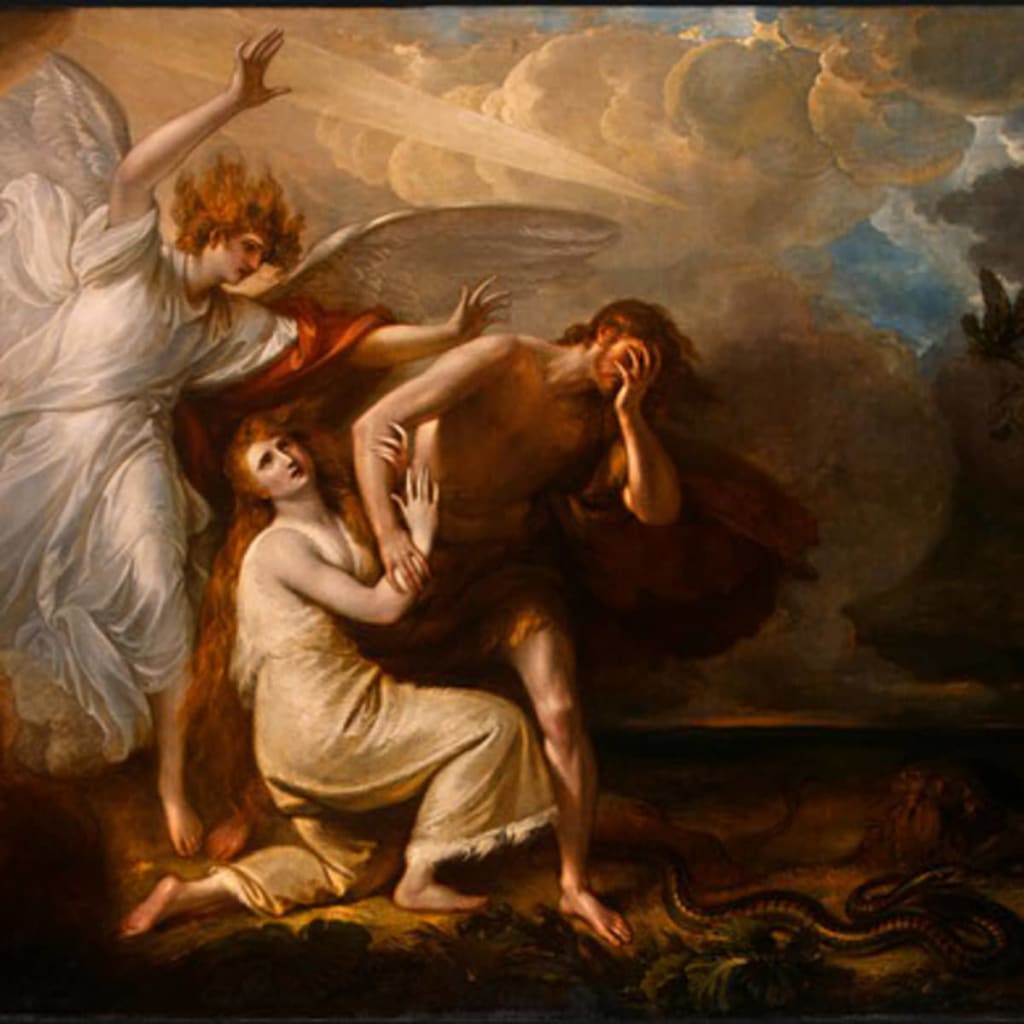
Lilith is a figure in Jewish mythology who is believed to be the first woman created by God, before Eve. Unlike Eve, Lilith was not created from Adam's rib, but rather from the same soil as Adam. She is often portrayed as a strong and independent woman who refused to submit to Adam and was subsequently cast out of the Garden of Eden.
The Origins of Lilith
Lilith's origins can be traced back to ancient Mesopotamia, where she was known as a demon or female vampire. In Jewish tradition, she is first mentioned in the Babylonian Talmud, where she is described as a creature who preys on newborn babies and pregnant women. Lilith's name is derived from the Hebrew word "lilit," which means "night."
The Legend of Lilith
According to legend, Lilith was created at the same time as Adam and was his first wife. However, Lilith refused to submit to Adam and demanded that they be equal partners in their relationship. When Adam refused, Lilith left him and was subsequently cast out of the Garden of Eden.
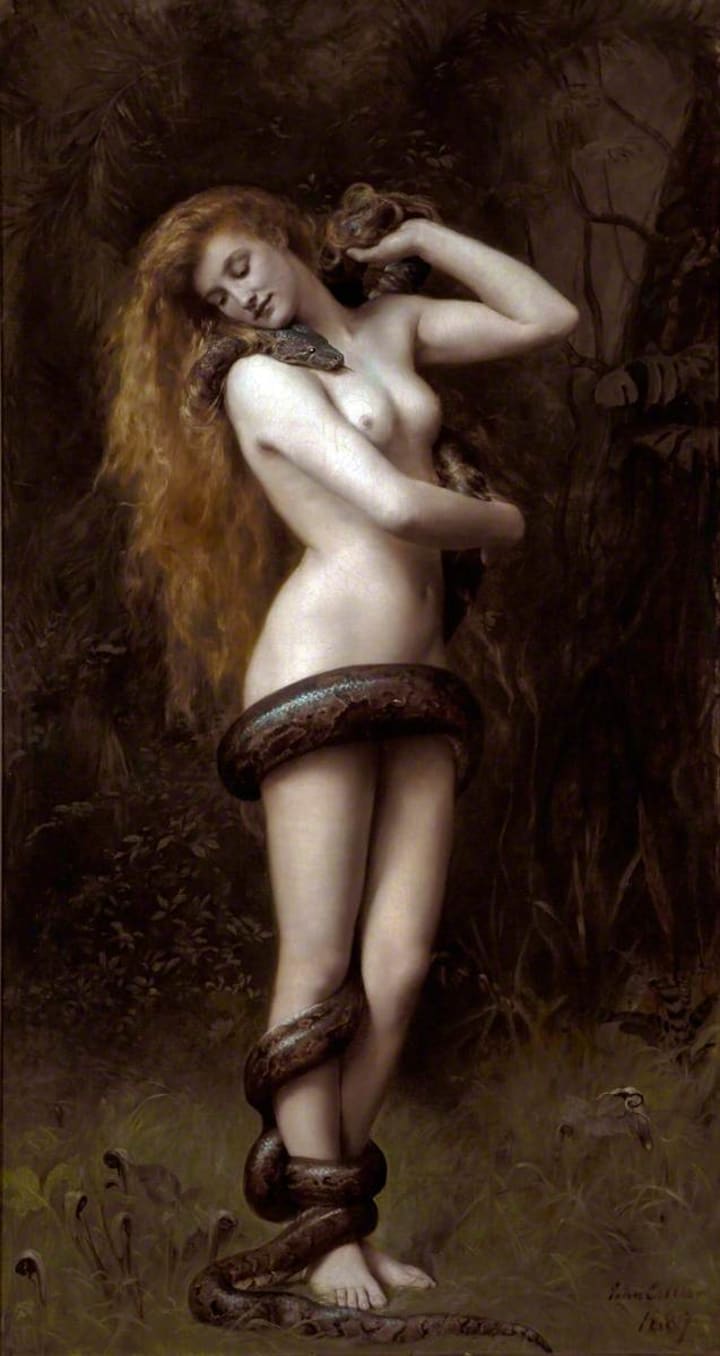
After leaving the Garden of Eden, Lilith became a powerful figure in Jewish folklore, often portrayed as a seductress or demon who preys on men. She is also associated with the concept of the "evil eye" and is believed to have the power to harm or curse people who anger her.
Lilith's Feminist Legacy
In recent years, Lilith has been reclaimed by feminist scholars and writers as a symbol of female empowerment and resistance against patriarchal authority. In this context, Lilith is seen as a woman who refused to submit to a male-dominated society and demanded equality and respect.
Feminist interpretations of Lilith often focus on her refusal to be subservient to Adam and her insistence on being treated as an equal partner. Some feminist scholars have even suggested that Lilith's rebellion against Adam represents the earliest example of feminist resistance in Western history.
Lilith in Popular Culture
Lilith's story has inspired countless works of literature, art, and music throughout history. In the 19th century, Lilith was a popular subject for artists and writers, who were fascinated by her role as a seductress and demon.
In more recent times, Lilith has appeared in various forms of popular culture, including TV shows, movies, and video games. For example, in the TV series "Supernatural," Lilith is portrayed as a powerful demon who is the leader of the demonic army.
Lilith's Legacy Today
Lilith's story continues to fascinate and inspire people today, particularly those interested in feminist and women's studies. Her legacy as a powerful and independent woman who refused to submit to male authority continues to resonate with people who seek to challenge patriarchal norms and promote gender equality.
Lilith's story is also a reminder of the importance of questioning authority and standing up for oneself, even in the face of adversity. Her refusal to be subservient to Adam represents a powerful message of empowerment and resistance that is as relevant today as it was thousands of years ago.
Conclusion
Lilith is a fascinating figure in Jewish mythology whose story has captivated people for centuries. As the first woman created by God, Lilith represents a powerful symbol of female empowerment and resistance against patriarchal authority. While her story has been interpreted in many different ways throughout history, her legacy as a strong and independent woman continues to inspire people today.
As we continue to explore and reinterpret the story of Lilith, we must remain mindful of the ways in which her story can inspire us to challenge societal norms and promote gender equality. Her refusal to submit to Adam is a powerful reminder of the importance of standing up for oneself and demanding equal treatment in all aspects of life, regardless of gender.
Furthermore, Lilith's story also highlights the importance of diversity and inclusion. As a non-traditional woman who refused to conform to societal expectations, Lilith embodies the spirit of diversity and the importance of embracing people of all backgrounds and lifestyles. In today's world, where diversity and inclusion have become increasingly important issues, Lilith's story serves as a valuable reminder of the need to celebrate and embrace differences.
Ultimately, Lilith's legacy remains an enduring and influential part of Jewish mythology and feminist discourse. As a symbol of female empowerment and resistance against patriarchal authority, Lilith's story will continue to inspire and empower women around the world for generations to come.
About the Creator
Keep reading
More stories from Emily Johnson and writers in Futurism and other communities.
The Blue Book Project: A Look at the Investigation of UFOs
The Blue Book Project, also known as the United States Air Force Project Blue Book, was a government-sponsored study that investigated Unidentified Flying Objects (UFOs) from 1947 to 1969. The project was tasked with analyzing and assessing potential threats to national security posed by UFO sightings. While the Blue Book Project was the most comprehensive study of its kind, it was not without controversy, and its findings have continued to influence public perception and scientific understanding of UFOs.
By Emily Johnson3 years ago in Fiction
About Binding Prometheus
I want to start actively advocating on behalf of my own work, and the most valuable part of my canon is, without a doubt, Binding Prometheus, the play I have been working on since 2019 and only finished in 2023 as part of my MA. The play itself is an amalgamation of a million different inspirations. On one end, it evokes the Ancient Greek myth-play, deriving its own title from the earliest extant work of Western drama we have, Aeschylus’s Prometheus Bound. On the other end, it borrows significantly from the sci-fi bulwarks from over the years, namely Mary Shelley’s Frankenstein and Karel Capek’s Rossum’s Universal Robots. The play could be an episode of Black Mirror, I fear. I don’t know. I’ve only ever seen one episode of Black Mirror.
By Steven Christopher McKnight19 days ago in Futurism
Saudi Arabia Cloud Computing Market & Forecast 2025–2033
Introduction Saudi Arabia’s digital transformation is entering a decisive phase, with cloud computing at the core of the Kingdom’s technology roadmap. As enterprises, government agencies, and startups accelerate their shift toward digital platforms, cloud infrastructure is rapidly becoming the backbone of innovation, efficiency, and scalability across industries.
By jaiklin Fanandish5 days ago in Futurism
Smart phones, Humans and Aliens.
WARNING. I will be tapping into one of your favorite creative tensions: The absurdity of humans worshipping their glowing rectangles as if they were tiny oracles. There’s something deliciously poetic about that contradiction, and it lends itself beautifully to an instructive proviso.
By Novel Allen4 days ago in Poets


Comments (1)
Thank you for sharing this insightful article, Emily. Your exploration of Lilith's origins, legend, feminist legacy, and presence in popular culture is both informative and thought-provoking. The idea of Lilith as a symbol of female empowerment and resistance against patriarchal authority is particularly noteworthy, and it is interesting to see how her story has been interpreted and reinterpreted throughout history. Your concluding remarks about the importance of diversity and inclusion and the need to celebrate and embrace differences are also valuable insights that resonate with contemporary issues. Thank you again for sharing your knowledge and perspective on this fascinating figure.