
Let’s Be Real: Can AI Ever Truly Feel the Spark of Creativity?
I’ve been using AI tools lately, and it made me wonder—are we human writers actually replaceable?
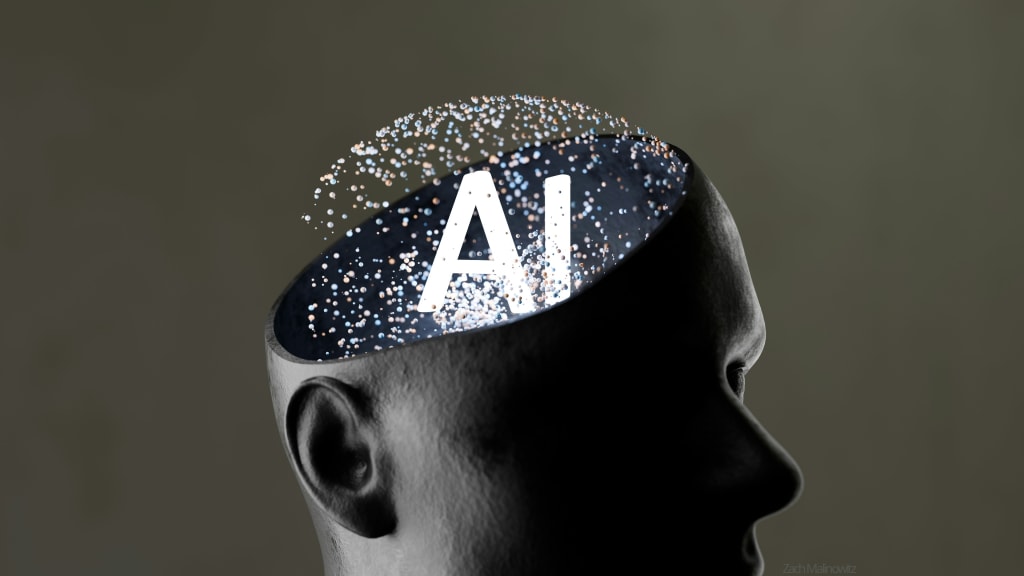
Honestly, I’ve spent the last few days playing around with AI. It’s everywhere—from our Spotify lists to our smart homes. It’s almost impossible to go a single day without interacting with some form of an algorithm. And while everyone is panicking about ChatGPT taking over the world and replacing every job on the planet, I started thinking about something deeper. I started wondering: Can a bunch of cold, calculated code and mathematical algorithms ever really understand the messy, beautiful, and sometimes chaotic "soul" that humans put into their work?
I don’t think so. In fact, the more I use these tools, the more I realize that being human is our biggest competitive advantage. Here is a deeper look at why I believe the human heart still wins.
The Difference Between Data and a Heartbeat
AI is brilliant at crunching numbers. It can write a technical report, summarize a 500-page book, or solve a complex math problem in seconds. But here is the catch: AI doesn’t have a "why." It has never felt the weight of a broken heart on a rainy Tuesday, or the pure, unadulterated joy of a child’s first laugh.
When we humans write, we aren't just putting words on a screen; we are sharing a piece of our lived experience. A machine can define the word "sadness" using a dictionary, but it can't feel the hollow ache in its chest. This is why I believe human storytelling is safe for now. As readers, we don't just want dry facts; we want to feel like someone else truly understands our struggle. A processor, no matter how fast, simply can't simulate that raw human connection.
Copying Isn’t the Same as Creating
We often call AI "creative," but let’s be honest—it’s actually just a master of imitation. It looks at billions of things humans have already created and then rearranges them into something new-ish. It’s like a very smart parrot. But true innovation? The kind that changes the course of history? That comes from breaking the rules, not following mathematical patterns.
Human creativity is fueled by our mistakes, our weirdness, and our sudden "Aha!" moments. A machine can follow music theory to compose a perfect tune, but it can't feel the "soul" behind a messy, slightly off-key guitar solo played in a garage with friends. It's often the imperfections that make art beautiful, and AI is programmed to be "perfect," which makes it boring after a while.
The Economic Impact: Will We Lose Our Jobs?
The fear of unemployment is real and valid. Many people think AI will leave us all behind. But if we look back at history, technology usually changes the nature of jobs rather than just killing them entirely. When the washing machine was invented, people didn't stop cleaning clothes; they just did it differently.
I think AI will take over the boring, repetitive, and "robotic" parts of our lives—like data entry, basic scheduling, or simple coding. This is actually a gift because it gives us more time to be "human." We can focus on strategy, ethics, empathy, and the big ideas. The future isn't about competing with AI; it's about using it as a "Co-Pilot" while you stay the Captain of the ship. We need to learn how to drive the machine, not run away from it.
The Human Touch in a Digital World
In a world that is about to be flooded with millions of AI-generated articles and images, anything made by a real human will become a "premium" luxury product. Just like we value a handmade piece of furniture or a hand-knitted sweater over a plastic factory version, people will always value the human voice.
Our flaws, our unique perspectives, and our willingness to take creative risks are things that an algorithm can never copy. There is a certain "warmth" in a human-written story that a cold AI output just can't match. We crave authenticity, and authenticity is the one thing you can't code into a machine.
The Symbiotic Future: AI as Our Partner
Instead of seeing AI as an enemy, we should look at it as a powerful tool. It’s like a hammer; you can use it to build a house or break a window. The choice is ours. I’ve started using AI to help me brainstorm ideas when I have writer’s block, but I always make sure the final "voice" is mine.
The most successful people of the next decade won't be the ones who ignore AI, and they won't be the ones who let AI do all their work. They will be the ones who combine the speed of AI with the emotional intelligence and creativity of a human. This partnership is where the real magic happens.
Final Thoughts: The Heart of the Matter
At the end of the day, AI is a mirror of our collective knowledge, but it’s not a replacement for our individual identity. It can paint a picture, but it can’t feel the inspiration that led to the first brushstroke. As we move forward into this digital age, we should use these tools to amplify our potential, but we must never forget that the heart of creativity belongs to us. We are the dreamers; the AI is just the calculator.
Disclosure: I used AI to help me research and structure parts of this article to ensure it covers all technical aspects, but the core thoughts, personal reflections, and final editing were done by me, the human author.
About the Creator
Umar Waleed
Passionate writer exploring technology and human behavior.
Keep reading
More stories from writers in Futurism and other communities.
Australia Toaster Market: Household Demand, Design Innovation & Retail Channels
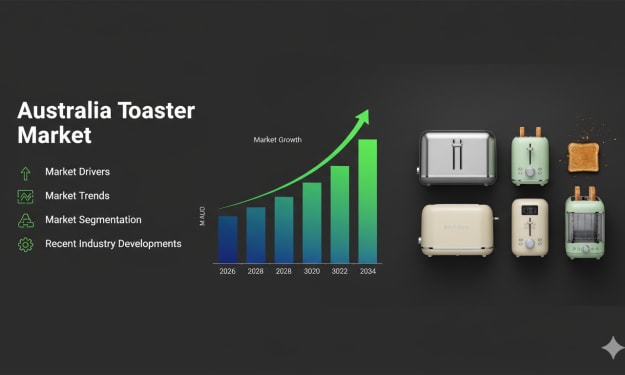
According to IMARC Group, the Australia toaster market reached USD 89.6 Million in 2025 and is projected to expand to USD 126.9 Million by 2034, exhibiting a compound annual growth rate (CAGR) of 3.94% during 2026–2034. This steady growth reflects evolving household consumption habits and the continued relevance of small kitchen appliances across Australia. Once viewed as a basic countertop device, the toaster has evolved into a design-led, feature-rich appliance aligned with modern kitchen aesthetics and lifestyle efficiency. As urban households prioritize convenience and energy efficiency, toaster manufacturers are integrating advanced controls, premium finishes and smart functionalities to meet consumer expectations.
By Kevin Cooperabout 12 hours ago in Futurism
Agricultural Adjuvant Market Outlook: Spray Efficiency Technologies & Future Demand
According to IMARC Group's latest research publication, global agricultural adjuvant market size reached USD 4.0 Billion in 2024. Looking forward, IMARC Group expects the market to reach USD 6.6 Billion by 2033, exhibiting a growth rate (CAGR) of 5.14% during 2025-2033.
By sujeet. imarcgroup6 days ago in Futurism
Part 2 Interview With Joe Patterson, Author Of Melanin Memoirs
This is my second interview with Joe Patterson. His 4th anniversary writing on Vocal will be in March 2026. He has one achievement on Vocal, The Other Foot. He has over 17,000 reads on Vocal since he started on Vocal in 2022. Joe Patterson is very creative poet and rapper. Joe is deep thinker and I feel it is reflected in his latest published book, Melanin Memoirs.
By Mariann Carroll5 days ago in Interview



Comments
There are no comments for this story
Be the first to respond and start the conversation.