Latest Stories
Most recently published stories in Futurism.
Goriest Anime Deaths
The land of Japan has given us many great exports. Home video games consoles, Pokemon, cosplay, but perhaps the greatest thing to ever come from the land of the rising sun is anime. No scratch that, not just anime, but crazy anime deaths. Unlike the tamer cartoons made by their American or other international counterparts, Japan just does not seem to care and will put just anything and every crazy thing they can think of in their animated masterpieces. It’s no wonder that anime seems to have such a huge international fandom. The crazy animators of Japan are willing to go to extremes no other cartoon will ever achieve. Forget South Park on Comedy Central or Aqua Teen Hunger Force if you’re craving a little piece of the classic horror show Ultra Violence. Then anime is your best bet in terms of injecting a little bit of batshit crazy into your mundane daily routine
By Isaac Shapiro11 years ago in Futurism
Best Philip K. Dick Books
Philip K. Dick's work has transformed the way we view science fiction. He published 44 novels and over 100 short stories, and 12 book to film adaptations, extending his influence even to today. In most of his works, the wall between reality and illusion fails to exist, leaving his audience to figure out what is and is not real. He touched upon deep philosophical issues. What does it mean to be human? What is an identity? Can I trust my own memories? As a long time science fiction fan, I can't list the following PKD novels in any particular order. To impose my own order would be arrogant of me. Each of the best Philip K. Dick books can be enjoyed by any fan of science-fiction.
By George Gott11 years ago in Futurism
Sci-Fi Military Books
As a sub-genre of science fiction, sci-fi military books often imagine the future of war, relying heavily on speculative technology and, oftentimes, extraterrestrial combatants. Many authors rely on historical events, such as Hannibal or the Vietnam War, and transcribe them for the future. Instead of nations in conflict, authors present planets at war. The ethics of war and consequences of military action are on the front-lines of many sci-fi military books. When is war justified? What is the value of one life versus many? New moral dilemmas present themselves as science fiction concepts muddle the line between what is and is not permitted. Military science fiction is about the people engrossed by the carnage of war and the larger problems facing them.
By Futurism Staff11 years ago in Futurism
Finding Meaning Without Religion
Traditionally, people have had churches and religion as a support system for life's emergencies. No matter the enormity of the crisis, God and his local representative, one's priest or minister, would be there to serve as a reminder of "what a friend [one has] in Jesus." But people who have grown alienated from religious orthodoxy or even from religion itself, what do they have?
By Joshua Samuel Zook11 years ago in Futurism
Andy Weir's The Martian Review
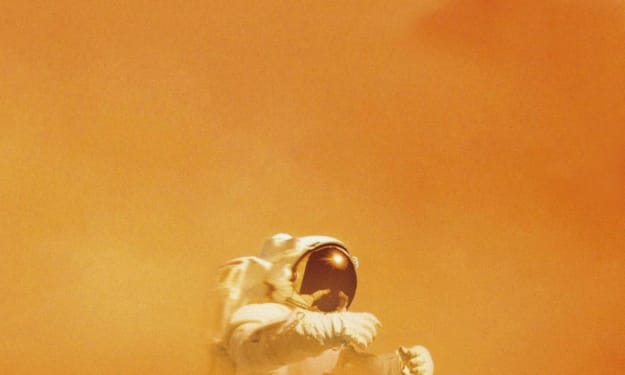
Andy Weir’s debut novel, The Martian, is something of a success story for self-published authors everywhere. Released by the author as an e-book in 2011, the book was picked up for broader distribution last year by Crown Publishing group, and is now well on its way to the big screen. The book itself is a labor of love for Weir, a well-researched and highly-realistic work of speculative fiction. It endeavors to answer a fairly straightforward question, how could a person survive on Mars if they were stranded there? This question requires knowledge of space travel, orbital physics, botany, and NASA bureaucracy to answer effectively, and Weir quickly establishes his expertise on all of the above. The resulting book is impressive for the amount of preparation it must have required before pen could be put to paper, and manages an engaging story to boot.
By Michael Gold11 years ago in Futurism
Sci-Fi Movie Women of the 90s
Science fiction films in the 1990s featured some of the most iconic women to appear on the big screen. Too often when people think "women in sci-fi" we think of what used to be called “scream queens,” that is, the actresses who appeared in scores of latter day B pictures running from extraterrestrials on earth or grappling with tentacled creatures on spaceships or what have you.
By Glenn Kenny11 years ago in Futurism
Sci-Fi Anime TV Shows
Animation is a fantastic medium to portray what are otherwise unrealistic action sequences and over the top effects. Science fiction anime is only limited by an artist's imagination. World War II Japan has become the poster child for turning science fiction into science reality. Logically, Japan has become the most important producer of top quality sci-fi anime. Often, sci-fi anime serves as a backdrop for opening a discussion on difficult topics, such as the nature of consciousness, "war," or "artificial intelligence." Beautifully crafted worlds explore daunting philosophical issues. Each selection on the list is a prime example of the best sci-fi anime TV shows and is sure to stir deliberation among fan pundits.
By Isaac Shapiro11 years ago in Futurism
Netflix's Marco Polo Historical Accuracy
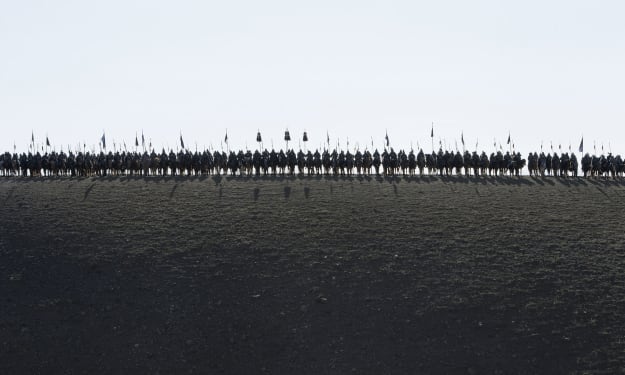
Marco Polo is a political drama soaked in blood and sex, but does Netflix's historic epic capture the historical truths of the famed explorer? The answer is vague. Marco Polo did travel to Mongolia, but whether he engaged in politics and combat is ambiguous. Polo wrote his works omitting any personal interactions, choosing to record accounts of the varying cultures and locations. However, lack of information did not stop the streaming service from delivering a show to rival shows on HBO and Starz, with engaging scenery and stunningly choreographed martial arts. Whether or not Marco Polo dabbled in political shenanigans is left to the imagination. Regardless, Bob Weinstein and Netflix have created an engaging series. For the sake of human curiosity, as most adventures begin, it is worth exploring the historical figure of Marco Polo.
By Futurism Staff11 years ago in Futurism
James Randi Scientific Skeptic
James Randi is a skeptic, well known for challenges to paranormal claims, false invention, religious claims and the pseudosciences. Randi started as a magician stage named "The Amazing Randi", he retired to devote his time to investigating the occult, and other supernatural claims. Randi became famous in 1972 when he openly questioned the claims of Uri Geller. He said Geller used plain magic tricks to accomplish his allegedly supernatural feats. Randi wrote about his claims in The Truth About Uri Geller one of a number of great books on debunking charlatans.
By Futurism Staff11 years ago in Futurism
Best Sci-Fi Anime Films
Sci-fi anime films take you into a world unlike any other. The extreme graphic nature of many films on the list is what makes some of them the best sci-fi anime films. Blood flows freely and bodies snap seamlessly in half in the world of anime leading, in many cases, to some of the goriest anime deaths. Animation is a great format for creating expansive worlds and complex narratives that collide in a crescendo of action. From robotics to cyborgs and gangsters to crime fighters, sci-fi anime films are a unique genre with some of the most talented creatives working today. The list of films include extreme imagery for the film fanatics and cerebral warnings for futurists and the scientifically curious.
By Isaac Shapiro11 years ago in Futurism
The Strain is an Infectious Vampire Gore Fest
For the past few years vampires have been effectively defanged. All of the initial menace from these terrifying blood suckers has been drained out. In their place we’ve seen then transformed into erotic creatures of lust and desire. Immortal beauties so far removed from their horror roots they become the erotic fixation of teenage fantasy. Stories like Twilight have served to delude and neuter vampires of their menace much to the dismay of longtime horror fans. But famed filmmaker Guillermo Del Toro has had enough of it. No more beautiful lovelorn vampire designed to be fawned over by teenage girls. With The Strain Del Toro sought to create a new kind of vampire that stripped the monster of any sense of romanticism. That was the impetus for the creation of The Strain. Originally Del Toro saw it as a tv series, but he was unable to find anyone interested in producing it amongst the major networks. He took an alternate path by collaborating with novelist Chuck Hogan to turn his idea into a trilogy of books. Ironically enough, a few years later after the runaway success of The Walking Dead, his books were optioned for a tv series so Del Toro got have his original desire of seeing The Strain turned into a TV series.
By James Sullivan11 years ago in Futurism