Latest Stories
Most recently published stories in Futurism.
OMNI's Early Review of Star Wars Rogue One
Of all the things Turkey is known for, early theatrical releases of international blockbusters isn't one. And yet--Turkey debuted Rogue One on December 14th, 2016...two days ahead of the U.S. release date. Which means, if you live in Turkey (and I do) then you're ahead of the pack!
By Matt Cates9 years ago in Futurism
Reviewing 'The Guccione Collection' OMNI Magazine Auction
Bob Guccione was more than just the founder of OMNI magazine, beyond this, he was an artist and lover of all things science fiction and art. He collected a variety of pieces from some of the world's most renowned artists; names like H.R. Giger, Stanislaw Fernandes, and Jim Burns. Thanks to his love of sci-fi art and his celebrity status, Guccione was able to commission some of the most recognized science fiction artists to create pieces that were later featured in various OMNI magazine issues. Thanks to a partnership with EBTH, you can now own a piece of the Bob Guccione OMNI magazine collection.
By George Gott9 years ago in Futurism
Time Traveling Views from Stars
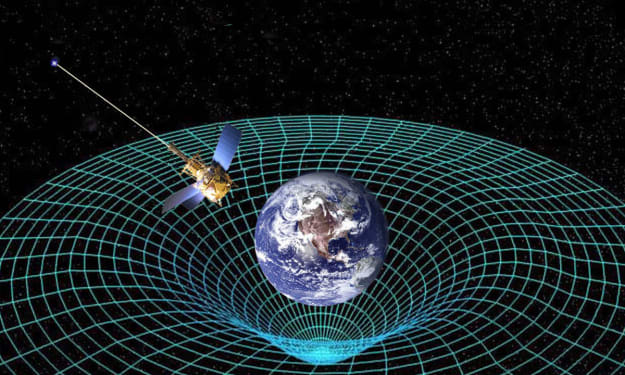
The White Queen in Through the Looking Glass made a regular morning habit of believing at least six impossible things before breakfast. There is one thing that simply cannot be done. It is impossible to travel backward in time. I have absolutely no faith that we might be able to transport ourselves back to the Crusades, the Ice Age, or even earlier I do not doubt that Einstein's relativistic time-dilation effect is valid; but that is a different thing.
By Conrad Morningstar9 years ago in Futurism
3D Bioprinting Takes Shot at Aging
One of the hurdles to longevity is that bodies seemed designed to break down. It's a part of aging. It might be a part of evolution. Transplants and implants aren’t painless and can be risky. Now, researchers are saying that you won’t have to worry about bodies breaking down when you can just print a new part.
By Matt Swayne9 years ago in Futurism
Al Hirschfeld's Legendary 'Star Trek' Illustrations
Iconic illustrator Al Hirschfeld was drawn to Star Trek. His first vision of the classic Star Trek came at the behest of TV Guide who commissioned him in 1966 to be part of a review of the premiere. The Image was of Kirk and Spock holding ray guns and what looks like a fluorescent lightbulb. Hirschfeld Hirschfeld said his contribution was to "take the character, created by the playwright, script or portrayed by the actor, and reinvent it for the reader".
By Frank White9 years ago in Futurism
Quantum Computing is Huge
Most people think that a quantum computer is either a plot device in a science fiction plot, or, at the very least, a relic of mankind's 100-year fascination with adding the adjective "quantum" to nouns to make things appear mysterious or powerful.
By Matt Swayne9 years ago in Futurism
Solar Power Today and Tomorrow
Solar power is one of the most efficient and clean sources of energy humanity possesses. There are no increased fuel costs or dependencies, no ties to pollutants, and it is both reliable and affordable. In order to harness solar power you need access to specific technology. The tech relies on either small-scale solar photovoltaic (PV) systems, large-scale solar photovoltaic systems, or concentrating solar power (CSP) systems to capture solar energy.
By Futurism Staff9 years ago in Futurism
The Legacy of Hard Science Fiction
Hard science fiction embodies the essence of the genre, though science fiction does not always adhere to its principles. They do not call it science fiction for nothing, though sometimes it might seem that way. The mushy physics, galaxy-hopping adventures, and even outright mysticism of Star Wars and Star Trek may hark back to the pulp science fiction of E. E. "Doc" Smith and Edmond Hamilton, but they do not say a lot for the average level of science education among Hollywood producers. Nevertheless, there is a long and healthy tradition of more scientifically faithful science fiction, running from Jules Verne and H. G. Wells through writers of the 1930s, 1940s, and 1950s (think of Arthur C. Clarke and Hal Clement) and on into the 1960s and 1970s in the hands of Larry Niven, Gordon R. Dickson, and others. Hard science fiction stands for some readers as the true heart and soul of the genre, and it continues vigorously today, as is evidenced by a look at publications since the Golden Age of science fiction.
By John Foley9 years ago in Futurism
The Mind Job
It was past midnight when Detective Jensen received a thought from the Mental Larceny Division. A mind jobber had been busted. The huge cache of stolen memories would have to be read, as well as the jobber's mind. The download would take days, but would likely lead to breakthroughs in several of her cases. She thought about what particular memories, people, and places she was looking for more evidence on, and the computer recorded all faithfully. The systems would let her know when new evidence was available, at the speed of thought.
By David Hallquist9 years ago in Futurism