Latest Stories
Most recently published stories in Futurism.
Review of Somewhere Between 1.4
So how is it that the killer is killed before he kills Laura's daughter Serena on Somewhere Between 1.4 last night, but there's still a harrowing story to be told? Because the killed killer is not the killer, after all. (Or, as is always the case with time travel, maybe he was but someone changed history so he no longer is.)
By Paul Levinson8 years ago in Futurism
Offline: Chapter 1
"Powering on. Welcome to Future™." A monotone, synthetic female-like voice echoed through the surround-sound. The genius mind and the face of Future™ smiled invitingly on the loading screen. He was one considered to be photogenic with his hair neatly groomed and his dimples deep. His name, Philander Pierce. "We are living in a time, where the lines between man and machine are blurring. Future™ is the future." His confidence in himself came off as rather charming than arrogant when paired with his mild-manneredness. The image of him faded and in bold letters the word future was spelled out, and under trademark, as if the future didn't belong to everyone. "Loading Future™." The female-esque voice reverberated.
By Karli Healey8 years ago in Futurism
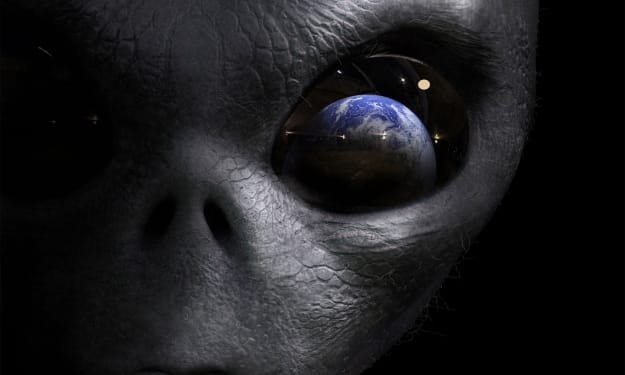
What Would Aliens Really Look Like?
Society has become totally obsessed with the search for alien life. The media is filled to the brim with stories about alien abductions, sightings of strange crafts, as well as stories about alien invasions. Aliens fascinate us, and to a point, it's totally understandable.
By Rowan Marley8 years ago in Futurism
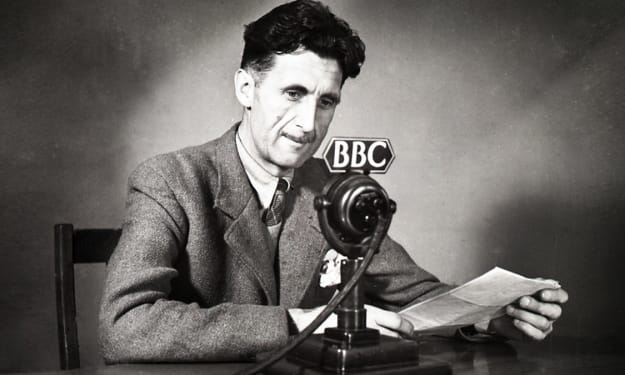
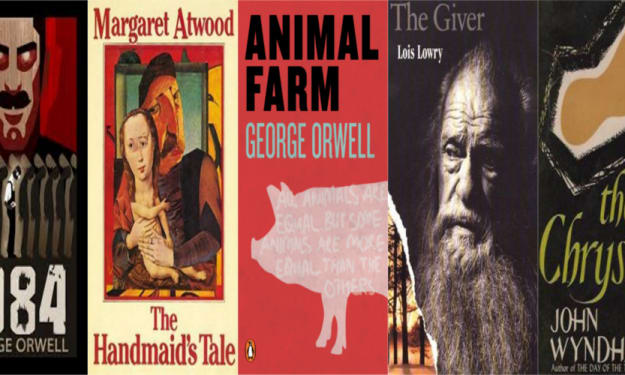
Best George Orwell Books
Born as Eric Arthur Blair, George Orwell, was known in the 19th century for his direct and creative writing style. He often wrote novels with short concise sentences instead of using a lengthy poetic style. By using metaphors and allusions he made the themes of his stories more apparent to readers.
By Jessica Herring8 years ago in Futurism
Jenna's Sacrifice Ch. 1
Jenna looked all around herself before she guided the heavy door closed behind her, but she saw nothing but the usual dull browns of the late summer sky after the passing of one of the worst dust storms of the season, and the grey browns of the ground all around the Door.
By Aurora Skye8 years ago in Futurism
Review of Twin Peaks: The Return 1.13
Twin Peaks may not always be comprehensible or comprehendible (well, almost never), but it's always good for a laugh, with a variety of visual, acoustic, and linguistic punchlines, and just some good old-fashioned gags (and I don't just mean scenes that make you feel like gagging).
By Paul Levinson8 years ago in Futurism
9 Signs We’re Already Living in a Dystopian Universe
Totalitarianism. Fascism. Authoritarianism. It is safe to say that times are looking fairly bleak in the year of 2017. These are all words that have surged in use by the media this past year and much of it is due to the dark political climate sweeping across the planet as of late.
By C.E. Zulin8 years ago in Futurism
Potentially Hazardous Asteroids
The term potentially hazardous objects (PHOs) means near-Earth objects (NEOs) like meteoroids, asteroids, and comets whose orbits will come very close to the orbit of the Earth. Meteoroids are composed of minerals and rock and have a diameter of less than one meter. Comets are composed of dust and ice. Meteoroids with a diameter of greater than one meter are called asteroids.
By Danny Fleming8 years ago in Futurism
Review of Westworld Season 1 Finale
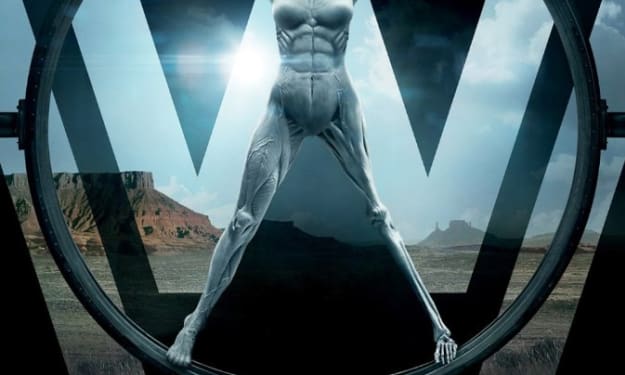
Here's what we learned in the excellent season 1 finale of Westworld, and the possible questions raised: The Man in Black is the new majority owner of Westworld. The Man in Black is William, much older. This is one of the first fine twists -- a sequence of turns and revelations of events that cut deep. What we've been seeing of Dolores during these ten episodes are not just skips and jumps and loops in her mind, but time itself chopped up, that is, earlier and more recent events in her life. Which means, regarding William, that every scene we've seen with him happened in the pretty distant past -- i.e., decades ago. Nice touch. Dolores dying in Teddy's arms by the sea is actually the entree to the new narrative Ford has been promising. I actually realized this a few moments before it was revealed, but it was still memorable to see. Maeve, despite her best efforts, was never going to leave Westworld. I was actually thinking this, too - the essence of Westworld is that, like the Hotel California, you can check in if you're a host (be created), but you can never leave. But the pursuit of her daughter being the reason is an effective touch -- because, after all, not only does love conquer all, but it's an all powerful component of what makes us human. The path towards consciousness is knowing thyself. In the Jaynesian bicameral mind -- at least, as portrayed in Westworld -- this means one half of your brain listening to the other. Two millennia prior to Jaynes, Socrates urged the same thing: know thyself. This makes Westworld not only Jaynesian but Socratic, a very good thing in my book. I never bought that Socrates drank the hemlock, though (and my best-known novel tries to explain what may really have happened back then) -- but, with that in mind, I wasn't happy to see Dolores blow out Ford's brains at the end, just as she had done years earlier with Arnold (even though suffering that real-guilt pain is said to be the only way she can achieve true consciousness).
By Paul Levinson8 years ago in Futurism