
Laboratory Centrifuge Market Outlook: Expanding Diagnostic Testing and Growth Opportunities
The laboratory centrifuge market is experiencing strong growth, driven by rising demand for diagnostic testing, biomedical research, and pharmaceutical development.

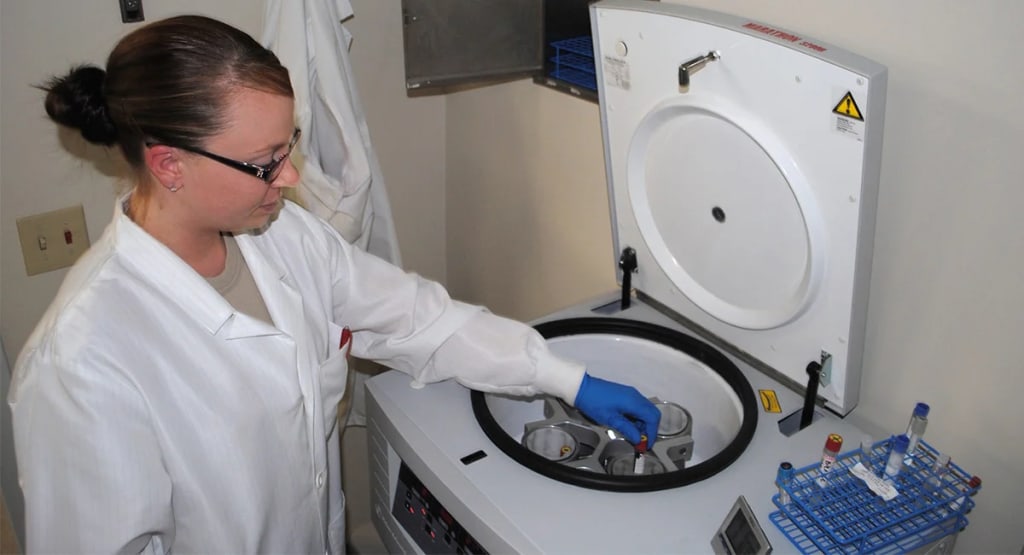
According to IMARC Group's latest research publication, The global laboratory centrifuge market size was valued at USD 1.86 Billion in 2025. Looking forward, IMARC Group estimates the market to reach USD 2.53 Billion by 2034, exhibiting a CAGR of 3.53% during 2026-2034.
How AI is Reshaping the Future of Laboratory Centrifuge Market
- Predictive Maintenance and Equipment Optimization: AI systems monitor centrifuge performance data in real-time, predicting equipment failures before breakdowns occur. GEA's X Control system, launched in January 2024, provides AI-ready control platforms with enhanced cloud integration and SCADA compatibility, enabling self-learning optimization for centrifuge operations.
- Automated Sample Processing and Quality Control: Machine learning algorithms enable automated rotor recognition, imbalance detection, and speed calibration, reducing human error and enhancing operational safety. AI-powered systems independently select optimal sample holders, preventing maximum permissible speeds from being exceeded while maintaining reproducible centrifugation results.
- Smart Lab Integration and Workflow Automation: AI-driven laboratory automation systems integrate centrifuges with robotic liquid handlers, creating seamless workflows. BD's FACSDuet Premium System, launched in June 2023, automates sample preparation for clinical flow cytometry, combining liquid-handling robotics with automated centrifugation for complete diagnostic workflows.

Laboratory Centrifuge Industry Overview
North America leads the laboratory centrifuge market with strong healthcare infrastructure and significant R&D investments. The NIH allocates nearly USD 48 billion annually for biomedical research, with 82% supporting extramural research at over 2,500 institutions. The U.S. population aged 65 and over reached 55.8 million in 2020, a 38.6% increase from 2010, driving diagnostic testing demand. Diabetes cases reached 37.3 million according to CDC's National Diabetes Statistics Report, while FDA-approved cell-based gene therapies like Casgevy, utilizing CRISPR/Cas9 technology, expand centrifuge applications in regenerative medicine.
Laboratory Centrifuge Market Trends & Drivers
The rapid expansion of biotechnology and pharmaceutical research is driving laboratory centrifuge demand across drug discovery and biologics production. Global laboratory automation hardware reached USD 8.3 billion in 2024, growing over 9% annually, as companies pursue precision and throughput improvements. The UK's biopharmaceutical sector contributed USD 17.1 billion in manufacturing GVA in 2022, representing 68% of life sciences turnover. Nearly 40% of biopharmaceutical respondents in BioPlan's 18th Annual Report identified continuous processing and perfusion as key evaluation areas, reflecting sustained bioprocessing investments that require specialized centrifuges for cell culture harvesting and protein purification.
Automation and robotic integration are transforming laboratory workflows, with centrifuges becoming integral components of total lab automation systems. Hettich has supplied robot-operated centrifuges for over 25 years, now integral to leading automation systems worldwide for 24/7 operation. Approximately 81% of laboratories used electronic lab notebooks (ELNs) by 2025, up from 66% in 2024, demonstrating rapid digital transformation. Sigma's 4-5KRL refrigerated robot centrifuge features impressively low process downtimes, with lid opening and closing taking under 2 seconds and rotor indexing just 8 seconds, enabling quick sample throughput critical for high-volume clinical diagnostics and pharmaceutical quality control.
Government funding and infrastructure modernization initiatives are strengthening research capabilities and expanding centrifuge adoption across academic institutions. NIH's S10 Instrumentation Programs support state-of-the-art equipment purchases for shared research facilities nationwide, benefiting thousands of investigators at hundreds of institutions. India's Ayushman Bharat program plans to establish 300+ new diagnostic labs by 2028, where automated systems now comprise 28% of centrifuge purchases in urban hospitals. China's biotech hub expansion and supportive state investments in laboratory automation drive demand, while Germany's High-Tech Strategy 2025 prioritizes lab automation across over 120 publicly funded biotech hubs, particularly in Baden-Württemberg, Bavaria, and North Rhine-Westphalia.
Leading Companies Operating in the Global Laboratory Centrifuge Industry
- Agilent Technologies, Inc.
- Andreas Hettich GmbH
- Becton, Dickinson and Company
- Cardinal Health
- DH Life Sciences, LLC
- Eppendorf SE
- Hermle Labortechnik GMBH
- KUBOTA Corporation
- Qiagen N.V.
- Sartorius AG
- Sigma Laborzentrifugen GMBH
- Thermo Fisher Scientific Inc.
Laboratory Centrifuge Market Report Segmentation
By Product Type:
- Equipment
- Multipurpose Centrifuges
- Microcentrifuges
- Ultracentrifuges
- Minicentrifuges
- Others
- Accessories
- Rotors
- Tubes
- Centrifuge Bottles
- Buckets
- Plates
- Others
Equipment stands as the largest component, holding around 57.6% of the market.
By Model Type:
- Benchtop Centrifuges
- Floor-Standing Centrifuges
Benchtop centrifuges lead the market with around 71.2% of market share.
By Rotor Design:
- Fixed-Angle Rotors
- Swinging-Bucket Rotors
- Vertical Rotors
- Others
Fixed-angle rotors lead the market with around 36.5% of market share.
By Intended Use:
- General Purpose Centrifuges
- Clinical Centrifuges
- Preclinical Centrifuges
General purpose centrifuges stand as the largest component, holding around 46.6% of the market.
By Application:
- Diagnostics
- Microbiology
- Cellomics
- Genomics
- Proteomics
Blood Component Separation
Others
By End-User:
- Hospitals
- Biotechnology and Pharmaceutical Companies
- Academic and Research Institutions
Regional Insights:
- North America (United States, Canada)
- Asia Pacific (China, Japan, India, South Korea, Australia, Indonesia, Others)
- Europe (Germany, France, United Kingdom, Italy, Spain, Russia, Others)
- Latin America (Brazil, Mexico, Others)
- Middle East and Africa
North America exhibits a clear dominance in the laboratory centrifuge market, holding a significant market share of over 36.4%.
Recent News and Developments in Laboratory Centrifuge Market
- January 2024: Hettich Group announced its acquisition of Kirsch Medical, a leading producer of cooling and freezing solutions for laboratories and healthcare settings. This strategic acquisition enhances Hettich's capabilities in developing advanced laboratory centrifuge solutions by integrating Kirsch's expertise in refrigeration technology, expanding its product range for medical and scientific sectors.
- July 2024: The Hettich Group entered into a strategic growth partnership with Bregal Unternehmerkapital GmbH. This collaboration aims to bolster Hettich's market presence, particularly in Asia and the USA, leveraging Bregal's global network to drive innovation in the laboratory equipment sector and strengthen Hettich's position as the global leader in robotic centrifuges.
- June 2023: Becton, Dickinson and Company launched the BD FACSDuet Premium System, a new robotic solution designed to automate clinical flow cytometry. The premium sample preparation system leverages liquid-handling robotics to automate the entire sample preparation process, including cocktailing, washing, and centrifuging for both in vitro diagnostics and user-defined tests.
- April 2023: Eppendorf launched the Centrifuge 5427 R, marking its debut in the microcentrifuge segment equipped with hydrocarbon cooling. This innovation enhances sustainability in laboratory environments by offering a refrigerated device utilizing a natural cooling agent with a Global Warming Potential nearly zero, revolutionizing laboratory practices with eco-friendly technology.
- February 2025: Thermo Fisher Scientific agreed to purchase Solventum's Purification & Filtration business for USD 4.1 billion to expand bioproduction capabilities. This transaction broadens Thermo Fisher's one-stop offering from cell harvest to downstream filtration, expecting USD 125 million operating synergies by year five and strengthening its position in the laboratory centrifuge market.
Note: If you require specific details, data, or insights that are not currently included in the scope of this report, we are happy to accommodate your request. As part of our customization service, we will gather and provide the additional information you need, tailored to your specific requirements. Please let us know your exact needs, and we will ensure the report is updated accordingly to meet your expectations.
About the Creator
James Whitman
With years of experience in analyzing global industries, I specialize in delivering actionable market insights that help businesses stay ahead in an ever-changing landscape.
Keep reading
More stories from James Whitman and writers in Futurism and other communities.
Industrial Catalyst Market Outlook: Chemical Production Efficiency and Growth Opportunities
According to IMARC Group's latest research publication, The global industrial catalyst market size reached USD 25.3 Billion in 2025. Looking forward, IMARC Group expects the market to reach USD 33.5 Billion by 2034, exhibiting a growth rate (CAGR) of 3.07% during 2026-2034.
By James Whitmanabout 10 hours ago in Futurism
South East Asia Specialty Chemicals Market Outlook: Trends & Growth Analysis
According to IMARC Group's latest research publication, "South East Asia Specialty Chemicals Market Size, Share, Trends and Forecast by Type, and Country, 2026-2034", the South East Asia specialty chemicals market size reached USD 30.3 Million in 2025. Looking forward, IMARC Group expects the market to reach USD 41.0 Million by 2034, exhibiting a growth rate of 3.42% during 2026-2034.
By Abhishek Dixitabout 8 hours ago in Futurism
Type of Support Required For Mental Health Of celebrities
The lives of celebrities are often viewed through the lens of glamor, fame, and fortune, but beneath the surface, many face challenges related to mental health that go unnoticed or unaddressed. The pressures of constant public scrutiny, overwhelming work schedules, and personal sacrifices can take a significant toll on their emotional well-being. As a result, maintaining mental health for celebrities requires a multifaceted approach, involving various types of support systems and coping mechanisms. In this article, we will explore the different types of support that are crucial for preserving the mental health of celebrities, ensuring they can navigate the demanding world of fame while fostering personal well-being.
By Ibrahim Shah 4 days ago in Futurism




Comments
There are no comments for this story
Be the first to respond and start the conversation.