
JAMES WEBB SPACE TELESCOPE (JWST)
Telescopes are one of the remarkable inventions that changed the way we seek the Cosmos, since its invention in the 16th century, mankind has used them to find the answer to the unknown.

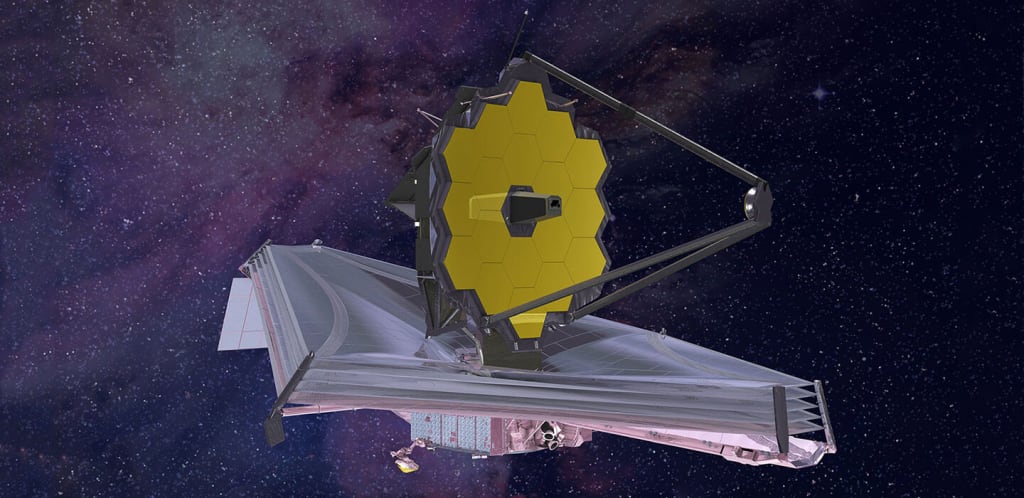
One such invention is the James Webb Space Telescope, which which started its journey on 24th December last year. The launch date has been rescheduled multiple times due to inevitable events.
Here's the list of the Top 7 amazing facts about the James Webb Space Telescope.
1. Named after James E. Webb
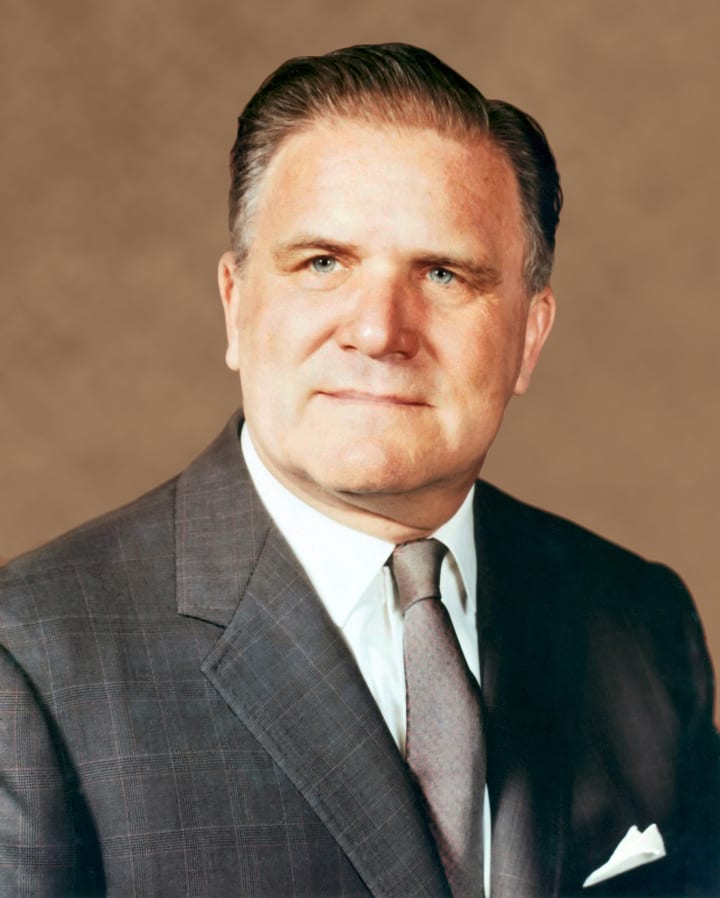
This astonishing telescope is named after the second head of NASA James E. Webb, who led the agency from (1961-1968).
Under his name, is one of the most notable records. Where he supervised the historical landing mission of the first man on the surface of the moon.
His vision was to strike a balance between human space flight and science, and that's the reason that NASA Administrator Sean O\'Keefe decided that the next big telescope after Hubble should be named after him.
2. Heading to the L2 point
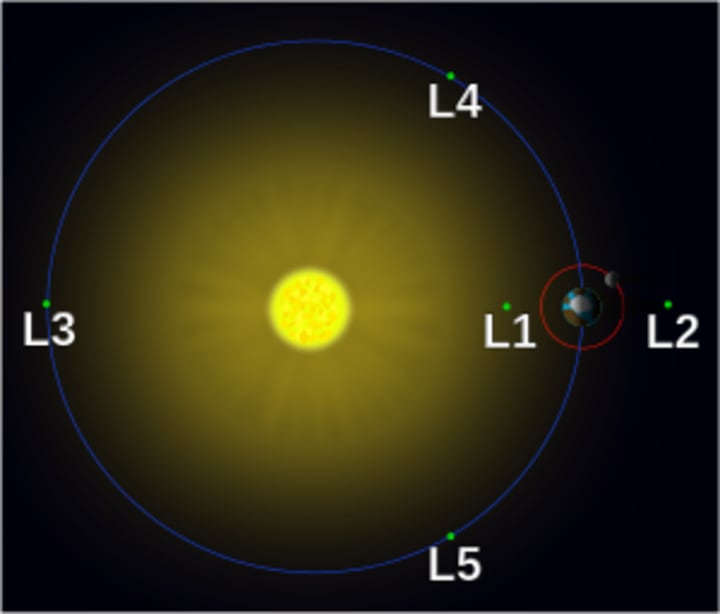
The James Webb Space Telescope or also known as JWST will orbit at around 374,000 - 1.5 million Km distance around the Earth and the Sun. This path in technical terms is known as L2 point or 'Lagrange point'. It will take around about 30 days to reach the orbit and the first bit of information can be expected around in 6 months of the launch.
As JWST is equipped with an advanced level of detectors and sensors than its predecessors, so it can analyze a much wider range of light than before and hence can observe a much longer Infrared wavelength.
To achieve this detectors will target near and mid-infrared wavelengths. To make it possible JWST is going to use:-
A large mirror - To collect as much light as possible
Extremely cold temperatures
Clear Line of Sight - For this L2 point is very crucial.
3. Dust Budget Crisis
For ages scientist and researcher who studies the unexplored part of the cosmos has encountered an issue and that is the cosmic dust, which is the tiny solid matter particle drifting around in space.
But JWST can solve the problem, it's doing more than just looking through the cosmic dust, it is going to solve the "Dust Budget Crisis", this is the inability to account for all the dust found throughout the universe.
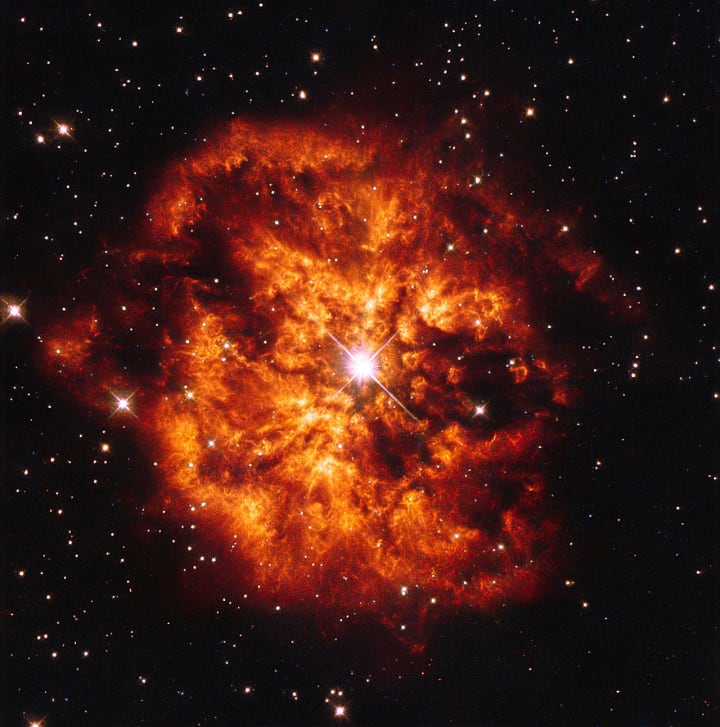
Webb will be working with JAXA to observe the Infrared light from Wolf-Rayet stars that help count it. The Wolf-Rayet stars are the supermassive stars in a very late stage of stellar life, so when observed in infrared light, they release dust in a pinwheel pattern. So Webb can observe the chemical signatures produced from Wolf-Rayet stars which then tend to help scientists to understand the complex answers of early star formations and how our cosmos got so dusty.
4. Operational temperature is between 85°C to -233°C.
Primarily James Webb Space Telescope is divided into two broad sections, the cold section that consists of the Observation function and the hot section that has the Sunshield layers.
The reason why it uses the shielded layers is that Infrared light can also be interpreted as heat, and one of the main tasks of JWST is to study the existent distant and usually faint wavelength. So engineers have to make sure that it is protected from all sources of heat.
The Hot side mainly compromises the sun shield, solar panels, Communication antennas, spacecraft buses, and star trackers. Whereas the cold side consists of primary and secondary mirrors, infrared instruments clusters, and detectors.
5. Unprecedented Goals
Being one of the most expensive projects in space history, it took more than 25 years to finally complete the projects, by the scientist, engineers, and research of the various space agencies of the USA, Canada, and EU.
This sheer hard work is to create a masterpiece. Compare to Hubble it is what Digital Microscope to the magnifying glass. Here are some of the goals set to achieve by JWST:-
- JWST will show our universe just after 100-250 million of Big Bang (Which helps the scientist to understand the process and the structure of our universe more precisely).
- Find the various signs for the potential life in the planetary system and the first galaxies that were formed.
- It helps to create a 3-D model of our universe to have a better understanding.
- It is set on the mission to find the planets and satellites outside our solar system and learn about earthlike exoplanets. (It will be able to determine their density, composition, and atmosphere for further analysis).
- JWST can find data on up to 300 exoplanets, in comparison to its predecessors Hubble and SST that collected data of up to 100 only.
6. Enormous size and structure of JWST
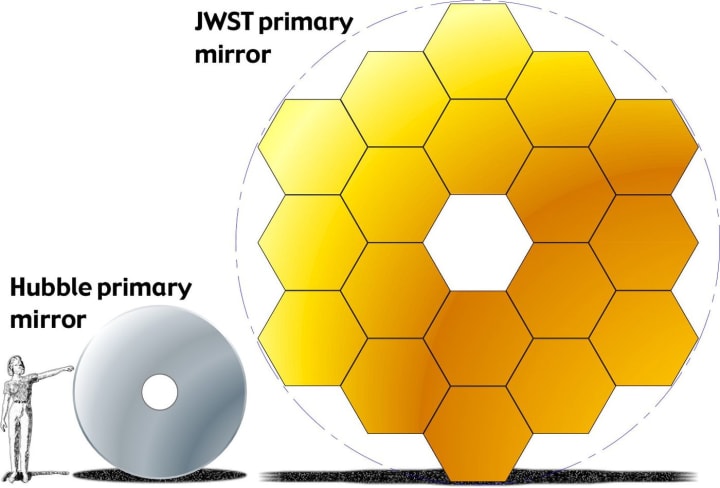
The James Webb Space Telescope has a significant size and structure. From one end to the other it's equal to a Tennis court and nearly three-story high. The weight is around 6.2 tonnes.
The main mirror of JWST has a diameter of about 6.5 meters, and a collecting area of about 25 meters square, it has been designed to resemble the shape of a giant honeycomb with 18 sections. A special type of Beryllium 'Be' was used for its construction, which can retain its shape in low cryogenic temperatures, in addition to that the front layer of the mirror is covered with 48.25 gm of gold, which is 100 nanometers thick for best reflection of infrared radiation.
The secondary mirror is placed opposite to the main mirror, which receives lights from the main and directs it to the instruments at the rear end of the telescope, for better quality two more mirrors are placed to collect images from the surface.
The biggest element of the telescope is the sun-shield, which resembles the structure of an enormous pie, it is about 20 meters long and 7 meters wide and consists of 5 very thin layers of Kapton Polymide film which protects the mirrors and tools from direct sunlight.
7. Important components and sensors
To achieve all the desired goals JWST has some amazing components. Here is the list of some:-
About the Creator
Sagar Tiwari
I am a freelance writer with deep interst in space science and technology, always seeking to learn more and more from every aspect.
Keep reading
More stories from writers in Futurism and other communities.
About Binding Prometheus
I want to start actively advocating on behalf of my own work, and the most valuable part of my canon is, without a doubt, Binding Prometheus, the play I have been working on since 2019 and only finished in 2023 as part of my MA. The play itself is an amalgamation of a million different inspirations. On one end, it evokes the Ancient Greek myth-play, deriving its own title from the earliest extant work of Western drama we have, Aeschylus’s Prometheus Bound. On the other end, it borrows significantly from the sci-fi bulwarks from over the years, namely Mary Shelley’s Frankenstein and Karel Capek’s Rossum’s Universal Robots. The play could be an episode of Black Mirror, I fear. I don’t know. I’ve only ever seen one episode of Black Mirror.
By Steven Christopher McKnight17 days ago in Futurism
CBRN Defense Market: National Security, Risk Preparedness & Industry Expansion
According to IMARC Group's latest research publication, The global CBRN defense market size was valued at USD 21.55 Billion in 2024. Looking forward, IMARC Group estimates the market to reach USD 33.11 Billion by 2033, exhibiting a CAGR of 4.64% during 2025-2033.
By James Whitman3 days ago in Futurism
Wild Card Weekend Recap: What Happens Now?
I think I figured out why I love Wild Card Weekend so much. It's because it's the first playoff anything of the calendar year. The NFL season starts in the fall, and once upon a time, the champion was crowned either on or slightly before New Year's. The evolution of the NFL schedule has resulted in the playoffs starting just into the New Year, and currently, the final week of the season falls on the first weekend of the New Year, with Wild Card Weekend coming a week after that. So yes, chronologically, the NFL's Wild Card Weekend serves as the first playoff anything of the calendar year.
By Clyde E. Dawkins5 days ago in Unbalanced




Comments
There are no comments for this story
Be the first to respond and start the conversation.