
Is the World Destined to Divide into 10 Super-States?
A Fractured Future: Is the World Destined to Divide into 10 Super-States?
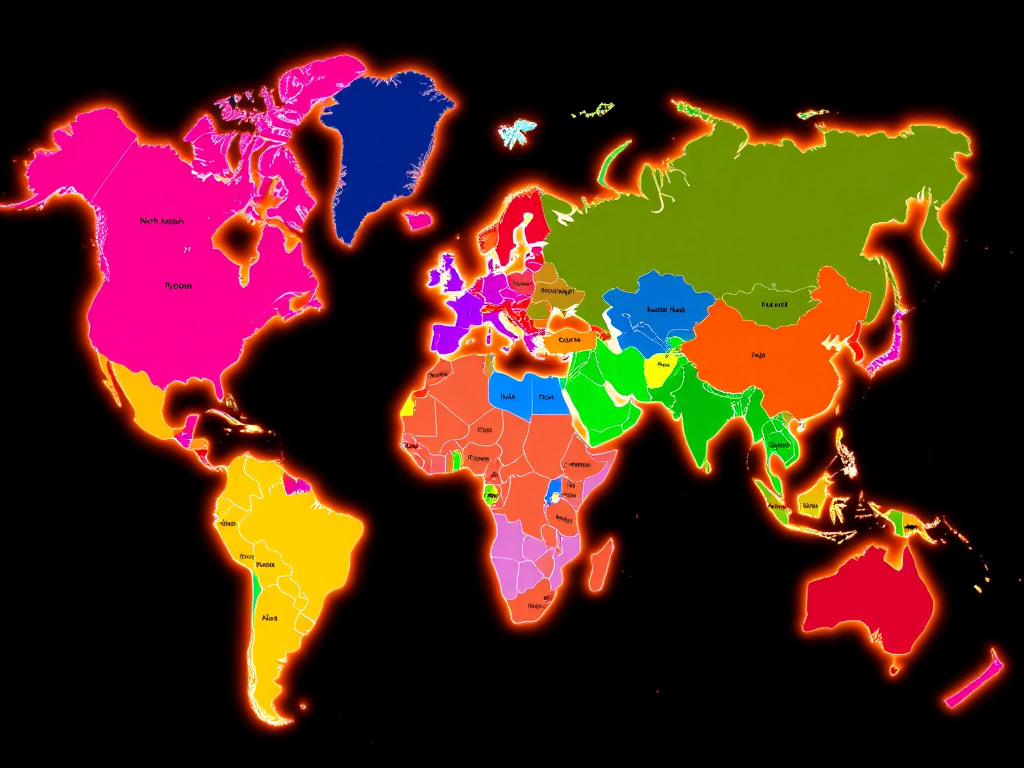
A Fractured Future: Is the World Destined to Divide into 10 Super-States?
Introduction:
Geopolitical analysis often focuses on individual nations, but a more unsettling question lingers: What if the future of the world lies not in a collection of independent states, but in the emergence of a handful of dominant "super-states," consolidating power, resources, and influence on a global scale? While the concept is speculative, examining current trends and potential future scenarios reveals the outlines of a world potentially reshaped into just a few powerful entities. This article explores the forces driving this potential consolidation and identifies ten possible super-states that could shape the 21st century and beyond.
The Drivers of Consolidation: Why Super-States Might Emerge:
Several powerful forces are pushing towards greater regional integration and the potential formation of super-states:
Economic Globalization: The interconnectedness of global markets and supply chains creates incentives for greater economic cooperation and integration. Larger economic blocs can better compete in the global marketplace.
Security Concerns: Faced with transnational threats such as terrorism, cyber warfare, and climate change, nations are increasingly seeking to pool their resources and capabilities for collective security.
Technological Advancement: Advances in communication and transportation technologies are making it easier for countries to integrate and coordinate their policies.
Resource Scarcity: Competition for scarce resources, such as water, energy, and minerals, could drive countries to form larger blocs to secure their access to these resources.
Ideological Affinity: Countries with shared values, political systems, and cultural heritage may be more likely to integrate and form closer alliances.
Climate Change: Climate change impacts, like mass migration and resource depletion, could force states to band together for survival.
Ten Potential Super-States of the Future:
It's crucial to remember that these are hypothetical scenarios, and the exact composition and boundaries of these super-states are highly uncertain. However, based on current trends and potential future developments, here are ten possible contenders:
The North American Union: Integrating the United States, Canada, and Mexico into a single economic and political entity. While facing significant political hurdles, the existing trade relationship through USMCA provides a foundation for closer integration.
The European Union (Expanded): Continuing the process of integration among European nations, potentially including some countries currently outside the EU, such as Ukraine and the Balkan states. This super-state would be a powerful economic and political force.
The Russian Sphere: Centered on Russia, this super-state would encompass countries in the former Soviet Union, such as Belarus, Kazakhstan, and Armenia. Russia's desire to reassert its influence in its near abroad makes this a plausible scenario.
The Chinese Bloc: Dominated by China, this super-state would include countries in Southeast Asia, such as Cambodia, Laos, and Myanmar, drawn into China's economic and political orbit. The Belt and Road Initiative provides a framework for expanding China's influence in the region.
The Indian Subcontinent Federation: Integrating India, Pakistan, Bangladesh, Nepal, and Sri Lanka into a single economic and political entity. Overcoming historical tensions and political differences would be a major challenge, but the potential economic benefits could be a powerful incentive.
The African Union (United States of Africa): A long-term goal of some African leaders, this super-state would unite the diverse nations of Africa into a single political and economic entity. Overcoming ethnic divisions, political instability, and economic disparities would be a formidable task.
The South American Confederation: Integrating Brazil, Argentina, Chile, and other South American countries into a single bloc. The existing Mercosur trade bloc provides a foundation for closer integration, but political and economic differences remain a challenge.
The Australasian Alliance: Uniting Australia, New Zealand, and potentially some Pacific Island nations into a single entity. Shared values, close economic ties, and security concerns could drive this integration.
The Islamic Caliphate (Transnational): A more controversial and less geographically defined possibility, this super-state would be based on a shared Islamic identity and could potentially transcend national borders, uniting Muslim communities across the globe. The appeal of such a structure is limited, and its realization is challenged by sectarian divisions and differing interpretations of Islamic law.
The Arctic Union: A more speculative but plausible scenario, this super-state would unite countries with territory in the Arctic region, such as Russia, Canada, the United States, Denmark (Greenland), and Norway, to manage the region's resources and navigate the challenges of climate change.
Implications of a World of Super-States:
The emergence of a world divided into a handful of super-states would have profound implications for global politics, economics, and culture:
Shift in Power Dynamics: The balance of power would shift from individual nations to these larger entities, potentially leading to increased competition and conflict between them.
Economic Restructuring: The global economy would be reorganized around these super-states, leading to new trade patterns and investment flows.
Cultural Homogenization: Greater integration within these super-states could lead to cultural homogenization, with the dominant culture potentially overshadowing local traditions.
Loss of Sovereignty: Individual nations would cede some degree of sovereignty to the super-state, potentially leading to concerns about democratic accountability and local autonomy.
New Forms of Conflict: Conflicts could shift from being between nations to being between these larger super-state entities, potentially leading to more devastating wars.
Conclusion:
The idea of the world consolidating into ten super-states is a speculative but thought-provoking scenario. While the exact composition and boundaries of these super-states are uncertain, the forces driving regional integration and consolidation are undeniable. Whether this trend leads to a more peaceful and prosperous world or a more fragmented and dangerous one remains to be seen. It is crucial to carefully consider the potential implications of this trend and to work towards a future where cooperation and collaboration, rather than competition and conflict, are the defining principles of international relations.
About the Creator
Podcasting in EdTech Market to hit USD 48.4 Billion By 2034
The Podcasting in EdTech Market is expected to reach USD 48.4 Billion by 2034, growing from USD 2.5 Billion in 2024, at a remarkable CAGR of 34.5% during the forecast period from 2025 to 2034. The rapid growth in this market is driven by the increasing adoption of podcasting as an educational tool, offering flexible, on-demand learning experiences.
By Roberto Crum6 days ago in Futurism
Australia Pet Supplement Market: Pet Humanization, Preventive Care & Natural Nutrition
According to IMARC Group, the Australia pet supplement market reached a value of USD 26.0 Million in 2024 and is projected to reach USD 41.0 Million by 2033, growing at a compound annual growth rate (CAGR) of 5.2% during 2025–2033. The market is expanding as pet owners increasingly prioritize the health, nutrition and overall well-being of their companion animals. Rising awareness about preventive healthcare for pets is encouraging owners to incorporate dietary supplements into daily feeding routines. Products designed to support joint health, digestive wellness, immunity and skin care are becoming widely popular among pet owners. At the same time, the growing trend of pet humanization—where pets are treated as family members—is significantly influencing purchasing decisions. The convenience of e-commerce platforms and personalized digital guidance is also helping pet owners access a broader range of supplement products, contributing to the steady growth of Australia’s pet supplement industry.
By Shrestha Roy6 days ago in Futurism



Comments
There are no comments for this story
Be the first to respond and start the conversation.