
Insurtech Market Analysis: Claims Automation, Risk Modeling & Industry Outlook to 2034
Analyzing how claims automation, digital-first interactions, and workflow optimization tools are reducing settlement times, lowering costs, and improving policyholder satisfaction across insurance value chains.

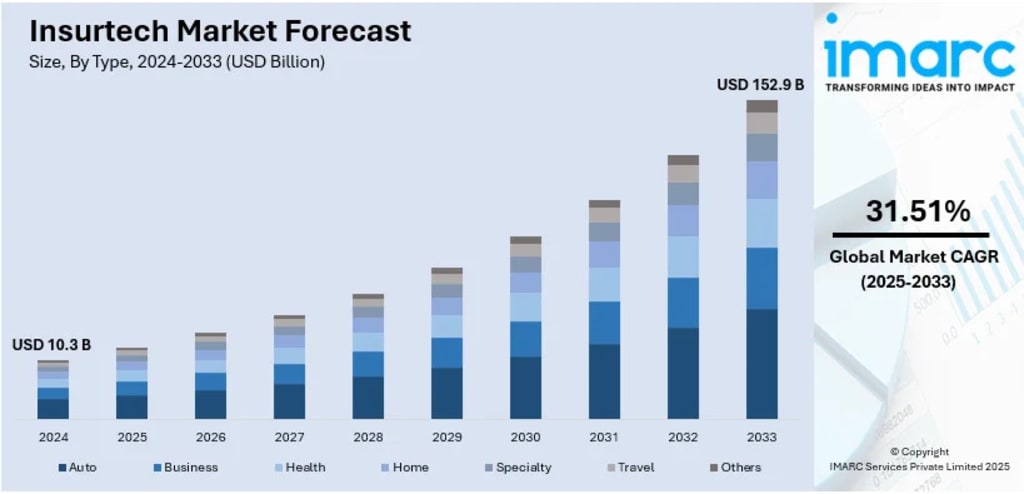
The insurtech sector is experiencing explosive growth as digital technologies transform how insurance companies operate and engage with customers. Driven by artificial intelligence, blockchain innovation, and shifting consumer expectations, the industry is moving toward more personalized, efficient, and transparent insurance solutions. According to IMARC Group's latest data, the global insurtech market size was valued at USD 10.3 Billion in 2025. Looking forward, IMARC Group estimates the market to reach USD 152.9 Billion by 2034, exhibiting a CAGR of 31.51% from 2026-2034.
Insurtech has evolved from a niche disruptor into a mainstream force reshaping the global insurance landscape. The industry is seeing billions in venture capital flowing into startups focused on artificial intelligence-powered underwriting, blockchain-based claims processing, and IoT-enabled risk management. Traditional insurance carriers are partnering with tech-savvy startups to modernize legacy systems, while new digital-first insurers are capturing market share with streamlined customer experiences. Investment surged with over 200 deals in the U.S. alone, supporting companies that prioritize automation, dynamic pricing, and embedded insurance solutions across fast-growing regions.
Insurtech Market Growth Drivers:
- AI and Machine Learning Revolutionizing Risk Assessment
Artificial intelligence and machine learning are fundamentally transforming how insurers assess risk and process claims. AI algorithms now analyze vast datasets in real time, identifying patterns that human analysts might miss and reducing underwriting time by up to 30% for commercial lines. Machine learning models enable predictive analytics that anticipate customer needs and fraud patterns, with some insurers reporting a 70% reduction in false positives compared to traditional methods. Over 78% of insurance leaders are expanding technology budgets specifically for AI implementation, making it the highest IT priority.
- Surging Demand for Digital Insurance Platforms
Consumer expectations for seamless digital experiences are pushing traditional insurers to modernize rapidly. Digital insurance platforms and marketplaces enable customers to compare products and purchase coverage entirely online, eliminating the need for traditional intermediaries. With smartphone penetration exceeding 92% in developed markets, mobile-first insurance solutions are gaining massive traction. These platforms provide instant policy issuance, real-time claims tracking, and 24/7 customer support through AI-powered chatbots. The shift toward digital channels has accelerated significantly, with customers now expecting the same convenience they experience in other digital services.
- Rising Cyber Threats Driving Specialized Insurance Demand
The escalating frequency and sophistication of cyberattacks are creating urgent demand for specialized cyber insurance products. Between 2023 and 2024, more than 6 billion records were compromised in 2,741 publicly disclosed security incidents. Insurtech companies are responding with AI-driven cyber risk assessment platforms that provide continuous threat monitoring and real-time risk scoring. These solutions enable insurers to offer dynamic pricing based on actual security postures rather than static annual assessments. Companies are leveraging partnerships with cybersecurity firms to embed insurance into broader security solutions, creating comprehensive protection packages.
Insurtech Market Trends:
- IoT and Telematics Enabling Usage-Based Insurance Models
Internet of Things devices are generating massive amounts of real-time data that insurers leverage for personalized pricing and proactive risk management. Telematics devices installed in vehicles provide detailed insights into driving behavior, enabling usage-based insurance policies that reward safe drivers with lower premiums. IoT systems now generate approximately 2.5 quintillion bytes of data daily, with this volume increasing yearly. Wearable technology in health insurance allows carriers to monitor policyholders' lifestyle choices and offer incentives for healthy behaviors, creating win-win scenarios where insurers reduce risk while customers save money. Smart home devices detect water leaks, fire hazards, and security breaches, allowing insurers to alert policyholders before major losses occur.
- Embedded Insurance Expanding Through Digital Ecosystems
Embedded insurance solutions are seamlessly integrating coverage into everyday transactions and digital platforms, making insurance more accessible and convenient. Companies are partnering with e-commerce platforms, ride-sharing services, and lending platforms to offer insurance at the point of sale without requiring separate policy purchases. This approach is particularly effective in emerging markets where traditional insurance penetration is low, providing affordable, bite-sized coverage through familiar digital channels. For example, FlyEasy partnered with Blink Parametric to bring parametric insurance solutions to the Asia-Pacific region, automating claims for flight disruptions.
- Regulatory Support and Sandbox Initiatives Fostering Innovation
Governments worldwide are creating supportive regulatory frameworks and innovation sandboxes that encourage insurtech experimentation while protecting consumers. The U.S. Department of Treasury's sandbox initiatives allow startups to test new products in controlled environments before full market launch. India's Insurance Regulatory and Development Authority launched the Bima Sugam portal, connecting insurers, intermediaries, and customers to simplify insurance access nationwide. European regulators are adapting frameworks to accommodate AI-driven underwriting and blockchain-based claims while maintaining strict data protection standards under GDPR. These progressive regulatory approaches enable insurtech companies to navigate compliance complexities while innovating rapidly.
Recent News and Developments in Insurtech Market
- January 2025: Peak3 and Lazada announced a joint venture to create a digital insurance ecosystem in Southeast Asia. Utilizing Peak3's SaaS insurance orchestration platform, the partnership integrates insurance products into Lazada's e-commerce platform, offering property, health, and travel coverage.
- January 2025: Corgi Insurance secured USD 108 Million in funding and obtained regulatory authority to operate as an AI-native, full-stack insurance carrier dedicated to startup companies. The insurtech offers comprehensive coverage including AI liability, cyber insurance, and errors and omissions liability.
- December 2024: Thailand Post partnered with an insurtech firm to launch an embedded online motor insurance service. Customers can now purchase competitively priced insurance directly through Thailand Post's platform and receive instant policy delivery via email.
Note: If you require specific details, data, or insights that are not currently included in the scope of this report, we are happy to accommodate your request. As part of our customization service, we will gather and provide the additional information you need, tailored to your specific requirements. Please let us know your exact needs, and we will ensure the report is updated accordingly to meet your expectations.
About the Creator
Andrew Sullivan
Hello, I’m Andrew Sullivan. I have over 9+ years of experience as a market research specialist.
Keep reading
More stories from Andrew Sullivan and writers in Futurism and other communities.
Digital Music Content Market Insights: Creator Economy, Licensing Dynamics & Forecast to 2033
The digital music revolution has fundamentally changed how people discover, consume, and share music worldwide. Streaming platforms, on-demand services, and innovative content delivery models are reshaping the industry, driven by evolving consumer preferences for convenience, personalization, and accessibility. According to IMARC Group's latest data, the global digital music content market size was valued at USD 23.7 Billion in 2024. Looking forward, IMARC Group estimates the market to reach USD 48.6 Billion by 2033, exhibiting a CAGR of 7.88% from 2025-2033.
By Andrew Sullivana day ago in Futurism
Secrets Between Walls
Secrets Between Walls The old mansion at the end of Willow Street had always been a source of whispered rumors in the neighborhood. Children dared each other to peek through its wrought iron gates, adults steered clear, and even the bravest teens swore they heard strange sounds echoing from within. To anyone looking from outside, it was a decaying relic of a bygone era—its paint peeling, windows clouded with dust, and shutters hanging at odd angles. But to Mara, who had just inherited the mansion from her late great-uncle, it was home.
By Samaan Ahmad8 days ago in Futurism
The Growing Importance of Data Accuracy in the Crypto Ecosystem
As blockchain technology matures, the conversation around cryptocurrencies is shifting beyond speed and scalability toward data accuracy and trust. Decentralized systems rely on correct information to function effectively, whether it involves transactions, smart contracts, or real-world integrations.
By Muhammad Talha Ahmadabout 2 hours ago in Futurism




Comments
There are no comments for this story
Be the first to respond and start the conversation.