
Digital Music Content Market Insights: Creator Economy, Licensing Dynamics & Forecast to 2033
How short-form video platforms, social media virality, and creator-led trends are influencing music consumption patterns, promotional strategies, and catalog performance worldwide.

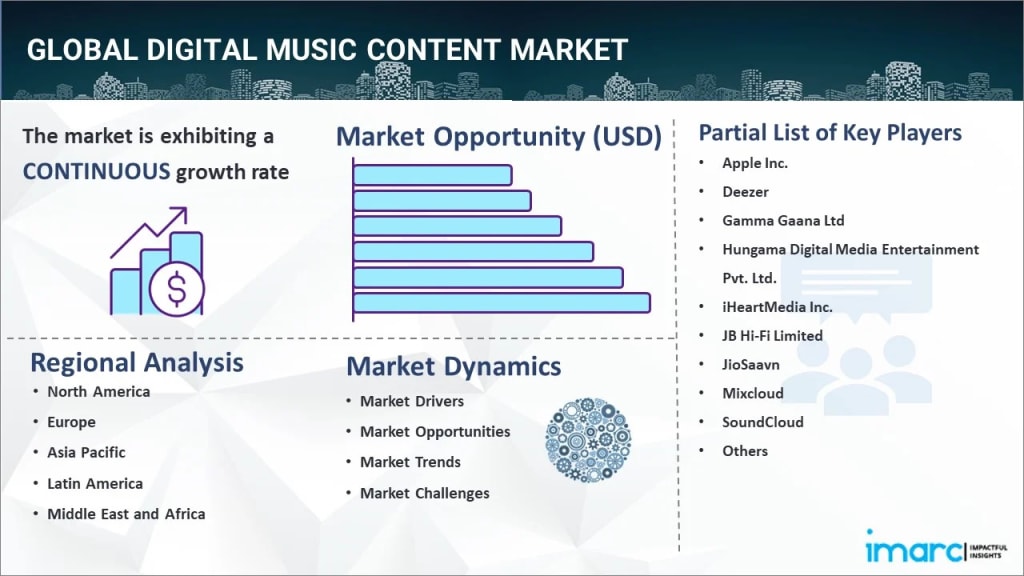
The digital music revolution has fundamentally changed how people discover, consume, and share music worldwide. Streaming platforms, on-demand services, and innovative content delivery models are reshaping the industry, driven by evolving consumer preferences for convenience, personalization, and accessibility. According to IMARC Group's latest data, the global digital music content market size was valued at USD 23.7 Billion in 2024. Looking forward, IMARC Group estimates the market to reach USD 48.6 Billion by 2033, exhibiting a CAGR of 7.88% from 2025-2033.
The digital music content landscape now represents a dynamic ecosystem where streaming platforms deliver instant access to millions of tracks, podcasts integrate seamlessly with music libraries, and AI-powered personalization keeps listeners engaged. Major segments include music streaming and permanent downloads, with commercial applications and the 18-40 age demographic driving the strongest demand. The industry is witnessing tremendous growth as platforms innovate with lossless audio, video integration, and subscription models that cater to diverse user needs across global markets.
Digital Music Content Market Growth Drivers:
- Explosive Growth in Streaming Adoption and Platform Competition
Music streaming has become the dominant form of music consumption, with over 713 million subscribers globally and platforms reporting more than 626 million monthly active users. Spotify alone paid out over $11 billion to the music industry in 2025, marking a 10% increase from the previous year and representing the largest annual payment from any retailer in history. The competitive landscape intensifies as major platforms like Spotify, Apple Music, and Amazon Music battle for subscribers through aggressive feature launches including lossless audio, music videos, and integrated podcast offerings.
- Unprecedented Content Volume and Creator Democratization
The music industry witnesses approximately 106,000 new tracks delivered to digital service providers every single day, reflecting a 7% increase over the previous year. This explosion in content creation stems from democratized distribution channels where independent artists and labels now account for 96% of daily uploads. The total catalog has expanded to roughly 253 million audio tracks, with independent artists and DIY distribution reshaping traditional industry dynamics. Major labels represented just 3.8% of new releases in 2025, down from 8% the previous year, as accessible platforms like TuneCore, DistroKid, and CD Baby enable creators to bypass traditional gatekeepers and reach global audiences directly through streaming services.
Request a Free “Digital Music Content Market” Report Sample Here
- AI-Powered Personalization and Enhanced Discovery
Artificial intelligence has transformed music discovery, with platforms deploying sophisticated algorithms that analyze listening behavior, contextual factors, and user preferences to deliver highly personalized recommendations. Spotify's AI-driven features like Discover Weekly and auto-generated playlists keep users engaged while helping artists reach new audiences. Services are increasingly organizing content around emotions and moods rather than traditional genres, creating playlists that reflect specific feelings or moments. AI also powers content moderation and copyright detection, with Deezer launching the world's first AI tagging system in June 2025 to identify fully AI-generated tracks, which now represent about 18% of daily uploads totaling over 20,000 tracks per day.
Digital Music Content Market Trends:
- Subscription Model Evolution and Premium Tier Expansion
Streaming platforms are actively reshaping their subscription structures to capture more value from engaged listeners. Spotify increased its Premium subscription from $11.99 to $12.99 in the US market, representing the third price adjustment in three years, while launching family and duo plans in international markets like India where JioSaavn offers family access for up to six users at Rs 149 monthly. Industry discussions around "supremium" tiers intensify, with research suggesting over 20% of users willing to pay an additional $10 monthly for exclusive features. These premium offerings promise lossless audio, early access to releases, enhanced video content, and artist-led exclusive experiences as platforms differentiate beyond catalog size and work to maintain subscriber growth in maturing markets.
- Integration of Podcasts and Expanded Audio Content
Music streaming platforms increasingly function as comprehensive audio destinations by incorporating podcasts, audiobooks, and spoken-word content alongside traditional music catalogs. Podcasts now account for approximately 17.6% of total audio streamed on Spotify, with Apple Podcasts reaching 44 million US listeners and YouTube Music launching podcast integration that drove a 22% spike in active listening hours. This convergence creates unified audio ecosystems where users access music, educational content, interviews, and storytelling without switching applications. The strategy enhances platform stickiness, increases daily engagement time, and provides additional revenue streams through advertising and premium tiers, with 72% of podcast consumption driven by Gen Z and Millennial audiences seeking diverse content formats.
- High-Fidelity Audio and Quality Enhancement Push
Major platforms are prioritizing audio quality upgrades to satisfy audiophiles and justify premium pricing, with Spotify finally launching lossless streaming in late 2025 after years of anticipation, offering 24-bit/44.1 kHz FLAC quality across more than 50 markets at no additional cost. This move positions Spotify alongside Apple Music, Amazon Music, and Tidal, which have offered high-resolution options for years. Services like Tidal maintain their audiophile edge with full FLAC support after ditching the controversial MQA codec, while platforms like AuroMasters launched in India specifically addressing low audio quality concerns.
Recent News and Developments in Digital Music Content Market
- August 2025: JioSaavn introduced Duo and Family 'Pro' subscription options in India, priced at Rs 129 monthly for two users and Rs 149 for up to six users. These subscriptions provide ad-free music access, unlimited downloads, and improved sound quality, making premium features more affordable and expanding the subscriber base in the competitive Indian market.
- December 2025: Spotify launched music videos in beta for Premium subscribers across the United States and Canada, stepping up its challenge to YouTube's dominance in visual music content. The feature provides access to a growing catalog of official videos including studio releases, live performances, and covers, enhancing the platform's multimedia capabilities.
- February 2026: Spotify reported quarterly earnings confirming payment of $11 billion to the music industry in 2025, up more than 10% from 2024, with independent artists and labels accounting for half of all royalties. The company now serves over 775 million monthly active users globally, marking record growth in audience reach and platform engagement.
Note: If you require specific details, data, or insights that are not currently included in the scope of this report, we are happy to accommodate your request. As part of our customization service, we will gather and provide the additional information you need, tailored to your specific requirements. Please let us know your exact needs, and we will ensure the report is updated accordingly to meet your expectations.
About the Creator
Andrew Sullivan
Hello, I’m Andrew Sullivan. I have over 9+ years of experience as a market research specialist.
Keep reading
More stories from Andrew Sullivan and writers in Futurism and other communities.
Farm Equipment Rental Market Trends: Mechanization Demand, Cost Efficiency & Forecast to 2034
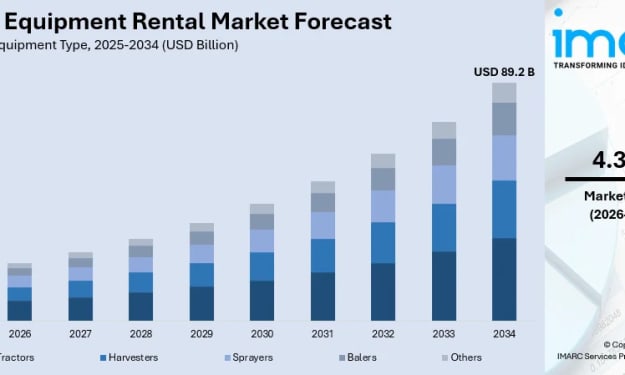
Rising agricultural mechanization, improved access to advanced technology without heavy investment, increased demand for flexible farming solutions, rapid urbanization, rising sustainability concerns, the growing trend of precision agriculture, and increasing government support for mechanized farming are driving demand in the farm equipment rental market. According to IMARC Group's latest data, the global farm equipment rental market size was valued at USD 60.7 Billion in 2025. Looking forward, IMARC Group estimates the market to reach USD 89.2 Billion by 2034, exhibiting a CAGR of 4.37% from 2026-2034.
By Andrew Sullivana day ago in Futurism
Stanislav Kondrashov Oligarch Series: Oligarchy and the Future Progress of Human Civilisation
Stop for a moment and think about this: when a new technology changes your daily life, when a city skyline transforms, when an entire industry pivots in a few short years — who made that possible?
By Stanislav Kondrashov a day ago in Futurism
Tin Market Outlook: Electronics Demand and Industrial Growth Opportunities
According to IMARC Group's latest research publication, The global tin market size was valued at 417.2 Kilo Tonnes in 2025. Looking forward, IMARC Group estimates the market to reach 461.6 Kilo Tonnes by 2034, exhibiting a CAGR of 1.13% during 2026-2034.
By James Whitmana day ago in Futurism



Comments
There are no comments for this story
Be the first to respond and start the conversation.