
Inside the Growing Resistance to AI-Governed Economies: 17 Alarming Reasons Sparking Global Pushback
Unveiling the Global Push-back Against Algorithmic Control of Our Economies

1. Introduction: Understanding the AI-Economic Nexus
Artificial Intelligence (AI) has infiltrated every corner of the modern economy. From determining which loans are approved to deciding who gets hired, AI systems are reshaping capitalism at its core. These changes have given birth to a new economic era, one governed less by human intuition and more by algorithms. However, as AI’s grip on economic processes tightens, a growing global resistance is taking shape—made up of workers, activists, ethicists, and even former tech insiders.
This article explores Inside the Growing Resistance to AI-Governed Economies, unpacking why people across the globe are pushing back against an economic system run by machines.
2. What Are AI-Governed Economies?
The Rise of Algorithmic Capitalism
AI-governed economies refer to systems where critical financial and economic decisions are made or influenced by artificial intelligence. From stock trading bots on Wall Street to AI-driven hiring tools, decisions once made by humans are increasingly handed over to predictive models.
AI’s Role in Shaping Financial and Labor Markets
AI now powers financial markets through high-frequency trading, risk analysis, and credit scoring. In labor markets, AI tools screen candidates, monitor employee productivity, and even manage gig economy platforms like Uber and Deliveroo. While efficient, this level of control raises ethical and economic concerns.
3. The Benefits That First Sparked Adoption
Efficiency and Automation in Decision-Making
AI promised to eliminate human error, streamline operations, and cut costs. Decision-making became faster and seemingly more “rational.” For businesses, the allure was irresistible.
Enhanced Predictive Analytics in Trade and Labor
With vast data processing capabilities, AI models provided insights that helped companies forecast trends, optimize logistics, and refine marketing strategies—seemingly maximizing profitability.
4. The Backlash Begins: Who’s Leading the Resistance?
Labor Unions and Worker Rights Movements
Unions around the globe have begun organizing protests and legal challenges against AI systems that automate or unfairly monitor labor. These groups argue that AI leads to dehumanization and job precarity.
Economists and Social Scientists
Academics are raising red flags about AI's influence on wealth distribution, labor rights, and the erosion of democratic economic planning.
Data Sovereignty Advocates
These advocates argue that people—not corporations—should own and control the data that feeds AI algorithms. They demand transparency and accountability in how data is harvested and monetized.
5. Loss of Human Agency in Economic Decisions
One of the central complaints is the erasure of human agency. Individuals are increasingly subjected to economic judgments made by machines they don’t understand and cannot challenge. From credit denial to automated job rejections, these impersonal systems leave no room for human negotiation.
6. Surveillance Capitalism and AI’s Control of Consumer Behavior
As AI tracks every click and purchase, it's not just reacting to consumer behavior—it’s shaping it. This leads to a dangerous feedback loop where consumer choices are manipulated by algorithms designed to maximize profit, not personal well-being.
7. Algorithmic Bias and Economic Inequality
Discrimination in Credit, Jobs, and Housing
Even the most advanced AI models reflect the biases of their training data. This has led to discriminatory practices in hiring, loan approvals, and housing—often reinforcing systemic inequalities under a guise of “neutrality.”
8. Automation and the Threat to Job Security
AI-driven automation is reshaping the workforce—and not always for the better. Millions of jobs are at risk, especially those in manufacturing, transportation, and customer service. While proponents argue that new tech will create new types of employment, many fear a net loss of human jobs, particularly those accessible to low-income or less formally educated individuals.
Beyond job elimination, there's a growing concern over the "gigification" of stable roles. Platforms like Uber and Amazon rely heavily on AI to assign tasks, monitor productivity, and discipline workers without any human involvement. This has led to unpredictable income, poor working conditions, and a deterioration of workers' rights.
9. The Myth of Objectivity in AI Decision-Making
AI is often marketed as objective, impartial, and data-driven. But that’s a myth. AI models are built by humans, trained on human-generated data, and inevitably reflect our biases. Whether it’s racial discrimination in facial recognition systems or gender bias in hiring software, the reality is that AI replicates—and sometimes amplifies—systemic injustice.
Resistance to AI-governed economies often stems from this myth. People are waking up to the fact that "neutral algorithms" can be as flawed, biased, and opaque as the people who created them—if not more so.
10. Tech Corporations vs. Public Accountability
Big Tech companies often operate in regulatory grey zones, enjoying immense power without matching responsibility. They create the AI systems that govern economic life but remain unaccountable when these systems fail or cause harm.
What happens when an algorithm falsely denies someone unemployment benefits or deems a small business too risky for a loan? There’s usually no clear channel for appeal, no transparent explanation—just a cold, faceless system optimized for profit.
This lack of recourse is driving public distrust and igniting calls for greater regulatory oversight, ethical standards, and democratic input into how economic AI is developed and deployed.
11. Global Movements Pushing for AI Regulation
The EU’s AI Act and Its Global Influence
Europe is leading the charge with the AI Act, which sets clear guidelines on the use of AI in critical areas like employment, finance, and biometric surveillance. It classifies systems by risk level and bans certain applications altogether. This landmark legislation is inspiring similar initiatives globally.
Grassroots Movements in the Global South
In countries like India, Brazil, and Kenya, grassroots activists are challenging the implementation of Western-developed AI tools in local economic systems. They argue that these models don’t account for local contexts and often perpetuate digital colonialism.
These movements are demanding local data sovereignty, transparency, and systems that reflect community needs—not just corporate bottom lines.
12. Economic Collapse Scenarios Fueled by AI Misjudgment
While AI can streamline decision-making, it can also cause catastrophic miscalculations. Consider automated trading algorithms that cause flash crashes on stock markets. Or predictive models that incorrectly identify credit risks, leading to mass loan rejections and financial instability.
If left unchecked, these tools could trigger widespread economic disruptions—especially if governments and regulators continue to defer to corporate developers without understanding the risks involved.
13. Ethical AI: Is It Even Possible in Profit-Driven Economies?
The phrase “ethical AI” is increasingly popular—but critics argue it’s an oxymoron in capitalist systems where profit trumps principle. Even well-intentioned developers often face pressure from investors and executives to prioritize scalability, not safety.
This has led to a push for non-profit AI labs, public sector involvement in AI development, and frameworks that embed ethical checks into the design process—not as an afterthought, but as a core feature.
14. Alternative Models to AI-Governed Economies
Human-in-the-Loop Economic Systems
These systems integrate AI but ensure that humans have the final say—especially in sensitive decisions involving health, finance, or employment. This approach keeps human ethics, empathy, and accountability at the center.
Cooperative Data Ownership Frameworks
Rather than letting corporations monopolize data, some advocates propose data cooperatives, where individuals own and control their data collectively. These cooperatives can decide how data is shared, with whom, and for what purpose—challenging the extractive logic of surveillance capitalism.
15. Role of Education in Empowering Resistance
Awareness is a powerful weapon. As people learn more about how AI shapes their lives, they begin to resist. From digital literacy programs to university courses on AI ethics, education is fueling a new wave of informed resistance.
Schools, communities, and labor organizations are teaching individuals how to navigate, question, and challenge AI-driven systems. This grassroots empowerment is essential to any long-term change.
16. Frequently Asked Questions (FAQs)
Q1: Why are people resisting AI in the economy?
Because many fear the loss of human jobs, transparency, and control, as AI systems take over decision-making processes in finance, employment, and resource distribution.
Q2: Isn’t AI more efficient than human decision-making?
Efficiency doesn’t always equal fairness. While AI can optimize processes, it often lacks empathy, context, and ethical judgment—leading to biased or harmful outcomes.
Q3: Can we regulate AI-driven economies?
Yes, through legislation like the EU’s AI Act, and by involving the public in decision-making. However, global cooperation and consistent enforcement are key.
Q4: Are there alternatives to AI-governed economies?
Absolutely. Models like human-in-the-loop systems, cooperative data ownership, and community-focused AI design offer more democratic alternatives.
Q5: Who benefits most from AI-governed economies?
Primarily large tech corporations and investors. Without regulation, these entities gain disproportionate power over economic life.
Q6: What role can individuals play in resisting harmful AI?
They can advocate for transparency, demand ethical standards, support data cooperatives, and educate themselves and others about AI’s economic impact.
17. Conclusion: Charting a Future Beyond Algorithmic Control
As the world races toward a future shaped by artificial intelligence, the resistance to AI-governed economies is both necessary and growing. It’s a call not to abandon technology—but to ensure it serves human dignity, equity, and freedom.
Economic systems should reflect our collective values, not just corporate algorithms. Whether through policy change, education, activism, or innovation, people everywhere are working to reclaim agency in an economy that’s becoming dangerously automated.
The question isn’t whether we can stop AI from influencing the economy—it’s whether we can ensure that influence benefits everyone, not just the powerful few.
About the Creator
DJ for Change
Remixing ideas into action. I write about real wealth, freedom tech, flipping the system, and community development. Tune in for truth, hustle, hacks, and vision, straight from the Capital District!
https://buymeacoffee.com/djforchange
Keep reading
More stories from DJ for Change and writers in Futurism and other communities.
How to Build Burner Crypto Setup for Anonymous Wealth (Expert Guide 2025)
Understanding the Concept of a Burner Crypto Setup A burner crypto setup is a temporary, untraceable digital wallet system created specifically for anonymous transactions. It’s designed to preserve privacy, avoid identity leaks, and maintain control over personal financial data. Unlike long-term wallets linked to identities or centralized exchanges, burner wallets are:
By DJ for Change6 months ago in Futurism
About Binding Prometheus
I want to start actively advocating on behalf of my own work, and the most valuable part of my canon is, without a doubt, Binding Prometheus, the play I have been working on since 2019 and only finished in 2023 as part of my MA. The play itself is an amalgamation of a million different inspirations. On one end, it evokes the Ancient Greek myth-play, deriving its own title from the earliest extant work of Western drama we have, Aeschylus’s Prometheus Bound. On the other end, it borrows significantly from the sci-fi bulwarks from over the years, namely Mary Shelley’s Frankenstein and Karel Capek’s Rossum’s Universal Robots. The play could be an episode of Black Mirror, I fear. I don’t know. I’ve only ever seen one episode of Black Mirror.
By Steven Christopher McKnight18 days ago in Futurism
Japan Smart Doorbell Market Size and Forecast 2025–2033
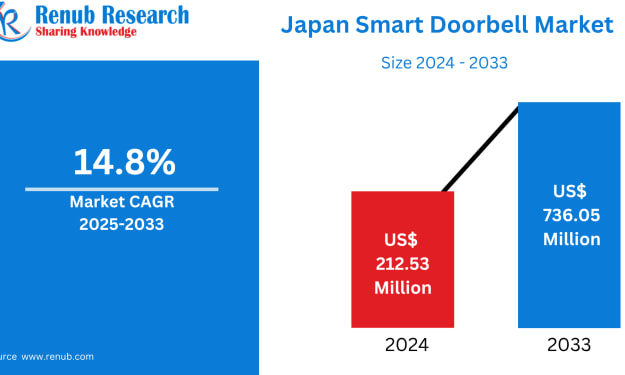
Market Snapshot The Japan Smart Doorbell Market is expected to reach US$ 736.05 million by 2033, up from US$ 212.53 million in 2024, expanding at a robust CAGR of 14.8% from 2025 to 2033. Rapid urbanization, increasing adoption of smart home technologies, and rising demand for home security systems are driving market growth. Advancements in AI, video analytics, and wireless connectivity are further strengthening consumer demand for smart doorbell systems.
By Marthan Sir3 days ago in Futurism
How to Succeed at the Benson Directory®
Congratulations and welcome to the Benson Directory® employee #22391! As our newest call handler, you will have the privilege of speaking with dozens of unique and interesting people on a daily basis as well as the opportunity to earn bonuses for high performance. Contained within this handbook you will find a set of ease to follow instructions designed to help you settle in to your new role and begin paving the way to success.
By S. A. Crawford2 days ago in Fiction



Comments
There are no comments for this story
Be the first to respond and start the conversation.