
Inside the First-Ever Robot Olympics: Beijing’s Humanoid Athletes Compete for Gold
Beijing 2025 hosted the world’s first Humanoid Robot Sports Games, where machines sprinted, jumped, and went viral blurring the line between technology, entertainment, and the future of sports


Historic First in Beijing
In August 2025, Beijing made history by hosting the world’s first Humanoid Robot Sports Games, quickly nicknamed the Robot Olympics. For the first time ever, humanoid robots ran, jumped, and competed like athletes inside the same Olympic venues that once hosted humans. The event has sparked global fascination—not just about sports, but about the future of robotics, artificial intelligence, and the relationship between machines and people. Could this be the beginning of a new sporting era where robots chase medals just like humans?
What Exactly Are the Robot Olympics?
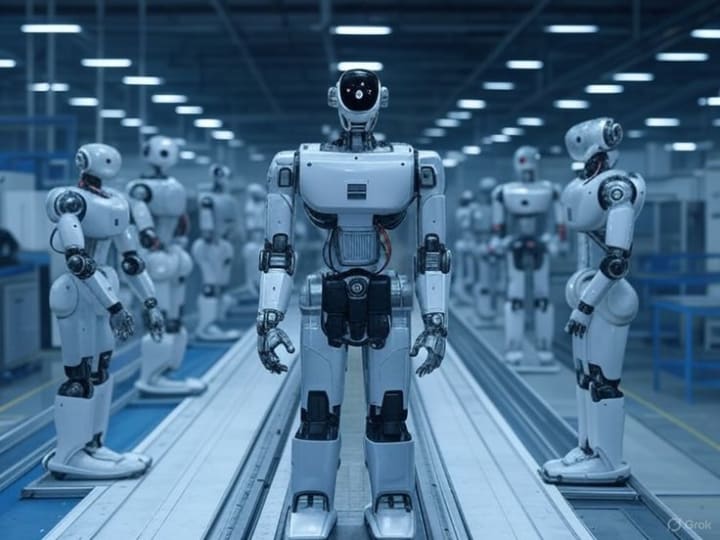
The Robot Olympics 2025, officially known as the World Humanoid Robot Sports Games, brought together teams from around the globe to showcase their robotic creations. Events included sprinting challenges, basketball throws, football-style matches, and obstacle courses. The games were designed not only for entertainment but also to test the limits of AI, mobility, and balance control in humanoid machines. Hosted in Beijing’s Olympic Sports Center, the competition highlighted the city’s ambition to lead the world in robotics innovation.
Why This Event Matters Beyond Sports
While the sight of robots sprinting and stumbling may seem futuristic or even humorous, the games have deeper significance. Each event provided real-world testing for technologies that could be applied in manufacturing, healthcare, disaster response, and even space exploration. By challenging robots to perform athletic tasks, engineers are accelerating breakthroughs in machine learning, agility, and real-time decision-making. At the same time, hosting the event gave China a powerful stage to demonstrate its growing dominance in robotics and artificial intelligence, sparking comparisons with rivals like Japan, South Korea, and the United States.

Social Media Buzz and Viral Moments
The event also set social media on fire. Clips of robots sprinting, falling, and even celebrating victories went viral across TikTok, X (Twitter), and YouTube Shorts. Memes compared the competition to “RoboCop meets the Olympics,” while tech influencers debated whether this could change the way we think about sports altogether. Hashtags like #RobotOlympics, #HumanoidGames, and #FutureOfSports trended globally, with millions of people sharing their excitement and curiosity.

What’s Next for Robot Sports?
Looking ahead, organizers have already hinted at expanding the games with even more complex challenges. Future editions may include gymnastics, swimming simulations, and large-scale team competitions. Some experts predict that by the 2032 Olympics, demonstration events featuring robots could run alongside human athletes. Others warn that the rise of robot sports could shift the meaning of competition itself, turning it from a measure of physical talent into a showcase of engineering innovation.

How the Robot Olympics Were Judged
The games weren’t just random displays of robotics—it was a structured competition. Judges evaluated robots based on speed, agility, balance, and technical performance. Each team brought different technologies, from AI-driven decision-making systems to advanced mobility hardware. Unlike human competitions, scoring here rewarded not only results but also innovation and engineering creativity.
Who Participated in the First Robot Olympics?
Dozens of teams represented leading universities, tech companies, and robotics startups from around the world. China’s robotics sector dominated, but strong entries also came from Japan, South Korea, Germany, and the United States. The event wasn’t limited to corporate giants—smaller research teams were also able to showcase breakthroughs, making it a mix of cutting-edge industry and grassroots innovation.
Challenges Faced by Humanoid Robots
Even with advanced technology, the games revealed how difficult it is to make robots move like humans. Many machines stumbled, lost balance, or froze during high-speed actions. Engineers noted that energy efficiency, battery life, and real-time adaptability remain major hurdles. These challenges highlight just how far robotics still has to go before machines can match human athletes.
Public Concerns: Excitement or Fear?
Not everyone viewed the Robot Olympics as fun and games. Some critics raised concerns about job automation, human relevance in sports, and ethical questions. Could future robots replace not only workers but also athletes? Others worried about the potential militarization of humanoid robotics. Still, supporters argue the event shows how robotics can inspire innovation rather than threaten humanity. Economic and Political Impact of Hosting the Games
By staging the world’s first Robot Olympics, Beijing sent a clear message: China wants to lead the global robotics race. Analysts suggest the event was as much about soft power and tech dominance as it was about sports. The games also attracted investors, creating new opportunities in robotics startups and AI development. For China, the Robot Olympics became a showcase of technological ambition on the world stage.
Could Humans and Robots Compete Together One Day?
One of the most debated questions after the event was whether future Olympics could feature mixed competitions—humans versus robots. Imagine sprinters racing alongside humanoid machines, or robots serving as teammates in relay races. While still speculative, some experts believe hybrid competitions could emerge within the next decade, creating a new category of entertainment that blends athleticism with engineering.
Conclusion: The Future of Sports or Just a Tech Craze?
The Robot Olympics 2025 in Beijing wasn’t just a spectacle—it was a preview of a future where machines not only serve us but also entertain and compete with us. Whether you find it thrilling or unsettling, one thing is clear: the line between technology and entertainment has officially blurred. The real question now is whether we are witnessing the future of sports or simply the start of a fascinating new tech craze.
About the Creator
Narrative Now
A storytelling platform that transforms trending topics, news, and cultural conversations into powerful vocal stories. We specialize in audio storytelling, narrated articles, and spoken insights that keep you informed and inspired.
Keep reading
More stories from Narrative Now and writers in Futurism and other communities.
Charlie Kirk Fatally Shot at Utah Valley University: A Tragic Turning Point
Introduction On September 10, 2025, conservative activist Charlie Kirk was fatally shot while addressing students and supporters at Utah Valley University (UVU) in Orem, Utah. The incident unfolded during his “American Comeback Tour” stop, which featured his signature “Prove Me Wrong” format. Roughly 3,000 attendees had gathered, making it one of the largest student events of the semester. Kirk’s sudden death has left the nation in shock and raised urgent debates about political violence, security, and free speech in America.
By Narrative Now6 months ago in Criminal
Australia Off-Road Vehicles Market: Adventure Tourism, Electric Models & Rural Utility Demand
According to IMARC Group, the Australia off-road vehicles market reached a value of USD 490.28 Million in 2024 and is projected to reach USD 861.59 Million by 2033, growing at a compound annual growth rate (CAGR) of 5.80% during 2025–2033. The market is experiencing steady growth as recreational, agricultural and commercial users increasingly adopt off-road vehicles for both adventure and practical applications. The expansion of adventure tourism across Australia’s remote landscapes is driving demand for rugged 4WD vehicles, all-terrain vehicles (ATVs) and utility task vehicles (UTVs) capable of navigating challenging terrain. At the same time, rising adoption of electric off-road vehicles supported by environmental regulations and battery technology advancements is transforming the industry. Additionally, growing demand from agriculture, mining and rural operations is strengthening the market as these sectors rely on off-road vehicles for transportation, equipment handling and operational efficiency.
By Shrestha Roy5 days ago in Futurism




Comments
There are no comments for this story
Be the first to respond and start the conversation.