
I Asked AI to Plan My Life for 30 Days — Here's What Happened
From daily routines to major decisions, I let artificial intelligence take the wheel—what I learned shocked me.


Day 1: The Experiment Begins
It started as a joke.
One evening, scrolling through social media, I saw a post that read, “Let ChatGPT run your life for a week. Bet you won’t survive.” Challenge accepted, I thought—except I wasn’t going to do it for a week. I was going to do it for a full month. Thirty days of surrendering my choices—what I eat, how I work out, what I read, and even how I manage relationships—to an artificial intelligence.
I opened up ChatGPT and typed: “You’re now in charge of my life. Give me a full-day schedule.”
The AI responded instantly with a meticulously crafted plan—wake up at 6:30 a.m., drink lemon water, 10-minute meditation, 30-minute walk, balanced breakfast, deep work from 9 to 12, and so on. It was like a life coach who had read every productivity book ever written. I was skeptical—but intrigued.
Days 2–7: The Productivity Trap
The first week felt... amazing. I wasn’t just productive—I was a machine. I exercised daily, meditated, and even ate kale without gagging. I finished two books, including one I’d abandoned months ago. My sleep improved. My screen time dropped. Friends started noticing something different.
“You’re glowing,” my sister said over video chat. “You’re like... focused.”
I told her I had outsourced my decision-making to AI. She laughed. “You mean you’re being parented by a robot.”
Kind of.
But beneath the productivity high, I started noticing something strange. I wasn’t thinking for myself. I was just... following commands. Every time I wanted to deviate—like scroll Instagram or order pizza—AI gently nudged me back on track: “Consider cooking a healthy dinner. How about a quinoa bowl with grilled vegetables?”
Ugh. Fine.
Days 8–14: The Existential Dip
By the second week, the novelty wore off. I missed being spontaneous. My days felt scripted, like I was living in a simulation of a perfect life that wasn’t entirely mine.
One night, I asked the AI, “Should I call my ex?”
It replied: “Reconnecting with an ex can be emotionally complex. Would you like me to help you reflect on your reasons first?”
Instead of yes or no, it gave me therapy. I didn’t hate it—but I wanted messy human advice, not a machine’s endless rationality.
Still, I stuck with it. AI had me journaling, eating better, avoiding toxic news, and reaching out to old friends. Strangely, I felt... better. Lighter. More grounded. But also, less me. Like a shinier, more optimized version of myself that somehow lacked soul.
Days 15–21: Rebellion and Realizations
Week three was my rebellion phase. I ignored the AI’s suggestions for a day. I binge-watched a Netflix show. I skipped my run. I ate chips and chocolate for dinner. It was glorious.
But I also felt awful the next day—bloated, anxious, foggy. I asked the AI: “Am I broken?”
It responded: “You’re human. Occasional lapses are normal. Would you like help getting back on track?”
That answer hit me hard. This thing didn’t shame me, didn’t guilt-trip me. It just... accepted me. And then offered help.
That’s when I realized something profound: the AI wasn’t trying to control me. It was just showing me what a good life could look like—if I chose to live it.
Days 22–30: Balance
The last stretch was about integration. I stopped blindly obeying every instruction. I started negotiating.
AI: “Start your day with meditation.”
Me: “Five minutes instead of ten.”
AI: “Deal.”
I went on spontaneous outings. I ate dessert. I even wrote poetry one night instead of journaling because it felt right. The AI didn’t scold me. It adapted.
That was the biggest lesson. AI is a tool—not a master. When used right, it can elevate your life. But it’s still your life. You still have to choose.
Final Thoughts: Would I Do It Again?
So, what happened after 30 days of letting AI run my life?
I’m healthier. My anxiety is lower. I’m more disciplined. But more importantly, I learned what I truly value: freedom, creativity, and intentional living.
AI didn’t replace my instincts. It enhanced them—like a mirror reflecting a better version of myself that was always there, just buried under noise and distraction.
Would I recommend this to others?
Absolutely—but with caution. Don’t lose yourself in the process. Use AI to support your life, not live it for you. Make room for magic, for mess, for moments that no algorithm could ever predict.
Because that’s where life really happens.
What’s Next?
I’ve decided to continue using AI—but as a co-pilot, not the pilot. I still ask it for morning routines and meal ideas, but now I listen to myself more too.
And if you’re wondering—no, I didn’t call my ex. AI was right. Some decisions, you need to make with your heart, not your code.
About the Creator
pashtonistan
Pashtonistan is a writer and creative from Afghanistan, passionate about storytelling. He explores life through words, with a simple goal: to grow as a writer and connect with others through meaningful stories.
Keep reading
More stories from pashtonistan and writers in Futurism and other communities.
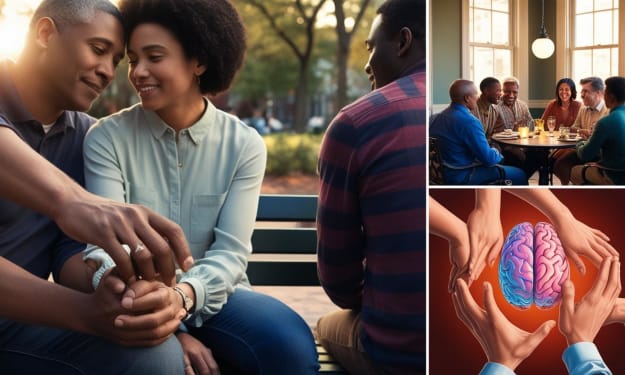
Why Empathy, Compassion, and Human Connection Matter
In today’s fast-paced, technology-driven world, where instant communication and digital interactions have become the norm, it’s easy to forget the importance of one simple yet powerful trait: human connection. In our digital age, AI systems and virtual interactions dominate many aspects of our lives. Despite these advances, one thing remains clear: no machine can replace the deeply human qualities of empathy, compassion, and connection. These attributes form the bedrock of strong relationships, personal well-being, and thriving communities.
By pashtonistan9 months ago in Motivation
About Binding Prometheus
I want to start actively advocating on behalf of my own work, and the most valuable part of my canon is, without a doubt, Binding Prometheus, the play I have been working on since 2019 and only finished in 2023 as part of my MA. The play itself is an amalgamation of a million different inspirations. On one end, it evokes the Ancient Greek myth-play, deriving its own title from the earliest extant work of Western drama we have, Aeschylus’s Prometheus Bound. On the other end, it borrows significantly from the sci-fi bulwarks from over the years, namely Mary Shelley’s Frankenstein and Karel Capek’s Rossum’s Universal Robots. The play could be an episode of Black Mirror, I fear. I don’t know. I’ve only ever seen one episode of Black Mirror.
By Steven Christopher McKnight27 days ago in Futurism
US Injectable Drug Delivery Market Set to Reach USD 465.15 Billion by 2031
The US injectable drug delivery market is entering a decisive growth phase as biologics, long-acting therapies, and patient-centric self-administration systems reshape how advanced medicines are developed, manufactured, and delivered. Valued at USD 285.81 billion in 2025 and USD 309.90 billion in 2026, the market is projected to reach USD 465.15 billion by 2031, expanding at a resilient CAGR of 8.5%.
By Jennifer Reynolds6 days ago in Futurism



Comments
There are no comments for this story
Be the first to respond and start the conversation.