
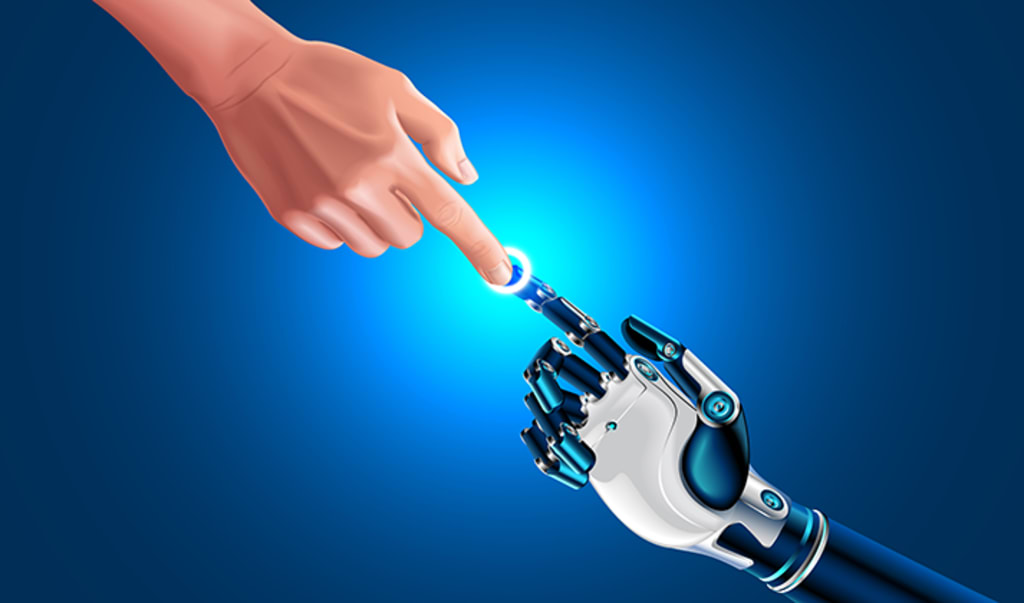
Once upon a time, in the early days of computing, the interaction between humans and computers was limited to punch cards and command-line interfaces. But as technology advanced, so too did the way that people interacted with computers.
In the 1980s, graphical user interfaces (GUIs) were introduced, which allowed users to interact with computers using icons, menus, and windows. This made computers more accessible to the average person, and helped to pave the way for the modern era of computing.
As the internet became more widely used, new forms of human-computer interaction emerged. Websites and web applications allowed people to access information and services from anywhere in the world, using only a web browser. This led to the development of new techniques for designing interfaces that were optimized for the web.
In the 2000s, mobile devices began to gain popularity, and the interaction between humans and computers once again underwent a significant shift. The rise of smartphones and tablets meant that people could access the internet and use applications from anywhere, at any time. This led to the development of new techniques for designing interfaces that were optimized for small screens and touch-based input.
In recent years, new technologies such as virtual reality, augmented reality, and artificial intelligence have opened up even more possibilities for human-computer interaction. Virtual and augmented reality allow people to interact with digital environments in more immersive ways, while artificial intelligence can help to make computers more responsive to human needs and preferences.
Despite these advancements, there are still many challenges to be overcome in the field of human-computer interaction. One of the biggest challenges is designing interfaces that are accessible to people with disabilities, such as those who are blind or have mobility impairments. Another challenge is ensuring that interfaces are secure and protect users' privacy.
As technology continues to evolve, the field of human-computer interaction will continue to play a crucial role in shaping the way that people interact with computers and other digital technologies. By understanding the needs and preferences of users, designers can create interfaces that are intuitive, efficient, and effective, and help to make the world a more connected and accessible place.
As the field of human-computer interaction (HCI) continues to evolve, it is increasingly important to understand how people interact with technology in various contexts. HCI is an interdisciplinary field that involves psychology, computer science, design, and other fields, and is focused on creating technology that is intuitive, effective, and enjoyable to use.
One of the most important aspects of HCI is usability testing, which involves testing interfaces with real users to identify any usability issues and areas for improvement. Usability testing can involve a variety of methods, including surveys, interviews, and observation, and can be conducted in a variety of settings, such as labs, homes, or workplaces.
Another important aspect of HCI is accessibility, which involves designing interfaces that can be used by people with disabilities. This can include designing interfaces that are compatible with assistive technologies, such as screen readers or Braille displays, or designing interfaces that can be controlled using voice commands or other non-traditional input methods.
Privacy and security are also important considerations in HCI, as users are often sharing sensitive information with technology. Designers need to ensure that interfaces are secure and protect users' privacy, while also providing users with control over their data and how it is used.
As technology continues to evolve, HCI is also becoming increasingly focused on designing interfaces for emerging technologies, such as virtual reality and augmented reality. These technologies offer new possibilities for human-computer interaction, but also present new challenges in terms of designing interfaces that are intuitive and effective in these new contexts.
In addition to designing interfaces, HCI also involves studying how people use technology in various contexts, and how technology affects people's behavior and attitudes. For example, researchers in HCI may study how people use social media, how technology affects workplace productivity, or how virtual reality can be used to treat anxiety disorders.
Overall, the field of HCI is crucial for creating technology that is not only functional, but also easy and enjoyable to use. By focusing on the needs and preferences of users, designers can create interfaces that make technology more accessible, efficient, and effective, and help to improve people's lives in a variety of contexts. As technology continues to evolve, the field of HCI will continue to play an important role in shaping the way that people interact with technology, and in ensuring that technology is a force for good in the world.
About the Creator
Keep reading
More stories from writers in Futurism and other communities.
About Binding Prometheus
I want to start actively advocating on behalf of my own work, and the most valuable part of my canon is, without a doubt, Binding Prometheus, the play I have been working on since 2019 and only finished in 2023 as part of my MA. The play itself is an amalgamation of a million different inspirations. On one end, it evokes the Ancient Greek myth-play, deriving its own title from the earliest extant work of Western drama we have, Aeschylus’s Prometheus Bound. On the other end, it borrows significantly from the sci-fi bulwarks from over the years, namely Mary Shelley’s Frankenstein and Karel Capek’s Rossum’s Universal Robots. The play could be an episode of Black Mirror, I fear. I don’t know. I’ve only ever seen one episode of Black Mirror.
By Steven Christopher McKnight27 days ago in Futurism
Smart Mobility Market: Sustainable Transport Solutions & Technology Advancements
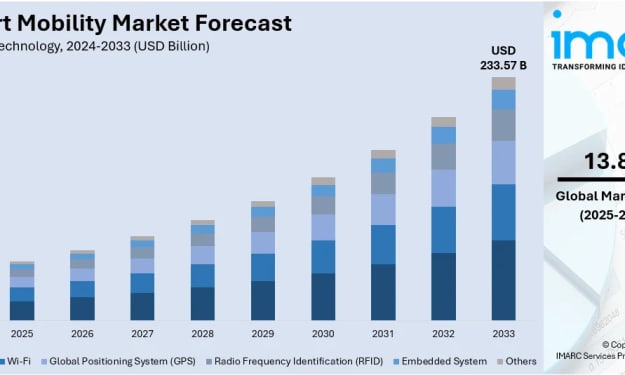
Driven by urbanization, smart city investments, EV adoption, connected technologies, and supportive government policies, demand is rising for efficient, sustainable, and data-driven transportation solutions worldwide. According to IMARC Group's latest research publication, global smart mobility market size was valued at USD 68.53 Billion in 2024. Looking forward, IMARC Group expects the market to reach USD 233.57 Billion by 2033, exhibiting a growth rate of 13.87% during 2025-2033.
By Andrew Sullivan5 days ago in Futurism
One Unchecked Box
"Republished" because it was the only way to add the embed for the newly recorded audio version of this story due to the Top Story badge. Plus it serves as a nice, informal announcement of the podcast's revival for another season (go subscribe!):
By Stephen A. Roddewigabout 4 hours ago in Fiction



Comments
There are no comments for this story
Be the first to respond and start the conversation.