
How to thwart criminals and secure your iPhone's data
Apple should really invest in anti-theft security features!

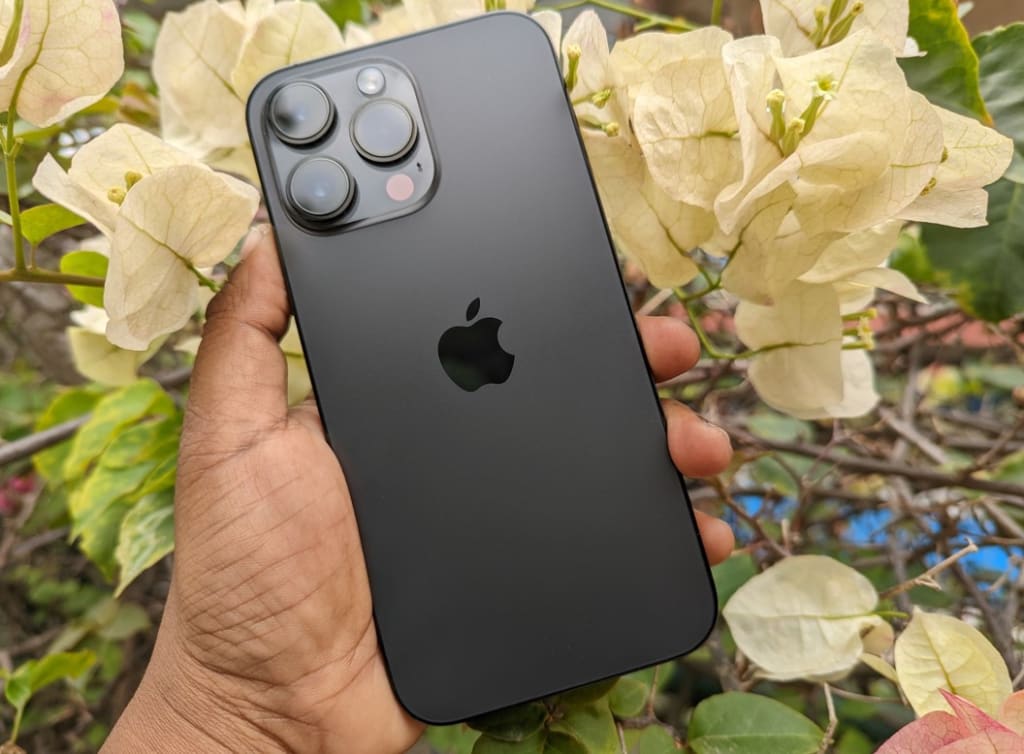
Users of Apple iPhones utilise the device's password feature to help safeguard their data. What if we told you that thieves may access your data and money by using the passcode? Amazing, huh?
The Find My network, which has recently undergone significant upgrades, is one of the security measures that Apple products have long been renowned for. Nevertheless, according to a Wall Street Journal investigation published on Friday, these protections are insufficient to stop burglars from obtaining customer data. Apple should increase its investment in anti-theft security features for iPhone and iPad with iOS 17.
Thieves value smartphones more than ever:
Theft of smartphones is nothing new. But in recent years, the causes of these thefts have undergone a significant transformation. People used to steal phones in the past and sell them on the black market. Thieves continued to steal phones despite the introduction of features like iCloud Lock by Apple and other firms. After all, they can simply remove and market components of the apparatus, such as the display.
For instance, many banks now allow consumers to conduct a variety of transactions through their apps without ever having to visit an ATM or bank location. It's difficult to fathom living without these advantages because this is so incredibly convenient. This has, however, also piqued the attention of thieves in smartphones.
More than a billion iPhones are in use worldwide, and the thieves are taking advantage of a straightforward weakness in the software architecture. The focus is on passwords, which are typically lengthier alphanumeric combinations used as login credentials for various accounts, and passcodes, the brief string of numbers that gives access to a device, according to the paper.
The report went on to say that a trespasser could quickly reset the password for the iPhone owner's Apple ID using only the device and its passcode. This would prevent the victim from accessing their account or any iCloud data. Since the passcode might grant access to all of the device's saved passwords, it was stated that thieves frequently take financial apps off of phones as well.
"Security researchers agree that the iPhone is the most secure consumer mobile device," an Apple representative was cited as saying in response to the study by The Wall Street Journal. "We work relentlessly every day to safeguard all of our users from new and emerging threats."
She added that the business feels these crimes are uncommon because they involve the loss of the device and the passcode: "We sympathise with people who have had this experience and we take all attacks on our users extremely seriously, no matter how uncommon." "We will continuously improving the safeguards to assist maintain the security of user accounts."In the meanwhile, alphanumeric passcodes rather than digit-only passcodes are encouraged for iPhone users to maintain in order to stay secure and protected. Users can also use Face ID or Touch ID to unlock their devices to increase security, especially when they are in public settings.
What can be done in this regard?
There is no quick fix for this. As I previously stated, there isn't much you can do if someone forcibly pushes you to give them your password or records a video of it from a distance.
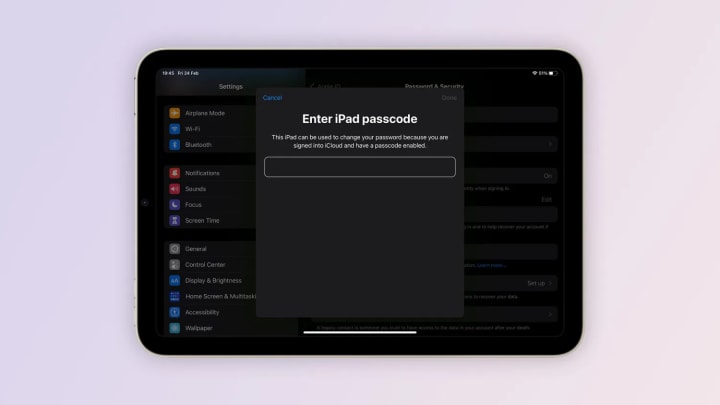
Apple can (and should) take a few steps, though, to make it harder for criminals to get away with their crimes and to give victims more time to figure out how to lock their stolen phones and bank accounts. For instance, Samsung enables customers to establish a protected folder containing particular programmes that is only accessible when the phone is connected to the user's Wi-Fi network.
Users can camouflage bank apps on Samsung phones by giving them alternate names and symbols. While it doesn't stop others from getting access to them, it can complicate things. You might have enough time to phone your bank and request that they lock your account.
Therefore, Apple should eliminate the capability to change the Apple ID password using only the passcode on an iPhone or iPad as a first step. For a business that claims to care about privacy and security, this is really concerning. Most people use flimsy passwords for their gadgets, and Apple provides a 6-digit PIN as the standard setting for iOS.
About the Creator
MUTHUSELVAM O
The Soceity is for the People,by the people,of the people.
Aspiring Blogger.
Subscribe and support .
Keep reading
More stories from MUTHUSELVAM O and writers in Futurism and other communities.
How to Configure ChatGPT to Respond to Your WhatsApp Messages Automatically
An AI chatbot named ChatGPT was created by OpenAI and released in November 2022. It has been improved (a method of transfer learning) by utilising both supervised and reinforcement learning strategies. It is based on the OpenAI GPT-3 family of big language models.Chat GPT produces text responses that sound human. It is capable of providing clear, conversational responses to queries. It has the ability to write stories, poetry, and codes. It provides logical responses to generate responses similar to what a human would say.
By MUTHUSELVAM O3 years ago in Futurism
Digital Avatar Market Valued at USD 745.1 Billion by 2033
Digital Avatar Market Overview The global Digital Avatar Market is projected to reach approximately USD 745.1 Billion by 2033, increasing from nearly USD 24.4 Billion in 2024. This expansion reflects a strong CAGR of 46.2% during the forecast period from 2024 to 2033. Market growth is primarily driven by the increasing adoption of digital avatars across gaming environments, social media platforms, virtual workplaces, and customer interaction systems.
By Roberto Crum7 days ago in Futurism
GCC Halal Food Market Analysis: Key Drivers, Market Dynamics & Future Prospects
According to IMARC Group's latest research publication, "GCC Halal Food Market: Industry Trends, Share, Size, Growth, Opportunity and Forecast 2025-2033", The GCC halal food market size reached USD 65.10 Billion in 2024. Looking forward, IMARC Group estimates the market to reach USD 88.70 Billion by 2033, exhibiting steady growth during 2025-2033.
By Abhay Rajput4 days ago in Futurism




Comments
There are no comments for this story
Be the first to respond and start the conversation.