
How to Remove Legacy Analytics Without Breaking Metrics?
What staring at an old dashboard taught me about trust, habit, and letting go.

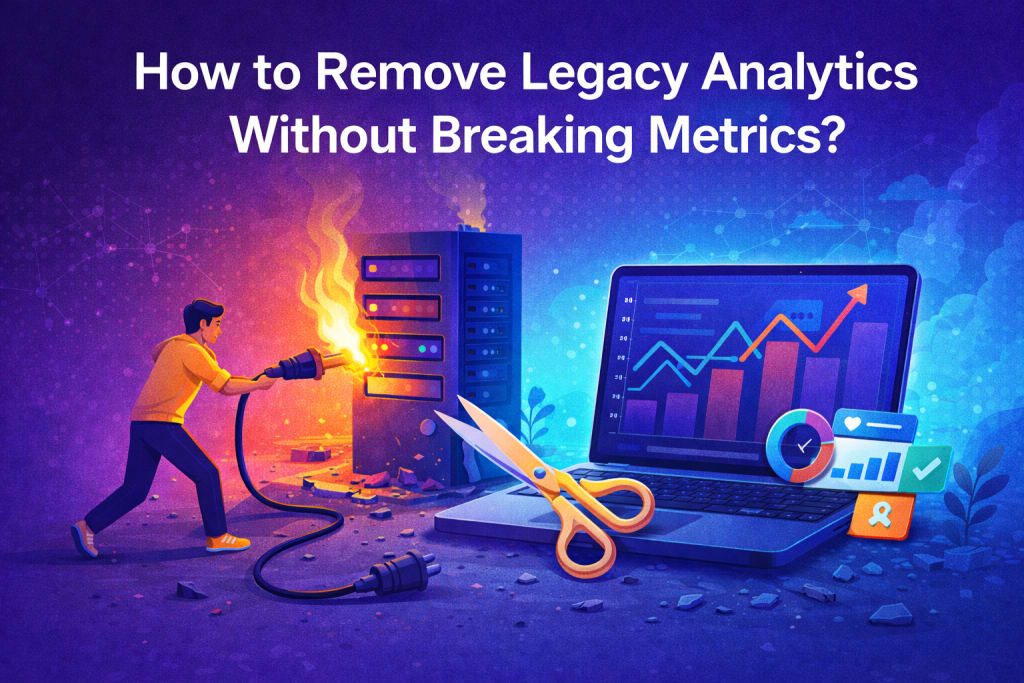
The morning I decided we were finally going to remove legacy analytics, I didn’t feel relief. I felt nervous in a very specific way, the kind that settles in your shoulders before your brain catches up. The office was quiet, lights still dimmed, my coffee untouched as I stared at two dashboards that had been living side by side for years.
One of them was modern, cleaner, actively maintained. The other was older, slower, stitched into places no one fully remembered anymore. Both showed numbers people trusted. Both told stories teams had learned to believe. I knew that removing one of them would not just change code. It would change confidence.
In mobile app development San Diego, I’ve learned that analytics aren’t just tools. They’re memory.
Weight of Numbers People Grew Up With
Legacy analytics rarely start as mistakes. They begin as solutions. Someone added them to answer a real question at a real moment, and for a long time, they did exactly that.
Over the years, teams changed. Goals shifted. New tools arrived. Still, the old analytics stayed. Not because they were perfect, but because they were familiar. People had learned how to read them. They had built instincts around those charts.
When I suggested removing them, no one argued immediately. That silence told me more than resistance would have. Everyone understood the technical reasons. What they feared was losing a shared language.
When Cleaning Up Feels Like Erasing History
As I traced events through the codebase, I could see how deeply embedded the legacy system was. Events fired twice. Some metrics existed only there. Others were slightly different between systems, close enough to ignore, different enough to matter.
What unsettled me most was realizing how many decisions had been shaped by those numbers. Marketing plans. Feature prioritization. Even moments of celebration. Removing the system felt like pulling a thread that might unravel stories people told themselves about why things worked.
That’s when I stopped thinking about this as a cleanup task. It was a transition of trust.
Watching How People Actually Use Metrics
Before touching anything, I spent time watching how teams interacted with the dashboards. Not what they said they used, but what they actually opened during meetings.
I noticed patterns. Certain charts were referenced casually, almost ritualistically. Others were ignored entirely. Some numbers were quoted without anyone remembering their definition.
That observation mattered more than documentation. It showed me which metrics carried emotional weight and which ones were just noise that had learned to look important.
Fear of Numbers Changing Overnight
One of the biggest fears around removing legacy analytics is the moment after. The day when numbers don’t match what people expect. Even small shifts can trigger panic.
I’ve seen teams roll back changes not because something was wrong, but because something looked unfamiliar. Familiarity often wins over accuracy when trust is fragile.
I knew we couldn’t afford that kind of shock. The goal wasn’t cleaner code alone. It was continuity of understanding.
Letting Old and New Exist Together for a While
For a period, we let both systems tell their stories side by side. Not forever, but long enough for patterns to become visible.
During that overlap, we talked openly about differences. We traced why one metric ran slightly higher. We explained where definitions diverged. Slowly, people stopped treating the legacy numbers as unquestionable truth and started seeing them as one interpretation among others.
That shift didn’t happen through documentation. It happened through repeated, calm conversations.
Learning That Metrics Are Agreements
At some point, it became clear that metrics are not facts in the way people assume. They are agreements about what matters and how it is counted.
Legacy analytics represented older agreements. Removing them meant renegotiating those terms with the present team. That realization changed how I framed the work.
I stopped saying we were removing analytics. I started saying we were updating how we agree on reality.
Day We Turned It Off
The day we finally disabled the legacy system was quieter than I expected. No alarms. No dramatic drops. The dashboards refreshed, and the world kept spinning.
Still, I watched closely. I checked conversations. I listened for unease. There were questions, but they were thoughtful ones. People asked why numbers looked cleaner in certain places. They asked what they should trust now.
That told me we had done enough preparation. Confusion had turned into curiosity instead of fear.
When Gaps Reveal What Really Matters
After the removal, some metrics simply disappeared. No one missed them.
That absence was revealing. It showed which numbers had been carrying real meaning and which ones had been habits with no purpose left. Losing unused metrics felt lighter than expected.
It reminded me that clutter isn’t neutral. It quietly shapes attention even when it’s ignored.
Unexpected Calm That Followed
What surprised me most was the calm that followed in the weeks after. Conversations became clearer. Fewer debates started with arguing over whose numbers were right.
When everyone looked at the same source, discussions moved faster. Decisions felt less defensive. The product roadmap stopped circling old assumptions.
Removing legacy analytics didn’t reduce visibility. It reduced noise.
Trust Doesn’t Come From More Data
I used to think more tracking meant more confidence. Now I know that trust comes from consistency and clarity.
People don’t need endless numbers. They need to believe the numbers they see mean what they think they mean. That belief takes time to build and moments of care to preserve.
By treating the removal as a human change instead of a technical one, we protected that belief.
Sitting With the Aftermath
Some mornings now, I still open the dashboard early, coffee in hand, remembering how it used to look. The absence doesn’t bother me anymore.
What matters is that when someone asks how something is performing, the answer feels grounded. Not perfect. Just honest.
Removing legacy analytics without breaking metrics isn’t about precision alone. It’s about respecting the stories people built around those numbers and guiding them gently toward a new one.
About the Creator
Preparing for a Future Ruled by Artificial Intelligence
A few months ago, I watched a video of a robot answering customer calls better than a human agent. It spoke clearly, responded instantly, and never sounded tired. For a moment, I felt uneasy. If machines can talk, write, design, and even think faster than us, where do students stand in this new world? That question stayed with me. Artificial Intelligence is no longer a futuristic idea. It’s already part of our daily routines. It recommends what we watch, corrects our grammar, suggests what we should buy, and even helps doctors diagnose diseases. For students, especially those dreaming about stable careers, this rapid change can feel overwhelming. But after thinking deeply about it, I realized something important: The future does not belong to those who fear AI. It belongs to those who prepare for it. The real challenge is not competing with machines — it is learning how to work alongside them.
By Shahid Zamana day ago in Futurism
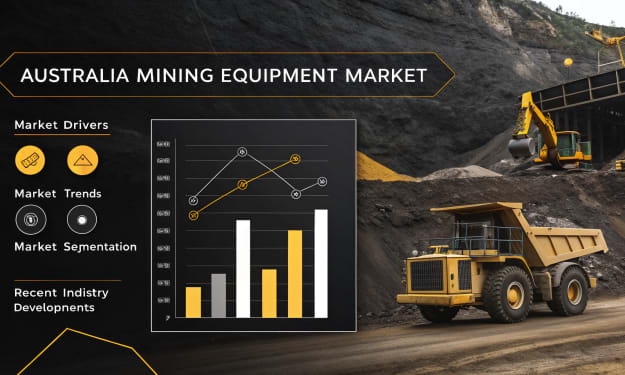
Australia Mining Equipment Market: Automation Adoption, Safety Focus & Sustainable Technologies
According to IMARC Group, the Australia mining equipment market reached USD 1.5 Billion in 2025 and is projected to expand to USD 2.3 Billion by 2034, exhibiting a steady compound annual growth rate (CAGR) of 5.15% during 2026–2034. This growth reflects the ongoing modernization of mining operations across Australia, one of the world’s leading resource-producing nations. Mining equipment—including excavators, haul trucks, drilling rigs, loaders and crushing systems—forms the backbone of mineral extraction and processing. As global demand for critical minerals rises and sustainability standards tighten, Australia’s mining sector is increasingly turning to automation, safety enhancement and environmentally responsible technologies.
By Kevin Cooper4 days ago in Futurism
When the Shelter Closes
Across the street from my house, a man slept under a tree, his dog by his side. My first, naive thought: he must be traveling through. But he kept coming back, often sleeping there during the day. Then it hit me—that person might not have a home.
By Bride of Sound3 days ago in Humans



Comments
There are no comments for this story
Be the first to respond and start the conversation.