
How Time Works in Space: From Relativity to the Rhythm of the Universe
Space

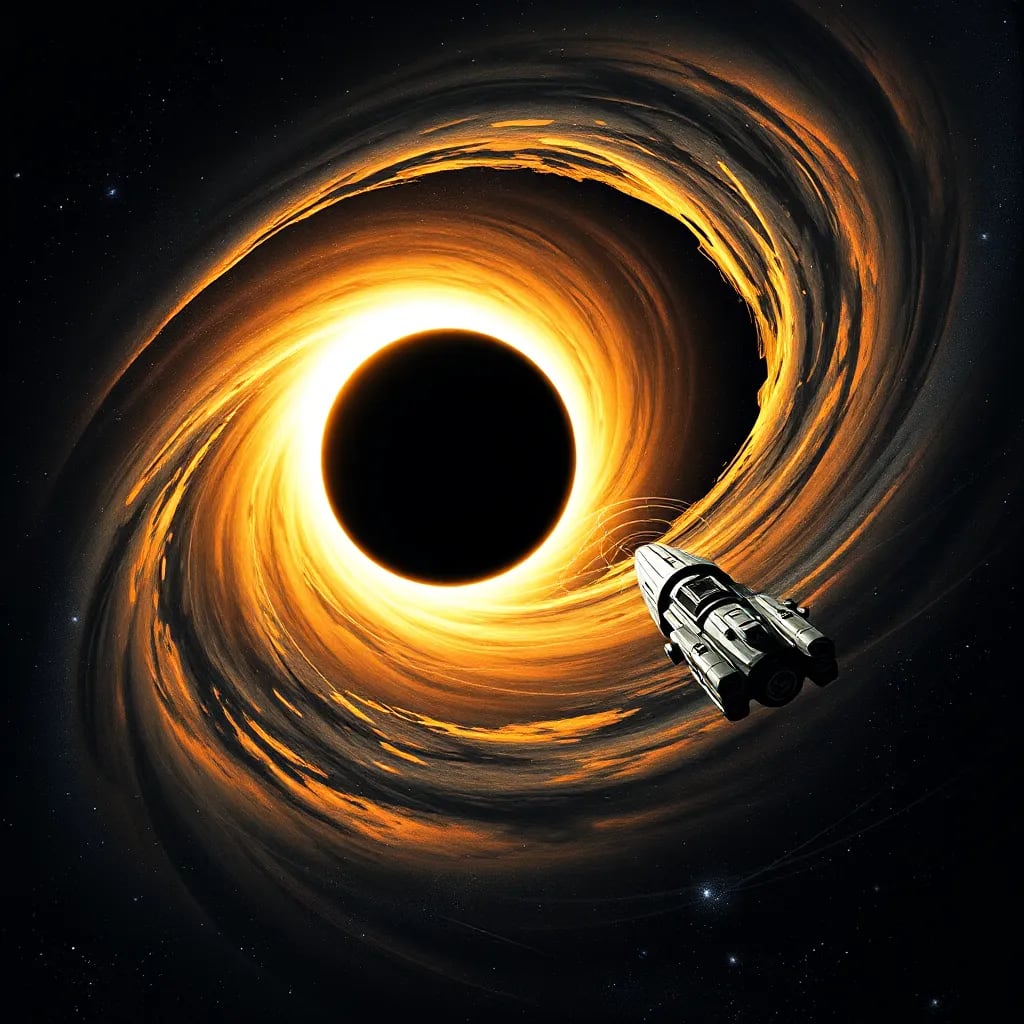
Time may seem like one of the most straightforward aspects of life—constantly ticking forward, evenly and reliably. On Earth, we mark it with clocks and calendars, confident that a second here is a second anywhere. But when we look beyond our planet into the vastness of space, time transforms into something far more mysterious. In the cosmos, time is flexible, curved, and deeply dependent on gravity, speed, and the very shape of space itself. Understanding how time works in the universe requires us to go beyond our everyday experience and dive into the strange and beautiful laws that govern reality.
Space and Time: An Inseparable Duo
Before the 20th century, time was believed to be universal and absolute. A ticking clock in one part of the galaxy was assumed to tick the same way anywhere else. That idea was shattered by Albert Einstein’s theory of relativity. According to Einstein, time is not an isolated entity—it’s part of a larger structure called space-time, a four-dimensional continuum that fuses space and time together.
This has profound consequences. Time doesn’t always move at the same rate. It can slow down or speed up, depending on two major factors: gravity and velocity. The stronger the gravitational pull—like near a black hole—the slower time moves. Similarly, the faster you move (especially as you approach the speed of light), the slower time passes for you relative to someone standing still.
Proof in the Sky: Time Dilation Experiments
These aren't just theoretical musings. Scientists have repeatedly confirmed these time-warping effects with real-world experiments. One famous example involved two synchronized atomic clocks—one placed on Earth and the other flown around the world in a jet. After the flight, the airborne clock was behind its twin on the ground by a tiny fraction of a second, precisely as Einstein predicted.
This effect is more than academic—it has practical implications. Take the Global Positioning System (GPS), for instance. GPS satellites orbit Earth at high speed and at altitudes where gravity is weaker. Engineers must adjust their internal clocks to account for both effects—otherwise, GPS calculations would quickly become inaccurate by several kilometers.
Time Near Black Holes: Where Time Stands Still
One of the most dramatic illustrations of time distortion comes from the vicinity of black holes. These massive, dense objects bend space-time to such extremes that near their event horizons, time nearly freezes.
If an astronaut were to approach a black hole, they might only experience a few minutes passing while years—maybe even centuries—tick by for someone watching from a safe distance. This idea was popularized in the movie Interstellar, where characters spent just hours near a black hole while decades passed on Earth.
Is There a Universal Clock?
With time ticking differently across space, is there any such thing as universal time? The short answer is: not really. In Einstein's universe, every observer experiences their own "timeline," shaped by their motion and gravitational environment. There is no cosmic master clock.
However, cosmologists sometimes refer to cosmic time, a kind of shared timeline used in models of the expanding universe. This time is measured from the moment of the Big Bang, assuming a stationary observer who isn't moving relative to the overall flow of galaxies. According to this cosmic clock, the universe is about 13.8 billion years old.
The Arrow of Time: Why the Past Stays Behind
In daily life, we experience time as moving in one direction—from past to future. Yet most fundamental laws of physics are time-symmetric, meaning they work the same way whether time flows forward or backward. So why don’t we see coffee un-pour itself back into the cup?
The reason lies in entropy, a measure of disorder. According to the second law of thermodynamics, entropy always increases in a closed system. This gives rise to the so-called arrow of time, the irreversibility of events. Ice melts, stars burn out, and buildings crumble—all because nature favors increasing chaos.
Space as a Time Machine?
Time travel may sound like pure science fiction, but physics doesn’t entirely rule it out—at least not in one direction. Traveling into the future is theoretically possible. All it takes is moving incredibly fast or getting close to a powerful gravity source. Time would slow down for the traveler compared to others, creating a kind of “fast-forward” into the future.
Traveling into the past, however, is a different story. While some speculative theories propose mechanisms like wormholes or closed time-like curves, they remain unproven and fraught with paradoxes.
Conclusion: Time Is Not What It Seems
Time in space is far from the simple, linear concept we experience on Earth. It’s a dynamic, shape-shifting dimension that responds to motion, mass, and gravity. It can be stretched, compressed, and even seemingly frozen. Understanding time is crucial for unlocking deeper truths about our universe—from how GPS works to what happens at the edge of a black hole.
As our tools grow more precise and our theories more advanced, we may one day move from measuring time to manipulating it. Until then, every tick of the clock is not just a moment lost—but a step deeper into the mystery of the cosmos.
About the Creator
Keep reading
More stories from Holianyk Ihor and writers in Futurism and other communities.
How Astronomers Predict Eclipses: From Ancient Tables to Modern Precision
A solar eclipse can turn day into night in just a few moments, leaving people awestruck by the rare and surreal beauty of the cosmos. For centuries, eclipses inspired fear, fascination, and a sense of mystery. But today, astronomers can predict eclipses with remarkable accuracy—down to the second and meter. How do they do it? The story of eclipse prediction is one that spans ancient observation, mathematical ingenuity, and modern computational power.
By Holianyk Ihor7 months ago in Futurism
About Binding Prometheus
I want to start actively advocating on behalf of my own work, and the most valuable part of my canon is, without a doubt, Binding Prometheus, the play I have been working on since 2019 and only finished in 2023 as part of my MA. The play itself is an amalgamation of a million different inspirations. On one end, it evokes the Ancient Greek myth-play, deriving its own title from the earliest extant work of Western drama we have, Aeschylus’s Prometheus Bound. On the other end, it borrows significantly from the sci-fi bulwarks from over the years, namely Mary Shelley’s Frankenstein and Karel Capek’s Rossum’s Universal Robots. The play could be an episode of Black Mirror, I fear. I don’t know. I’ve only ever seen one episode of Black Mirror.
By Steven Christopher McKnight18 days ago in Futurism
Top 10 Fintech Software Development Companies in USA 2026
In today’s rapidly evolving digital finance landscape, fintech companies and traditional financial institutions alike are investing heavily in advanced software solutions that enable secure transactions, seamless customer experiences, and robust compliance with regulatory standards. As we enter 2026, the demand for specialized fintech software development services continues to grow, driven by technologies such as blockchain, artificial intelligence (AI), machine learning (ML), and cloud-native architectures. Choosing the right development partner can make or break a fintech project, whether it’s launching a next-generation digital wallet, a mobile banking platform, a payment processing system, or a comprehensive financial analytics suite. This article profiles the top 10 fintech software development companies that stand out in the United States market for their innovation, technical expertise, industry experience, and ability to deliver scalable, secure solutions that meet the unique needs of finance organizations.
By Steve Waugh5 days ago in Futurism
Wild Card Weekend Recap: What Happens Now?
I think I figured out why I love Wild Card Weekend so much. It's because it's the first playoff anything of the calendar year. The NFL season starts in the fall, and once upon a time, the champion was crowned either on or slightly before New Year's. The evolution of the NFL schedule has resulted in the playoffs starting just into the New Year, and currently, the final week of the season falls on the first weekend of the New Year, with Wild Card Weekend coming a week after that. So yes, chronologically, the NFL's Wild Card Weekend serves as the first playoff anything of the calendar year.
By Clyde E. Dawkins6 days ago in Unbalanced


Comments
There are no comments for this story
Be the first to respond and start the conversation.