
How Smartphone Flaws Allow Hackers and Government Agencies to Map Your Home
Your phones are too smart


Smartphone technology has transformed contemporary life by merging communication, computer, and multimedia functions in a single portable device. These gadgets, which run complex operating systems like Android and iOS, provide a variety of services such as calling, messaging, internet surfing, social media access, photography, navigation, and more via numerous apps.
Smartphones are indispensable tools for communication, productivity, and entertainment. They let consumers keep in touch with others via voice and video conversations, texting, and social networking. Smartphones also serve as effective personal organizers, allowing users to manage schedules, emails, projects, and reminders. The incorporation of high-quality cameras has made them vital for capturing and sharing memories in real time.
Privacy and security breaches are becoming increasingly important problems in today's digital environment. With the fast growth of technology and the widespread acceptance of online services, the volume of personal and sensitive information transmitted and kept electronically has increased tremendously. This has raised the potential for privacy violations and security breaches, which can damage individuals, corporations, and even governments.
We can resolve the following critical issues:.
Unauthorised access to sensitive data, such as personal identifiable information (PII), financial records, or intellectual property, is a serious problem. Cybercriminals use system weaknesses to steal or disclose this information, resulting in financial loss, identity theft, and reputational harm.
Monitoring and tracking: The increased use of surveillance technology and data monitoring by governments and companies raises worries about the loss of privacy rights. These entities have the ability to monitor people's internet activity, whereabouts, and conversations without their knowledge or consent.
Phishing and Social Engineering: Cyber attackers are increasingly using sophisticated techniques such as phishing and social engineering to deceive people into disclosing personal information or login credentials. This can result in unauthorized access to accounts, financial loss, and compromising personal information.
Ransomware: This type of hack encrypts a victim's data and demands money for its release. Ransomware attacks may interrupt businesses, lock people out of their personal files, and result in huge financial losses.
Let's look at some of the impacts:
Economic Loss: Breaches can cause significant financial harm, including cleanup expenses, legal bills, and lost business.
Individuals may lose faith in organizations that fail to secure personal data, resulting in a tarnished reputation and the loss of consumers.
Technology cannot exist without mitigating methods. I'll highlight a few of them:
Strong security measures: Implementing strong cybersecurity standards like encryption, multi-factor authentication, and frequent software upgrades helps lower the chance of a compromise.
Employee Training: Teaching workers about the dangers of phishing and social engineering, as well as the need to adhere to security rules, can help avoid breaches.
The blueprint for your home, also known as the house map, is a visual depiction of what will be created. It includes not just the layout of rooms and places, but also how people live their lives. This notion might include a variety of technologies and applications, including:
Smart Home Devices: Robot vacuums (e.g., Roomba), smart speakers, and security cameras collect and store information about a home's layout and contents. For example, a robot hoover may map out a home's floor layout in order to move more effectively.
Augmented reality (AR) and virtual reality (VR) technology may generate immersive experiences by utilizing home mapping. For example, AR apps can aid in interior design by allowing users to see furniture in their own space.
In short, while home mapping has numerous benefits, it also requires careful consideration of privacy, security, and ethical issues.
Understanding the Flaw
A defect in a system such as GPS, Bluetooth, or Wi-Fi is usually explained in technical terms as a vulnerability in the protocol, implementation, or architecture. Here are instances of each:
GPS Vulnerability (Spoofing):
GPS spoofing happens when an attacker sends bogus GPS signals, causing a GPS receiver to calculate its position erroneously. GPS uses signals from many satellites to triangulate a position. If an attacker can create stronger signals that look like satellite signals, the receiver may latch onto them and calculate a false position. The vulnerability emerges because GPS receivers accept any signal that follows the anticipated protocol. without validating its validity. Most GPS devices lack capabilities for distinguishing between valid satellite transmissions and fraudulent ones.
Bluetooth vulnerability
The BlueBorne exploit enables attackers to take control of a device over Bluetooth without the device being linked. This attack leverages flaws in the Bluetooth protocol layer. The vulnerability exists because Bluetooth protocols and implementations may include defects in how they handle device detection, pairing, or communication. For example, an attacker might exploit a buffer overflow or code execution issue in the Bluetooth stack to gain unauthorized access to the device.
Wi-Fi vulnerability (KRACK attack):
The WPA2 protocol, which secures Wi-Fi networks, contains a vulnerability known as KRACK (Key Reinstallation Attack). It enables an attacker to decode information sent across the network. The issue arises during the four-way handshake, which is used to create a secure connection between the client and the access point. KRACK exploits a protocol weakness that allows for the retransmission of the third handshake message, which results in the reinstallation of the encryption key and, as a result, the decryption of transmitted data.
General steps for exploiting such vulnerabilities:
Identifying the Flaw: Attackers examine protocols and implementations to find weaknesses such as inappropriate validation, insufficient encryption, or bad message processing. Attackers create tools or scripts to exploit the identified holes.
The methods of exploitation
Analyzing GPS data to locate specific locations, such as home addresses, requires several important steps:
Data Collection:
Collect GPS coordinates (usually in degrees).
Timestamp: Each GPS point normally includes a timestamp, which aids in tracking the sequence of movements.
Data preprocessing:
Noise Filtering: Remove outliers and inaccuracies from the data (for example, inaccurate measurements caused by signal interference).
Segmentation is the process of grouping data points into clusters that indicate distinct areas where the individual spent a substantial amount of time.
Address Extraction:
Use reverse geocoding services (e.g., Google Maps API, OpenStreetMap) to turn GPS coordinates into readable addresses.
Check for accuracy by comparing the geocoding results to recognized landmarks or other data points.
Data analysis:
You can use clustering methods (e.g., DBSCAN, K-Means) to identify frequent locations like home or work.
5. Pattern Recognition:
Analyze time-stamped data to identify patterns, such as daily routines, that can aid in the confirmation of places such as house addresses.
Location Identification: Identify likely home addresses based on time spent (e.g., overnight stays). Validate with known data (e.g., user input or public records).
6. Privacy Considerations:
Data Anonymization: Protect sensitive information, especially when handling data that can be linked to specific individuals.
Legal Compliance: Follow legal standards and guidelines.
Bluetooth and WiFi are both wireless technologies for connecting your devices, but they are quite different. While WiFi is mainly used to connect your devices to the internet, Bluetooth is only used to connect your devices to each other. Bluetooth and Wi-Fi signals are widely utilized to triangulate positions and identify adjacent devices.
Here's a basic explanation of how these strategies work:
This method measures signal strength by broadcasting signals on a regular basis from Bluetooth devices. The distance between numerous Bluetooth beacons or devices can be estimated by monitoring their Received Signal Strength Indicator (RSSI). And if a device receives signals from at least three separate Bluetooth beacons, it may triangulate its position by determining where the signal intensities cross.
Wi-Fi triangulation detects signals from numerous access points (APs). Each AP has a unique identification (SSID/BSSID). RSSI Measurement: Similar to Bluetooth, the RSSI of various WiFi APs is monitored. The stronger the signal, the closer the device is to the access point. Position Estimation that is The device may estimate its position by measuring the distance between various APs and then utilizing triangulation to determine its location.
Combined Bluetooth and Wi-Fi improve accuracy. Devices can achieve more precise position tracking by combining Bluetooth and Wi-Fi triangulation, which is especially useful inside where GPS signals may be weak or absent. Indoor navigation, asset tracking, and proximity marketing are all common applications of this integrated technique.
Here are some programs you may use:
Indoor Navigation: These techniques are used in shopping malls, airports, and museums to direct visitors to their destinations.
Asset tracking is used by businesses to keep track of equipment and inventories inside their facilities.
Retailers use proximity marketing to deliver offers to consumers' cellphones when they are near specific items or areas inside a shop.
Potential Consequences of Home Mapping
Home mapping, which includes making precise maps of domestic areas, may have a variety of beneficial and bad implications.
The positive outcomes include:
improved smart home integration. Detailed house maps can improve smart home systems by enabling improved automation and customization of devices such as lighting, thermostats, and security systems.
House mapping may greatly increase the efficiency and efficacy of house robots, such as vacuum cleaners or personal assistants, by allowing them to travel more accurately.
Negative consequence also includes:
Data Exploitation: Detailed maps of residences can be abused if they get into the wrong hands, resulting in privacy breaches. Companies, for example, may use this data to target advertisements, while hackers could use it to uncover flaws. Surveillance: There is a risk of increasing surveillance since house mapping data might be shared with or accessed by unauthorized parties, resulting in a loss of personal privacy.
Preventive Measures
Home mapping, often known as a home security survey or assessment, is the process of examining your home's security in order to discover weaknesses and adopt preventive measures. When mapping your house for security, consider the following preventative measures:
Provide appropriate outside illumination, particularly around access points, pathways, and the perimeter. Motion-activated lights can effectively discourage burglars. Trim shrubs and trees near windows and entrances to remove potential hiding places for burglars. Keep your garden in good condition and install security fencing surrounding your property, including secured gates. Ensure that the fencing is high enough to prevent climbing.
Install high-quality locks at all entrance points, such as doors, windows, and gates. Consider adopting smart locks or keyless entry systems to increase security. Install security bars or door braces to strengthen doors and prevent forceful access. Consider employing solid-core or metal doors as outdoor entrance points.
On ground-level windows, use shatterproof glass, security film, or window bars. Ensure that windows have safe locks and are closed when not in use. Use robust locks and ensure that garage doors close correctly. To avoid hacking, put a rolling code on your remote-controlled garage door.
Interior Measures: Alarm Systems. Install a dependable alarm system that includes sensors on doors, windows, and motion detectors throughout the house.
Final Thoughts
Awareness and proactive actions are critical for maintaining privacy in today's digital era, as personal information is regularly exchanged and stored online.
Being aware of privacy risks and taking proactive measures is essential to protect personal data, prevent identity theft, maintain control over information, avoid financial and reputational harm, comply with legal obligations, and enhance overall cybersecurity.
While home mapping offers many potential benefits, particularly in enhancing smart home technologies and security, it also comes with significant risks, especially related to privacy, security, and ethical concerns. Balancing these aspects is crucial to ensuring that the technology is used responsibly and safely.
Calling for further research and development of better security measures for smartphones includes pushing for improved security procedures and creating awareness among key stakeholders.
Here's a systematic technique you can use:
Technology companies include smartphone makers, operating system developers, and app creators. Government agencies include regulatory entities and cybersecurity agencies. Universities and research institutes that focus on cybersecurity.
Consumers are smartphone users who are worried about privacy and data security.
About the Creator
Edina Jackson-Yussif
I write about lifestyle, entrepreneurship and other things.
Writer for hire [email protected]
Entrepreneur
Software Developer + Machine Learning Specialist
Founder:
➡️Creator Vibes Club
➡️Article Flow Club
Keep reading
More stories from Edina Jackson-Yussif and writers in Futurism and other communities.
Musician Charged in AI-Driven Streaming Fraud Case
A musician from North Carolina, Michael Smith, has been accused of using artificial intelligence (AI) tools and a network of automated bots to artificially boost the streaming of his music, allegedly raking in more than $10 million in royalties. This case is notable because it is reportedly the first time someone has been criminally charged for inflating music streams using AI.
By Edina Jackson-Yussif about a year ago in Futurism
About Binding Prometheus
I want to start actively advocating on behalf of my own work, and the most valuable part of my canon is, without a doubt, Binding Prometheus, the play I have been working on since 2019 and only finished in 2023 as part of my MA. The play itself is an amalgamation of a million different inspirations. On one end, it evokes the Ancient Greek myth-play, deriving its own title from the earliest extant work of Western drama we have, Aeschylus’s Prometheus Bound. On the other end, it borrows significantly from the sci-fi bulwarks from over the years, namely Mary Shelley’s Frankenstein and Karel Capek’s Rossum’s Universal Robots. The play could be an episode of Black Mirror, I fear. I don’t know. I’ve only ever seen one episode of Black Mirror.
By Steven Christopher McKnight17 days ago in Futurism
Japan Smart Doorbell Market Size and Forecast 2025–2033
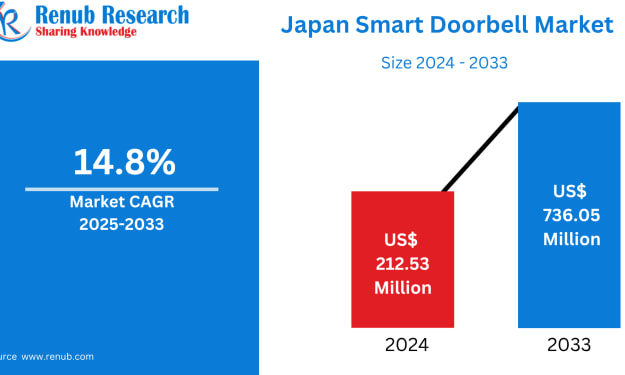
Market Snapshot The Japan Smart Doorbell Market is expected to reach US$ 736.05 million by 2033, up from US$ 212.53 million in 2024, expanding at a robust CAGR of 14.8% from 2025 to 2033. Rapid urbanization, increasing adoption of smart home technologies, and rising demand for home security systems are driving market growth. Advancements in AI, video analytics, and wireless connectivity are further strengthening consumer demand for smart doorbell systems.
By Marthan Sir2 days ago in Futurism
How to Succeed at the Benson Directory®
Congratulations and welcome to the Benson Directory® employee #22391! As our newest call handler, you will have the privilege of speaking with dozens of unique and interesting people on a daily basis as well as the opportunity to earn bonuses for high performance. Contained within this handbook you will find a set of ease to follow instructions designed to help you settle in to your new role and begin paving the way to success.
By S. A. Crawforda day ago in Fiction



Comments
There are no comments for this story
Be the first to respond and start the conversation.