
How pollen seasons are being extended by artificial light
Pollen timing and night lighting

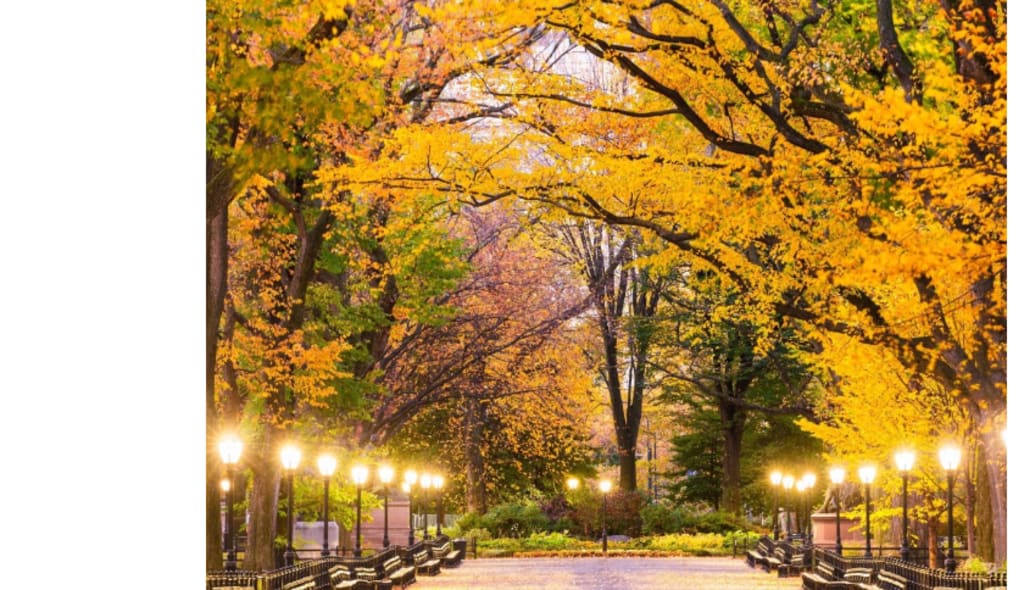
The end of pollen season may be postponed by artificial light from city lights, prolonging the time that pollen is in the air. For city dwellers, the longer season modifies the duration and timing of allergy exposure.
In cities throughout the Northeastern United States, longer and later pollen seasons are correlated with brighter evenings. This trend was identified by Vanderbilt University's Dr. Lin Meng, who recorded the correlation between delayed pollen activity shutdown and external night lighting.
Artificial light at night (ALAN) from outdoor lights coincided with prolonged pollen seasons in cities throughout the Northeast. Streetlights, building lights and other outdoor illumination that brightens the night beyond natural darkness and modifies biological timing are examples of artificial light at night. Dr. Meng wrote, "ALAN's impact on the end of the season is larger than on the start of the season."
Plants observe the duration of the day.
Light and darkness are essential to plants, and many species begin to bloom when the length of the day above a seasonal threshold. This clock determines when buds open and is based on photo period, or the amount of daylight a plant perceives.
ALAN can postpone the darkness cue that triggers blooming by adding hours of light that plants interpret as daylight. These cues can be thrown off schedule by even mild light, particularly in the vicinity of streetlights that continue to shine throughout the autumn.
Why fall finishes later
When evenings remain bright, trees and weeds continue to work longer, which allows late-season pollen to persist. By keeping light-sensing proteins active, nighttime light can postpone senescence, the natural leaf ageing that stops growth.
Early spring buds are frequently triggered by warm spells, while autumn dormancy is indicated by darkness, therefore ALAN can have a greater impact during that time. Because a light screen can lower exposure without touching the weather, late-season lighting becomes a target for city action.
Pollen count in the atmosphere
A recognised network that collects air samples and counts grains under a microscope provides the daily pollen counts. A known volume of air is drawn through a trap by technicians, who then turn what remains into a daily concentration.
For this project, the team used records from 12 Northeastern stations from 2012 to 2023 and compared them to satellite night brightness. The results showed strong associations rather than direct cause, meaning that experiments will be important before cities rely solely on lighting changes.
When exposure reaches severe levels, longer seasons hurt most when high-pollen days pile up; in ALAN areas, 27% of season days met the severe cutoff, compared with 17% where nights stayed dark. Inhaling these particles can cause swelling and itching that can last for hours. More severe days also put a strain on clinics and workplaces.
When exposure is shared by millions
According to a Centres for Disease Control and Prevention data brief, 25.7% of adult Americans suffered from seasonal allergies in 2021. More than 80% of people now live beneath light-polluted skies, according to separate global mapping.
Both issues are concentrated in dense neighbourhoods, so while lamps keep plants on schedule, residents may have symptoms for weeks. Because decisions made for one block can have an impact on the entire city, this overlap makes lighting a public problem.
Rain and heat are still important.
Warm years continued to push spring pollen earlier, but once the team took weather into account, nighttime light continued to appear. While precipitation might occasionally wash pollen away, temperature accelerates plant growth because enzymes function more quickly under warm conditions.
Nonetheless, the ALAN-related patterns remained constant in both wet and dry locations, indicating that light travels via a different route. Dimmer evenings may reduce exposure even as temperatures rise, so cities cannot cool themselves out of this on their own.
Options for streetlights can be beneficial.
Using only the necessary amount of light, focusing it downward, and favouring warmer tones are all key components of lighting principles. After midnight, less light reaches leaves and buds because shielded lights block stray rays.
In addition to limiting exposure, timers and motion sensors conserve energy and, while in use, keep sidewalks and intersections illuminated. Because the light signal that plants respond to is weakened with each hour of reduction, small design modifications can have a significant impact on a whole city.
Planning and urban trees
Fast-growing trees are frequently chosen by city foresters for shade, however some popular selections also emit highly allergic pollen. Extra lighting can prolong flowering and sustain pollen production since many street species react strongly to light signals.
Exposure can be reduced by planting lower-pollen species close to clinics, schools, and apartments, particularly if designers steer clear of the brightest areas. Tree selection cannot replace better lighting, but it can reduce the amount of pollen launched into dense neighborhoods.
All of the data point to the possibility that city light can prolong pollen exposure by altering plant timing and increasing the number of difficult days. While planners may begin cutting back on needless nighttime light and monitoring health effects, future research can investigate the cause more thoroughly.
About the Creator
Keep reading
More stories from Francis Dami and writers in Futurism and other communities.
The cause of mysterious quick radio bursts could be unexpected.
Among the most peculiar signals we detect from space are fast radio bursts. They can outshine entire galaxies in radio light during their brief duration of a few thousandths of a second. One major question persisted for years: what kind of entity could produce something so loud and quick, sometimes repeatedly?
By Francis Damia day ago in Futurism
About Binding Prometheus
I want to start actively advocating on behalf of my own work, and the most valuable part of my canon is, without a doubt, Binding Prometheus, the play I have been working on since 2019 and only finished in 2023 as part of my MA. The play itself is an amalgamation of a million different inspirations. On one end, it evokes the Ancient Greek myth-play, deriving its own title from the earliest extant work of Western drama we have, Aeschylus’s Prometheus Bound. On the other end, it borrows significantly from the sci-fi bulwarks from over the years, namely Mary Shelley’s Frankenstein and Karel Capek’s Rossum’s Universal Robots. The play could be an episode of Black Mirror, I fear. I don’t know. I’ve only ever seen one episode of Black Mirror.
By Steven Christopher McKnight26 days ago in Futurism
Biosensors Market: Electrochemical Sensors, High Sensitivity Detection & Analytical Accuracy
According to IMARC Group's latest research publication, global biosensors market size reached USD 30.9 Billion in 2024. Looking forward, IMARC Group expects the market to reach USD 57.0 Billion by 2033, exhibiting a growth rate (CAGR) of 6.97% during 2025-2033.
By sujeet. imarcgroup7 days ago in Futurism



Comments
There are no comments for this story
Be the first to respond and start the conversation.