
How AI is Shaping the Future of Financial Services?
The Future of AI in Financial Services
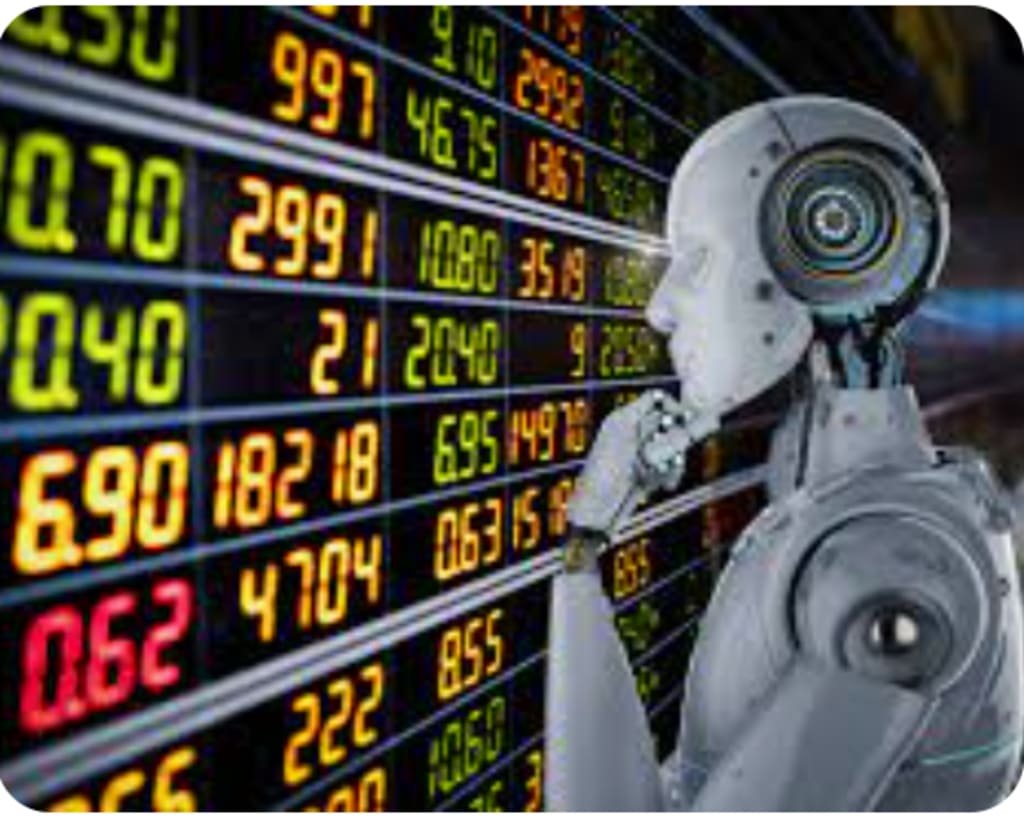
Welcome to the dawn of a new era in financial services, an era where Artificial Intelligence (AI) is not just a buzzword but a game-changer. The power of AI to transform the financial services industry is immense and undeniable. In this comprehensive piece, we will explore how AI is currently impacting the financial services sector and what the future holds. Buckle up, because the future of finance is not just exciting, it's intelligent!
What is Artificial Intelligence (AI)?
Before we delve into AI's impact, it's essential to understand what AI is. AI refers to the simulation of human intelligence in machines programmed to think like humans and mimic their actions. AI can be categorized as either weak or strong. Weak AI, also known as Narrow AI, is designed to perform a narrow task (such as voice commands), while strong AI, also known as Artificial General Intelligence (AGI), is an AI system with generalized human cognitive abilities.
AI in Risk Assessment and Management
Risk assessment is integral to the financial services industry. From credit scoring to investment risk assessment, AI is proving to be a boon. Traditional risk assessment methods often involve tedious manual processes and rely heavily on historical data. AI, on the other hand, can process vast amounts of data in real-time, enhancing the accuracy of risk assessments.
For instance, in credit scoring, AI algorithms can analyze an individual's transaction history, social media activities, and other non-traditional data to determine creditworthiness. This method not only improves accuracy but also promotes financial inclusion by providing access to credit for individuals with little to no credit history.
Similarly, in investment management, AI can process a vast array of data, including market trends, geopolitical events, and economic indicators, to predict market movements and manage investment risks effectively.
AI in Fraud Detection and Prevention
Fraud poses a significant threat to financial institutions and their customers. Traditionally, detecting fraud involved identifying unusual activities based on predefined rules. However, this approach often resulted in false positives and failed to detect sophisticated fraud schemes.
AI, with its machine learning capabilities, can learn from historical fraud patterns and detect anomalies in real-time. AI systems can analyze multiple variables in a transaction, such as the location, transaction amount, device used, and more, to identify potentially fraudulent activities. This proactive approach not only detects fraud but also prevents it, saving financial institutions millions of dollars annually.
AI in Personalized Banking
In today's digital age, customers expect personalized experiences, and the banking sector is no exception. AI is enabling banks to provide personalized services at scale. Through AI-powered chatbots, banks can offer 24/7 customer service, addressing customer queries and providing personalized financial advice.
Moreover, AI can analyze a customer's financial behavior to offer customized product recommendations. For example, if a customer frequently incurs overdraft charges, an AI system might recommend a suitable overdraft protection service. This level of personalization not only enhances customer satisfaction but also drives revenue growth.
AI in Trading
The trading world is fast-paced and data-driven, making it a perfect fit for AI. High-frequency trading, which involves buying and selling securities in microseconds, is now predominantly performed by AI algorithms. These algorithms can analyze market trends, news, social media sentiment, and more, to make trading decisions, often resulting in higher profits than traditional trading methods.
The Future of AI in Financial Services
The impact of AI on financial services is profound, but we're just at the beginning. As AI technology advances, we can expect even more disruption. For instance, the advent of AI-powered robo-advisors is set to democratize investment management, making it accessible to the masses. Similarly, AI's role in regulatory compliance, known as RegTech, is set to revolutionize the way financial institutions manage regulatory changes and compliance.
In conclusion, AI is not just shaping the future of financial services; it's redefining it. The ability of AI to process vast amounts of data in real-time, learn from patterns, and make intelligent decisions is transforming the financial services landscape. From risk assessment to fraud detection, personalized banking to trading, AI's impact is far-reaching and profound. As we look forward to the future, one thing is clear - the future of finance is intelligent, and it's here to stay.
About the Creator
Geoffrey Muriuki
Geoff is a tech enthusiast with interest in the transformative powers of Artificial Intelligence and blockchain. He strives to demystify the world of AI and blockchain. He believes in the potential of technology to shape a better future.
Keep reading
More stories from Geoffrey Muriuki and writers in Futurism and other communities.
The Impact of Artificial Intelligence on Job Markets
The dawn of the Artificial Intelligence (AI) era has sparked both excitement and apprehension in equal measure. As AI technology continues to evolve and permeate various sectors, it's inevitable that its impact on job markets will be significant. This detailed exploration delves into AI's effects on employment, the skills needed in an AI-driven world, and how we can best prepare for this technological revolution. So sit back, buckle up, and let's embark on this enlightening journey through AI's influence on job markets.
By Geoffrey Muriuki3 years ago in Futurism
About Binding Prometheus
I want to start actively advocating on behalf of my own work, and the most valuable part of my canon is, without a doubt, Binding Prometheus, the play I have been working on since 2019 and only finished in 2023 as part of my MA. The play itself is an amalgamation of a million different inspirations. On one end, it evokes the Ancient Greek myth-play, deriving its own title from the earliest extant work of Western drama we have, Aeschylus’s Prometheus Bound. On the other end, it borrows significantly from the sci-fi bulwarks from over the years, namely Mary Shelley’s Frankenstein and Karel Capek’s Rossum’s Universal Robots. The play could be an episode of Black Mirror, I fear. I don’t know. I’ve only ever seen one episode of Black Mirror.
By Steven Christopher McKnight18 days ago in Futurism
Car Sharing Market Size and Forecast 2025–2033
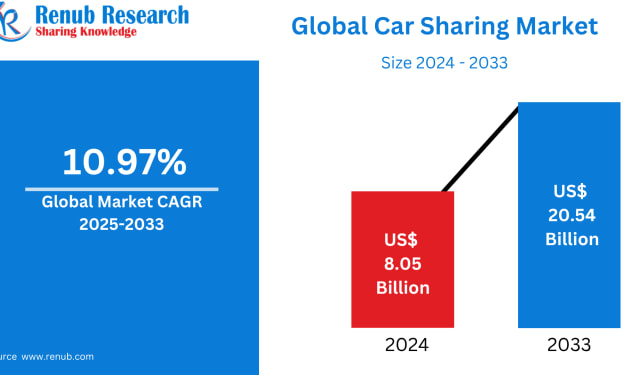
Introduction: A New Era of Mobility The global transportation landscape is undergoing a profound transformation. Once dominated by private vehicle ownership, urban mobility is now being reshaped by digital platforms, sustainability priorities, and changing consumer behavior. At the center of this shift stands the Car Sharing Market, a model that emphasizes access over ownership, flexibility over permanence, and efficiency over excess.
By Aaina Oberoi7 days ago in Futurism
So You Decided To Become a Nurse Practitioner:
So you decided to become an "Advanced Practice" nurse. Congratulations!... is what I would say if this was a good idea. Grad school? In this economy? What were you thinking? Likely it was something along the lines of either 1) “I've seen these other chucklefucks do it— Why can't I?” or even 2) “I've got a nice career, I should shake it up. I miss feeling like I have no clue what I'm doing.”
By Sandor Szabo2 days ago in Fiction


Comments (1)
In today's digital era, political campaigning has undergone significant transformation, placing a stronger emphasis on efficient online fundraising methods. Among the plethora of fundraising platforms, WinRed - https://winred.pissedconsumer.com/review.html has emerged as a potent tool for political candidates. Tailored exclusively for the Republican Party, WinRed has already transformed the fundraising landscape by offering an effective, secure, and user-friendly platform that individuals actively employ to back their chosen candidate.