
How AI Is Revolutionizing Banking: Trends and Innovations to Watch
From Smart Loans to Robo-Advisors—Discover How AI is Redefining Banking

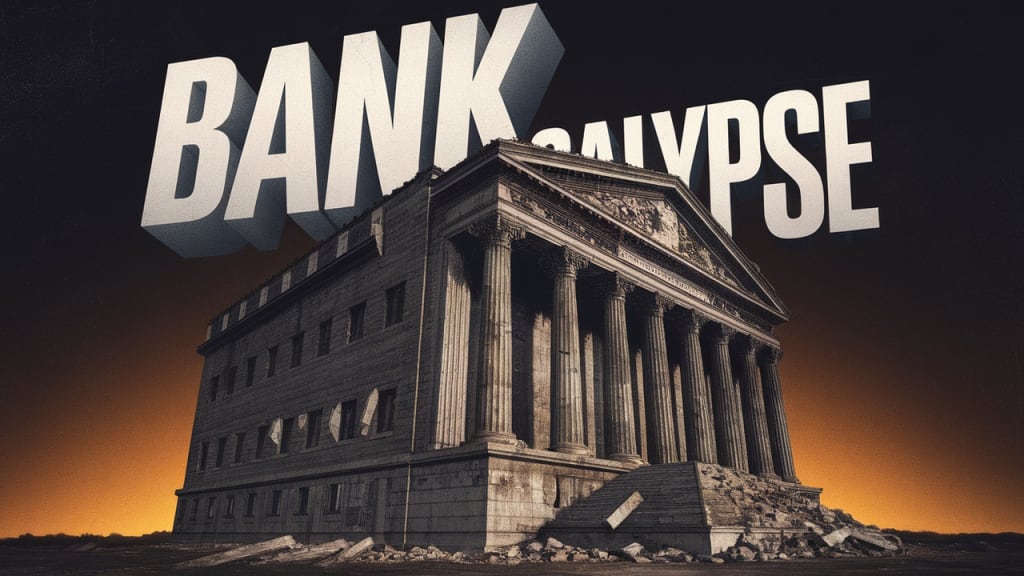
Artificial intelligence (AI) is no longer just a buzzword in the financial services industry—it’s a transformative force reshaping banking as we know it. From streamlining customer interactions to combating fraud and enabling hyper-personalized services, AI is driving a new era of efficiency and innovation. As we step into 2025, let’s explore how AI is revolutionizing banking and what trends and innovations are shaping the future of financial services.
Why Traditional Banking is Dying (and What Comes Next)
The AI Banking Revolution: What’s Driving Change?
1. Generative AI: Beyond Chatbots
Generative AI tools, such as ChatGPT, are pushing the boundaries of customer service and decision-making. Unlike traditional chatbots, generative AI can:
- Craft personalized responses in real-time.
- Analyze customer sentiment to offer tailored solutions.
- Assist with complex financial planning.
For instance, banks like JPMorgan are experimenting with generative AI to provide advanced investment insights, helping customers make informed decisions.
2. Hyper-Personalization
Customers now expect banking services tailored to their unique needs. AI-driven systems analyze vast datasets, including transaction histories, spending habits, and even social media activity, to offer hyper-personalized experiences. Examples include:
- Customized financial advice.
- Automated budgeting tools.
- Dynamic interest rates based on customer profiles.
Banks utilizing these technologies report higher customer satisfaction and retention rates.
3. AI in Fraud Detection and Risk Management
Fraud remains one of the biggest challenges in banking. AI-powered systems can detect anomalies in real-time, flagging potential threats before they escalate. Features include:
- Predictive models that identify suspicious patterns.
- Biometric authentication for secure transactions.
- Real-time alerts for account irregularities.
For example, HSBC uses AI to monitor billions of transactions and identify fraudulent activities, saving millions in potential losses annually.
4. Automated Processes and Operational Efficiency
AI-driven automation is streamlining backend processes, allowing banks to reduce costs and improve accuracy. Key applications include:
- Loan approval processes that analyze creditworthiness in minutes.
- Automated compliance checks to meet regulatory standards.
- AI-powered trading systems that optimize portfolio management.
Top Trends in AI and Banking for 2025
1. Voice-Powered Banking
Voice assistants like Alexa and Google Assistant are becoming banking allies. In 2025, more banks are integrating voice recognition technology to:
- Enable hands-free banking transactions.
- Provide balance inquiries and transaction histories.
- Facilitate bill payments via voice commands.
2. Embedded Finance
AI is powering embedded finance, where non-banking platforms offer financial services seamlessly. Think retail apps providing instant loans or ride-sharing apps offering insurance—all made possible through AI-driven algorithms.
3. Sustainability Through AI
AI is helping banks align with ESG (Environmental, Social, and Governance) goals by analyzing data to:
- Assess the environmental impact of investments.
- Promote green financing initiatives.
- Offer sustainability-linked financial products.
4. AI-Driven Cybersecurity
With cyber threats on the rise, AI is fortifying digital banking systems by:
- Predicting and preventing cyberattacks using machine learning models.
- Encrypting data more effectively.
- Enhancing security measures with multi-factor authentication.
Real-World Applications: How Banks Are Using AI Today
1. Wells Fargo: AI-Powered Customer Insights
Wells Fargo uses AI to analyze customer data and provide actionable insights, enabling proactive financial management.
2. Citibank: AI in Risk Assessment
Citibank employs AI to predict loan defaults and adjust lending strategies, improving profitability and minimizing risk.
3. Bank of America: Erica, the AI Assistant
Bank of America’s virtual assistant, Erica, leverages AI to help customers:
- Monitor their spending.
- Pay bills.
- Receive personalized savings tips.
4. Mastercard: Fraud Detection
Mastercard’s AI systems detect fraudulent transactions within milliseconds, ensuring secure and seamless payments for customers worldwide.
The Future of AI in Banking: Opportunities and Challenges
While AI offers immense potential, its adoption isn’t without challenges. Key opportunities and obstacles include:
Opportunities
- Expanding Financial Inclusion: AI can help underserved populations access credit and banking services through alternative data analysis.
- Improving Customer Retention: Personalization and predictive insights foster stronger customer relationships.
- Cost Savings: Automation reduces operational costs, enabling banks to focus resources on strategic initiatives.
Challenges
- Data Privacy Concerns: Banks must address regulatory challenges and protect customer data from breaches.
- Implementation Costs: Adopting AI requires significant investment in technology and training.
- Ethical Considerations: Ensuring AI systems are unbiased and fair is critical for maintaining customer trust.
How to Prepare for the AI-Driven Future of Banking
Financial institutions must take proactive steps to stay competitive in an AI-driven world:
- Invest in AI Talent: Recruit data scientists and AI experts to lead innovation.
- Enhance Data Security: Prioritize cybersecurity to protect sensitive customer information.
- Collaborate with Fintechs: Partner with fintech companies to accelerate AI adoption.
- Educate Customers: Build trust by educating customers on how AI enhances their banking experience.
Conclusion
As 2025 unfolds, artificial intelligence is set to revolutionize banking and financial services on an unprecedented scale. From hyper-personalization to real-time fraud detection, the possibilities are limitless. However, staying ahead requires financial institutions to embrace innovation, address challenges, and prioritize customer trust.
By leveraging the latest AI technologies and keeping a pulse on emerging trends, banks can transform themselves into agile, customer-focused organizations ready to thrive in the digital age.
About the Creator
Keep reading
More stories from Marveline Merab and writers in Futurism and other communities.
The Marvel of Self-Healing Materials Technology
Imagine a world where cracks in your smartphone screen, chips in your car’s paint, or damage to a bridge can repair themselves without human intervention. It sounds like something out of a sci-fi movie, but thanks to self-healing materials technology, this futuristic vision is becoming a reality. These materials, inspired by nature’s ability to heal wounds, are reshaping industries and paving the way for smarter, more sustainable products.
By Marveline Merababout a year ago in Futurism
About Binding Prometheus
I want to start actively advocating on behalf of my own work, and the most valuable part of my canon is, without a doubt, Binding Prometheus, the play I have been working on since 2019 and only finished in 2023 as part of my MA. The play itself is an amalgamation of a million different inspirations. On one end, it evokes the Ancient Greek myth-play, deriving its own title from the earliest extant work of Western drama we have, Aeschylus’s Prometheus Bound. On the other end, it borrows significantly from the sci-fi bulwarks from over the years, namely Mary Shelley’s Frankenstein and Karel Capek’s Rossum’s Universal Robots. The play could be an episode of Black Mirror, I fear. I don’t know. I’ve only ever seen one episode of Black Mirror.
By Steven Christopher McKnight18 days ago in Futurism
Glass Straw Market Size and Forecast 2025–2033
Introduction The global push toward sustainability is reshaping everyday consumer choices, from grocery bags to beverage packaging. Among the most visible symbols of this transformation is the humble drinking straw. Once dominated by single-use plastic, the category is rapidly evolving as governments, businesses, and consumers prioritize environmental responsibility. In this context, glass straws have emerged as a premium, reusable alternative that combines sustainability with style.
By Aaina Oberoi5 days ago in Futurism


Comments
There are no comments for this story
Be the first to respond and start the conversation.