
How AI Is Reshaping Traditional SEO Strategies in 2025?
AEO, SEO and GEO are creating the disruption.

You must remember the times when ranking on Google's first page was the ultimate goal for every brand. It was, in fact, for a very long time, the prime SEO strategy people used for their digital visibility.
However, now, the rules have changed. The SEO strategies for 2025 are rewritten, and the "front page" is no longer an exclusive spot.
According to recent data, nearly 60% of Google searches end without a single click — a figure that has surged in the past year as Google’s AI Overviews and other generative tools have taken center stage.
It's even more interesting to notice that when AI Overviews appear on search engines, website clicks can drop by almost 50%.
Clearly, these are not some small dents in the traffic; they are structural shifts that every marketing leader must contend with.
This disruption is pushing CMOs to acknowledge the impact of generative AI on SEO, and to rethink their SEO strategies for 2025-26.
So, how is AI changing SEO? The short answer to this is-- dual forces are in action, i.e., AI Overviews and generative search.
The long answer is detailed in the blog!
In this blog, we will explore how AI Overview will change SEO, the impact of generative AI on SEO, and most importantly, the strategies executives must adopt in 2025 to maintain visibility in an AI-first search landscape. This is not about evolution; it’s about survival through strategic reinvention.
Why Traditional SEO Strategies 2025 Are Losing Ground
There are Cracks in a Keyword-First Playbook.
For more than two decades, SEO revolved around keywords, backlinks, and technical tweaks. But in 2025, those once-reliable levers deliver quite diminishing returns. AI-driven search platforms now process queries in natural language, summarize results in real time, and often eliminate the need for a click. Traditional seo strategies 2025, if left unchanged, simply cannot compete with algorithms that are designed to answer users’ questions directly.
Also Read: Can AI-Generated Content Hurt SEO?
How Will AI Overview Change SEO and User Behavior?
One of the most disruptive forces in 2025 is Google and Bing’s AI Overview. By pulling multiple sources into a single, AI-generated snapshot, these search engines are reducing the role of organic results.
Studies reveal that when an AI Overview appears, the click-through rate (CTR) to websites can be nearly halved. This isn’t just about fewer visits; it’s about the erosion of visibility for brands that previously thrived on high rankings.
The effect is twofold:
- Users are satisfied faster. Instead of scanning ten links, they read the AI summary.
- Brands lose control. Even if your site ranks high, you may not get the click unless your content is referenced in the overview itself.
This demonstrates clearly how AI Overview will change SEO — it shifts the battleground from “ranking higher” to “being included in the AI-generated answer.”
The Impact of Generative AI on SEO Beyond Google
The broader impact of generative AI on SEO extends far beyond Google and Microsoft Bing. Generative AI tools like ChatGPT, Perplexity, and Anthropic’s Claude are becoming primary gateways to information. These platforms don’t display “ten blue links” at all. Instead, they generate single synthesized answers. That means your brand’s visibility depends on whether generative engines cite you as an authoritative source, not where you rank on Google.
In practice, it means that visibility is no longer platform-agnostic. It’s fragmented across multiple AI environments…and the winners are not just the ones with the best backlinks but those with structured, authoritative, and trusted content that AI engines can safely surface.
Strategic Takeaway
Traditional seo strategies 2025 are insufficient in the age of AI. Marketers can no longer rely solely on keyword rankings or organic traffic. The priority now is understanding how AI Overview will change SEO at its core and preparing for the broader impact of generative AI on SEO across platforms.
The Impact of Generative AI on SEO
Why Generative AI Has Become SEO’s Disruptor
If AI Overviews exposed cracks in the traditional SEO playbook, the rise of generative AI has blown the doors wide open. Generative AI platforms such as ChatGPT, Perplexity AI, and Anthropic’s Claude have become mainstream search destinations today.
A Gartner report predicts that by 2026, over 30% of online searches will bypass traditional engines entirely, routed instead through generative assistants. What do you think it means for the brands?
The impact of generative AI on SEO is profound:
- No SERPs: Instead of showing lists of links, generative AI delivers synthesized answers. Visibility depends on whether your content is cited or referenced in the output.
- Entity-driven trust: Large language models (LLMs) rely on entity-level knowledge. This means they prioritize content that is recognized across and has the highest consensus.
- Contextual personalization: Answers differ per user, location, and query nuance, making keyword rankings less reliable.
Marketers must confront the truth…the real battleground isn’t about being in the top three results on Google anymore. Those days are done. It’s about being part of the knowledge base that generative engines trust when crafting their responses.
A Strategic Shift From SEO to GEO
Generative Engine Optimization (GEO), unlike traditional SEO, which targets ranking, is about ensuring your content is ingested, understood, and cited by generative AI platforms.
Key elements of GEO include:
1. Structured Content for AI Parsing
- Use schema markup, FAQs, tables, and bullet points to make content machine-readable.
- Example: A healthcare brand publishing treatment data with a schema ensures AI models can extract authoritative answers directly.
2. Entity Strength and Authority Signals
- Build brand and author authority with consistent mentions across authoritative platforms.
- Example: If AI sees your CEO consistently cited on Forbes or Harvard Business Review, it increases trust in referencing your brand.
3. First-Party Data as a Differentiator
- Publish proprietary research, surveys, and case studies.
- LLMs favor unique, verifiable data over recycled content.
4. Digital PR and Knowledge Graph Integration
- Invest in PR campaigns that create structured mentions (linked profiles, Wikidata entries, cited reports).
- These act as knowledge graph signals that generative engines map to your entity.
In short, GEO is the answer to “how AI is changing SEO” in 2025.
Strategic Takeaway
The impact of generative AI on SEO is not a future scenario– it’s today’s reality. As more users shift queries to generative engines, brands must pivot from chasing SERP rankings to building entity-driven authority that AI trusts. GEO is the backbone of effective seo strategies 2025. The winners will be the companies whose content is not just optimized for humans, but engineered for AI consumption and citation.
Hybrid SEO Strategies 2025: SEO, AEO, and GEO
Why Hybrid SEO Strategies 2025 Are Essential?
The arrival of AI in search doesn’t mean traditional SEO is obsolete — it just means it’s incomplete. Brands that focus solely on rankings will miss the larger opportunity, while those who ignore technical foundations will fail to get recognized as trustworthy sources by AI engines. The future is a hybrid model, where seo strategies 2025 must balance three layers:
- Traditional SEO: This is the foundation. Site speed, mobile optimization, keyword research, backlinks, and technical health still matter. They ensure crawlers can index your content and users can engage with it.
- Answer Engine Optimization (AEO): The middle layer. Content structured for Q&A, featured snippets, and voice assistants — designed to answer specific user questions directly.
- Generative Engine Optimization (GEO): The new frontier. Strategies designed to make your brand part of AI-generated answers in platforms like Google’s AI Overview, ChatGPT, and Perplexity.
Also Read: AEO vs GEO vs SEO – Breaking Down the Future of Search Optimization
Together, these create a stacked strategy — SEO for visibility, AEO for accessibility, and GEO for authority in AI-driven answers.
How is AI Changing SEO?
To understand how AI is changing SEO, you must understand how users interact with information today:
- A consumer might ask a question on ChatGPT (GEO).
- Then refine it on Google with an AI Overview (AEO).
- Finally, check a top-ranking link for depth (SEO).
If your content isn’t present across all three layers, you risk dropping out of the discovery journey altogether. That’s why hybrid seo strategies 2025 is the most important survival tactic.
Strategic Takeaway
Hybrid SEO strategies 2025 are the only way forward. Companies must treat SEO as the technical foundation, AEO as the bridge to conversational and overview-driven results, and GEO as the key to surviving in generative AI ecosystems. In practice, this means your team must operate on three fronts: optimizing your site, structuring your content for answers, and building brand authority to earn AI citations.
Strategic Shifts Marketers Must Make in 2025
1. Build an Entity-First Content Strategy
Traditional keyword-first approaches no longer guarantee visibility. Generative engines prioritize entities (people, brands, organizations) because they provide contextual trust.
Why it matters: Studies show that AI systems disproportionately surface content tied to authoritative entities, not just keyword relevance.
How to act:
- Add schema markup for organizations, authors, and products.
- Strengthen author bios, LinkedIn presence, and structured citations.
- Publish original thought leadership and research that reinforces your brand as a credible entity.
Strategic link: This directly addresses how is AI changing SEO by shifting focus from keyword density to entity credibility.
2. Structure Content for AI Overviews
One of the clearest changes is how AI Overview will change SEO in practice. Google AI Overviews pull from concise, structured content.
Why it matters: Research from 2025 shows that AI Overviews can cut click-throughs by nearly 50%, meaning you need inclusion within the snapshot itself.
How to act:
- Write content in Q&A formats.
- Use bullet points, tables, and step-by-step guides.
- Add FAQ schema to pages.
Example: A law firm publishing a “What is X law?” FAQ increases its odds of being referenced in AI-generated legal summaries.
3. Prioritize Authority Through Digital PR
Backlinks still matter, but mentions from authoritative sources are even more valuable for GEO.
Why it matters: Generative AI often cites Forbes, The New York Times, or Harvard Business Review in its responses. Getting cited in such places feeds authority back to your brand.
How to act:
- Shift budgets from bulk link-building to digital PR campaigns.
- Target guest contributions and thought leadership in niche, high-authority outlets.
Strategic link: This reflects the impact of generative AI on SEO, where AI engines rely on trusted mentions rather than raw link volume.
4. Track AI Visibility Metrics, Not Just Rankings
Ranking #1 is no longer the sole measure of SEO success.
Why it matters: A 2025 BrightEdge survey revealed that over 70% of marketers now track AI visibility, measuring whether their brand is included in AI answers.
How to act:
- Monitor presence in Google AI Overviews using tools like MarketBrew’s AI Visualizer.
- Track citation frequency across ChatGPT and Perplexity with AI visibility dashboards.
- Treat AI citations as the new “rankings.”
Strategic link: This redefines seo strategies 2025 around metrics that reflect the actual AI-driven discovery journey.
5. Optimize for Multimodal Queries
Generative AI platforms accept not just text, but voice, images, and even video.
Why it matters: In 2025, voice searches account for nearly 30% of global queries, and AI models increasingly integrate image and video recognition.
How to act:
- Add alt text and descriptive metadata to images.
- Optimize transcripts and captions for video/audio content.
- Anticipate conversational, voice-style phrasing in your FAQ content.
Strategic link: This reflects how AI is changing SEO — search is no longer typed, but spoken, snapped, or recorded.
6. Balance Human and AI Workflows
AI tools are invaluable for scaling keyword research, clustering, and drafting. But unchecked, they risk creating generic or inaccurate content.
Why it matters: A 2025 Deloitte study found that 74% of CMOs use AI tools for content generation, but only 29% trust them without human review.
How to act:
- Use AI to generate outlines, topic clusters, and draft snippets.
- Employ human editors to add brand tone, strategic insight, and fact-checking.
- Establish editorial “guardrails” to maintain E-E-A-T (Experience, Expertise, Authoritativeness, Trustworthiness).
Strategic link: This hybrid workflow keeps seo strategies 2025 scalable yet trustworthy.
7. Guard Against AI Hallucinations
Generative models sometimes produce false citations or incorrect facts — a direct threat to brand credibility.
Why it matters: Misattributions can erode consumer trust, especially in regulated industries like healthcare, finance, or law.
How to act:
- Publish sources of truth (e.g., data dashboards, methodology pages).
- Consistently update evergreen content to reduce outdated references.
- Ensure brand statements and facts are easily extractable by AI.
Strategic link: This addresses how ai overview will change seo by ensuring your brand is cited accurately and consistently in AI outputs.
8. Integrate SEO With Organizational Strategy
SEO in 2025 is no longer siloed in marketing. It requires coordination across PR, product, and data teams.
Why it matters: Generative AI relies on signals that touch every part of the organization — from PR mentions to product reviews to customer support documentation.
How to act:
- Align SEO teams with PR, product marketing, and analytics groups.
- Create cross-functional task forces dedicated to GEO readiness.
- Train leadership to understand that SEO is now a brand strategy, not just a marketing tactic.
Strategic link: This makes seo strategies 2025 an enterprise-wide initiative rather than a tactical afterthought.
Organizational Implications of SEO Strategies 2025
The transformation of SEO into an AI-first discipline has organizational consequences. What used to be a tactical role inside marketing has become a cross-functional mandate.
- Integration with PR: Since digital PR drives entity authority, PR and SEO teams must collaborate on campaigns that secure brand mentions in authoritative outlets.
- Partnership with Product & Customer Success: AI platforms often scrape product documentation, reviews, and FAQs. Ensuring this content is structured and accurate directly impacts visibility.
- Data & Analytics Collaboration: Tracking AI visibility metrics (citation frequency, AI Overview presence) requires analytics sophistication beyond traditional keyword dashboards.
In short, seo strategies 2025 require marketers to work as orchestrators across departments. How is AI changing SEO? It has expanded it from a marketing silo into an enterprise-wide responsibility. Companies that fail to build these cross-functional bridges will struggle to appear in AI-generated answers, no matter how well their blog posts are optimized.
The Future of SEO Strategies 2025 and Beyond
Now, looking ahead, search will become increasingly fragmented and multimodal.
The impact of generative AI on SEO will intensify as LLMs evolve. Personalized responses — where two users get entirely different answers — will challenge marketers to focus less on universal rankings and more on building content ecosystems. Visibility will be about being the “go-to source” across contexts, not just the top of one page.
For executives wondering how AI overview will change SEO beyond 2025, the answer is simple: AI will not just summarize information, it will curate brand trust. The brands most frequently cited will dominate digital mindshare, regardless of whether a click ever happens.
Final Thoughts
Traditional SEO is not dead, but it is no longer enough. Seo strategies 2025 must integrate technical SEO, AEO, and most critically, GEO — ensuring that AI systems treat your brand as a trusted entity. The real shift is not about “how is AI changing SEO” and the experts understand this!
You don't have to figure it all out on your own; rather, consult the top GEO agencies in USA and get visibility across the LLM platforms with more ease!
The winners will be those who stop chasing rankings and start earning citations, trust, and authority in the generative era.
About the Creator
Sarah Kamal
Sharing expert insights on next-gen tech services to help businesses innovate and grow!
Keep reading
More stories from Sarah Kamal and writers in Futurism and other communities.
Best WordPress Website Development Companies in the USA (2025)
WordPress started off as a blogging platform; however, it has come a long way from its humble beginnings. Today, it stands strong as one of the world's most dominant content management systems, powering over 43% of all websites all across the globe. The list includes major enterprise portals, newsrooms, government sites, and Fortune 500 companies.
By Sarah Kamal6 months ago in Futurism
About Binding Prometheus
I want to start actively advocating on behalf of my own work, and the most valuable part of my canon is, without a doubt, Binding Prometheus, the play I have been working on since 2019 and only finished in 2023 as part of my MA. The play itself is an amalgamation of a million different inspirations. On one end, it evokes the Ancient Greek myth-play, deriving its own title from the earliest extant work of Western drama we have, Aeschylus’s Prometheus Bound. On the other end, it borrows significantly from the sci-fi bulwarks from over the years, namely Mary Shelley’s Frankenstein and Karel Capek’s Rossum’s Universal Robots. The play could be an episode of Black Mirror, I fear. I don’t know. I’ve only ever seen one episode of Black Mirror.
By Steven Christopher McKnight24 days ago in Futurism
Advanced Analytics Market: Predictive Insights, Big Data Adoption & Industry Trends
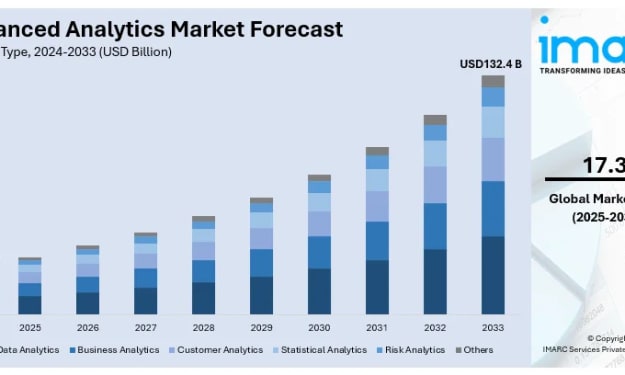
Rapid digital transformation, exponential data generation, cloud adoption, AI and machine learning integration, and rising demand for real-time, data-driven decision-making are accelerating advanced analytics adoption across industries. According to IMARC Group's latest research publication, global advanced analytics market size reached USD 26.9 Billion in 2024. Looking forward, IMARC Group expects the market to reach USD 132.4 Billion by 2033, exhibiting a growth rate (CAGR) of 17.3% during 2025-2033.
By Andrew Sullivan4 days ago in Futurism
Autonomy Is The Real Privilege
Good morning, freedom-seekers! Today we’re gonna be looking at autonomy. A strange word, I know; one many would probably look at blankly and run away from on sight. We’re gonna figure out what it actually means, consider how it’s achieved, and decipher just how deeply most of us are tangled up in dependence without realising it.
By That ‘Freedom’ Guy4 days ago in Humans



Comments
There are no comments for this story
Be the first to respond and start the conversation.