
How AI is Enhancing Cybersecurity in 2025
By Jay Phoenix
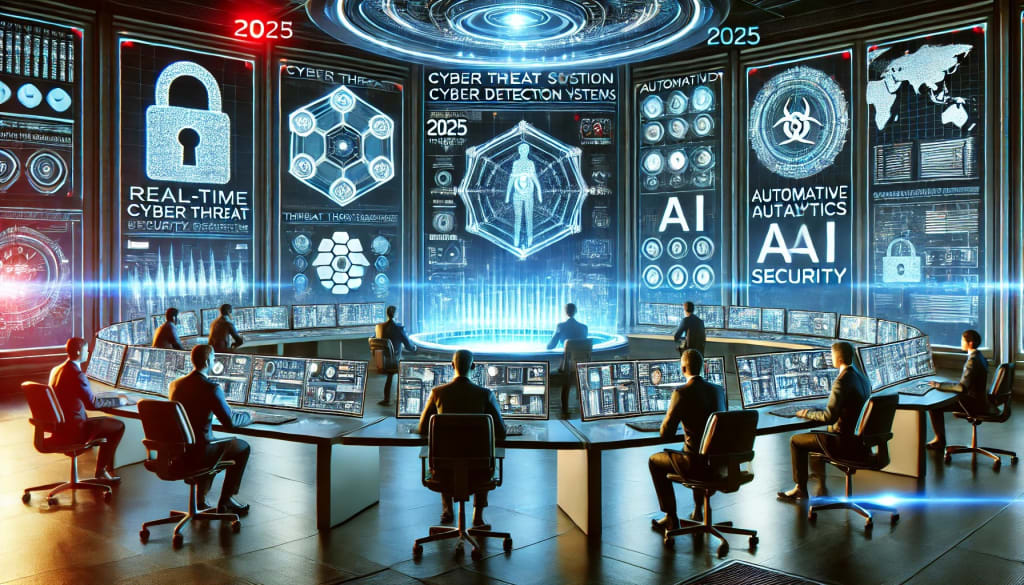
Cybersecurity threats are evolving, and traditional defense mechanisms are no longer enough. In 2025, artificial intelligence is leading the fight against cybercrime, making security systems smarter, faster, and more adaptive than ever before. AI is not just a tool; it is an essential part of protecting businesses, governments, and individuals from an ever-growing list of cyber threats.
AI-Powered Threat Detection
One of the biggest challenges in cybersecurity is identifying threats before they cause damage. AI-powered threat detection systems analyze vast amounts of data in real-time, spotting anomalies that could indicate a cyberattack. Unlike traditional security software, which relies on predefined rules, AI continuously learns from new threats and adapts accordingly.
AI is improving threat detection by:
- Identifying unusual network behavior before an attack happens
- Recognizing zero-day vulnerabilities faster than human analysts
- Using predictive analytics to forecast potential attack patterns
With AI monitoring systems, organizations can detect and neutralize threats before they escalate, minimizing damage and downtime.
Automated Incident Response
When a cyberattack occurs, response time is crucial. AI-driven security systems automate incident response, reducing the need for human intervention and speeding up recovery times.
How AI automates cybersecurity responses:
- AI identifies and isolates compromised systems to prevent further damage
- Automated forensic analysis determines the origin and method of attack
- AI-driven security measures restore affected systems quickly
By eliminating delays caused by human response time, AI ensures that organizations can recover from cyber incidents faster and with minimal disruption.
AI and Fraud Prevention
Online fraud is a growing concern, and cybercriminals are using increasingly sophisticated tactics to deceive individuals and businesses. AI-powered fraud detection systems analyze financial transactions, website behavior, and login attempts to identify suspicious activities in real-time.
Ways AI is preventing fraud:
- Detecting unusual spending patterns that indicate identity theft
- Recognizing deepfake technology used in social engineering attacks
- Enhancing multi-factor authentication to verify users more securely
Financial institutions, e-commerce platforms, and even social media networks are leveraging AI to prevent fraud before it affects consumers.
The Role of AI in Password Security
Passwords remain one of the weakest links in cybersecurity. AI is making authentication stronger by moving beyond traditional passwords and introducing more secure methods.
Innovations in AI-powered authentication include:
- Behavioral biometrics that analyze typing speed, mouse movements, and facial recognition
- AI-generated passkeys that change dynamically, making them harder to hack
- Continuous authentication that verifies user identity throughout a session
These advancements are reducing the risk of password-related breaches and making digital identities more secure.
AI and Ransomware Defense
Ransomware attacks have become a major threat, targeting businesses, hospitals, and even government institutions. AI is now playing a critical role in detecting and preventing ransomware attacks before they encrypt valuable data.
How AI combats ransomware:
- Identifying malicious file behavior before encryption begins
- Blocking phishing emails that often serve as entry points for ransomware
- Automatically backing up critical data to ensure quick recovery
With AI-driven ransomware defense, organizations are better prepared to withstand attacks and protect sensitive information.
The Ethical Challenges of AI in Cybersecurity
While AI is making cybersecurity more effective, it also raises ethical concerns. AI can be used by both defenders and attackers, making it a double-edged sword. Cybercriminals are using AI to develop more advanced hacking tools, creating an ongoing battle between AI-powered security and AI-driven attacks.
Challenges that need to be addressed:
- Ensuring AI security tools do not mistakenly block legitimate activities
- Preventing bias in AI algorithms that could lead to discrimination
- Balancing AI automation with human oversight to avoid overreliance
As AI continues to evolve, ethical considerations will play a crucial role in shaping how it is used in cybersecurity.
What’s Next for AI in Cybersecurity?
The future of cybersecurity will be shaped by AI innovations that improve threat detection, response, and prevention. Emerging trends in AI-driven cybersecurity include:
- Quantum computing integration to enhance encryption methods
- AI-driven deception techniques that trick hackers into revealing their methods
- More advanced deepfake detection tools to prevent misinformation attacks
With cyber threats becoming more sophisticated, AI will continue to be a game-changer in the ongoing fight for digital security.
Organizations that invest in AI-driven cybersecurity today will be better equipped to protect their assets, data, and users from the growing risks of cybercrime. The digital world is evolving, and AI is ensuring that cybersecurity evolves with it.
About the Creator
Keep reading
More stories from Jay Phoenix and writers in Futurism and other communities.
The Best AI Writing Assistants for Content Creators in 2025
Content creation has never been more exciting, and artificial intelligence is at the center of this revolution. In 2025, AI writing assistants are not just tools; they are creative partners that help writers produce high-quality content faster than ever before. Whether you’re a blogger, journalist, marketer, or novelist, AI-powered writing assistants are changing the way content is crafted. The question is no longer whether to use AI in writing, but which AI tool is the best fit for your needs.
By Jay Phoenix12 months ago in Futurism
About Binding Prometheus
I want to start actively advocating on behalf of my own work, and the most valuable part of my canon is, without a doubt, Binding Prometheus, the play I have been working on since 2019 and only finished in 2023 as part of my MA. The play itself is an amalgamation of a million different inspirations. On one end, it evokes the Ancient Greek myth-play, deriving its own title from the earliest extant work of Western drama we have, Aeschylus’s Prometheus Bound. On the other end, it borrows significantly from the sci-fi bulwarks from over the years, namely Mary Shelley’s Frankenstein and Karel Capek’s Rossum’s Universal Robots. The play could be an episode of Black Mirror, I fear. I don’t know. I’ve only ever seen one episode of Black Mirror.
By Steven Christopher McKnight26 days ago in Futurism
Autonomy Is The Real Privilege
Good morning, freedom-seekers! Today we’re gonna be looking at autonomy. A strange word, I know; one many would probably look at blankly and run away from on sight. We’re gonna figure out what it actually means, consider how it’s achieved, and decipher just how deeply most of us are tangled up in dependence without realising it.
By That ‘Freedom’ Guy7 days ago in Humans




Comments
There are no comments for this story
Be the first to respond and start the conversation.