
How AI is Changing the Job Market—And How to Stay Ahead
"AI is disrupting jobs faster than ever. Learn how to adapt, upskill, and turn AI into your biggest career advantage before it’s too late!"

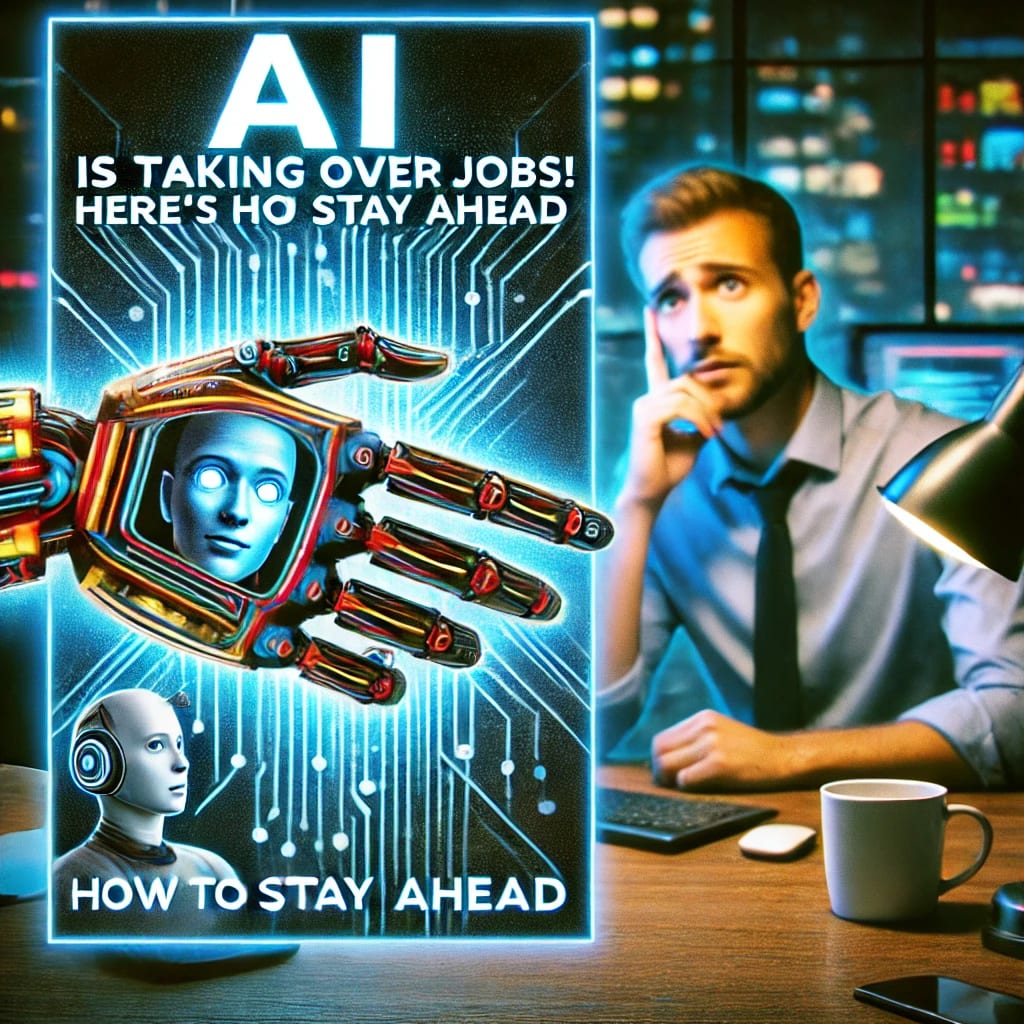
Artificial intelligence (AI) is no longer the future—it’s the present. From automating tasks to making complex decisions, AI is transforming industries at a rapid pace. While some fear job losses, others see it as an opportunity. The question isn’t "Will AI replace jobs?" but rather, "How can we adapt and stay ahead?"
In this article, we’ll explore how AI is reshaping the job market and the best strategies to future-proof your career.
How AI is Transforming the Job Market
1. Automation is Replacing Repetitive Jobs
AI-powered robots, chatbots, and software are taking over routine and repetitive tasks in industries like manufacturing, customer service, and data entry. Jobs at risk include:
Factory line workers
Telemarketers
Data entry clerks
Basic accounting roles
However, this doesn’t mean mass unemployment—it means job transformation. Instead of performing manual tasks, workers will need to manage, monitor, or improve AI systems.
2. AI is Creating New High-Paying Jobs
While AI is replacing some jobs, it’s also creating new ones in fields like:
AI & Machine Learning Engineering
Data Science
Cybersecurity
AI Ethics & Compliance
Prompt Engineering
According to reports, AI-related jobs pay 2-3x more than traditional roles—so the opportunity is massive!
3. The Rise of AI-Assisted Work
Rather than replacing jobs completely, AI is enhancing human capabilities. Professionals in fields like marketing, finance, healthcare, and law are now using AI tools to work faster and smarter.
For example:
Doctors use AI for better diagnosis and patient management.
Lawyers use AI for legal research and contract analysis.
Marketers use AI tools like ChatGPT and Jasper for content creation.
The key is learning how to work alongside AI rather than fearing it.
How to Stay Ahead in the AI-Driven Job Market
1. Learn AI and Automation Skills
Understanding AI tools will make you irreplaceable in the workforce. You don’t need to be a programmer—just knowing how to use AI in your field can give you an edge.
Some useful AI tools to learn:
ChatGPT, Claude, Gemini (for writing and communication)
MidJourney, DALL·E (for AI-generated images)
Zapier, Make.com (for task automation)
2. Focus on Human-Centric Skills
AI may be great at automation, but it lacks human creativity, emotional intelligence, and problem-solving. Employers are increasingly valuing soft skills like:
Critical thinking
Creativity
Leadership
Emotional intelligence
Adaptability
3. Start an AI-Based Side Hustle
AI isn’t just for employees—it’s also creating business opportunities. Some profitable AI-based side hustles include:
AI-Generated Content Creation (blogs, YouTube, social media)
AI Consulting (helping businesses integrate AI tools)
Faceless YouTube Automation (using AI for scriptwriting and video creation)
The AI revolution isn’t just about jobs—it’s about wealth-building opportunities.
4. Continuous Learning & Upskilling
AI is evolving fast, and the best way to stay ahead is to keep learning. Platforms like:
Coursera & Udemy (AI & data science courses)
LinkedIn Learning (business & tech skills)
YouTube & Medium (free AI tutorials)
Make it a habit to stay updated with AI trends.
Final Thoughts: Adapt or Get Left Behind
AI isn’t taking jobs—people who know AI are taking jobs. The job market is evolving, and those who embrace AI will thrive.
By learning AI tools, developing human skills, and staying adaptable, you can future-proof your career and turn AI into your biggest advantage.
Are you ready to stay ahead of AI? Let me know your thoughts in the comments!
About the Creator
Aravinth Kumar Sakthivel
I’m Aravinth, a storyteller exploring mysteries, fantasy, and heartfelt dramas. I craft tales to inspire, intrigue, and spark imagination. Join me in discovering the extraordinary within the ordinary.
Keep reading
More stories from Aravinth Kumar Sakthivel and writers in Futurism and other communities.
The Reflection in the Mirror Wasn't Mine
I never believed in ghosts. That is, until the night I saw something in my mirror that changed everything. It was supposed to be a normal evening. I had just finished brushing my hair when I noticed something strange—the reflection in the mirror wasn’t following my movements. My hands stopped, but the girl in the mirror kept brushing. My stomach turned to ice.
By Aravinth Kumar Sakthivel about a year ago in Horror
On-Device AI Market Valuation Set to Total USD 174.19 billion by 2034
On-Device AI Market Overview The Global On-Device AI Market is projected to reach approximately USD 174.19 Billion by 2034, increasing from USD 14.87 Billion in 2024, reflecting a strong CAGR of 27.9% during the forecast period from 2025 to 2034.
By Roberto Crum3 days ago in Futurism
AI Orchestration Platform Market to hit USD 48.7 Billion By 2034
The Global AI Orchestration Platform Market is projected to reach approximately USD 48.7 Billion by 2034, rising from USD 5.8 Billion in 2024, and it is expected to grow at a CAGR of 23.7% during the forecast period from 2025 to 2034. The expansion of this market is largely driven by the increasing deployment of artificial intelligence solutions across enterprise environments.
By Roberto Crum6 days ago in Futurism
Author’s Advice
If you would’ve asked me 20 years ago did I know I’d become a writer and an author, I would’ve said “nope, ain’t happening”. As fate would have it I did become an author and I can honestly say I’m loving it so far. It really does feel good to be a writer. I’ve learned a lot on this journey and I feel like with even me being as new to this world as I am, there’s some wisdom I need to share with every other aspiring author.
By Joe Patterson5 days ago in Journal



Comments
There are no comments for this story
Be the first to respond and start the conversation.