
How AI Could Outshine Humans in Solving Riddles and Puzzles
Let’s explore how AI could potentially outshine humans in solving riddles and puzzles.

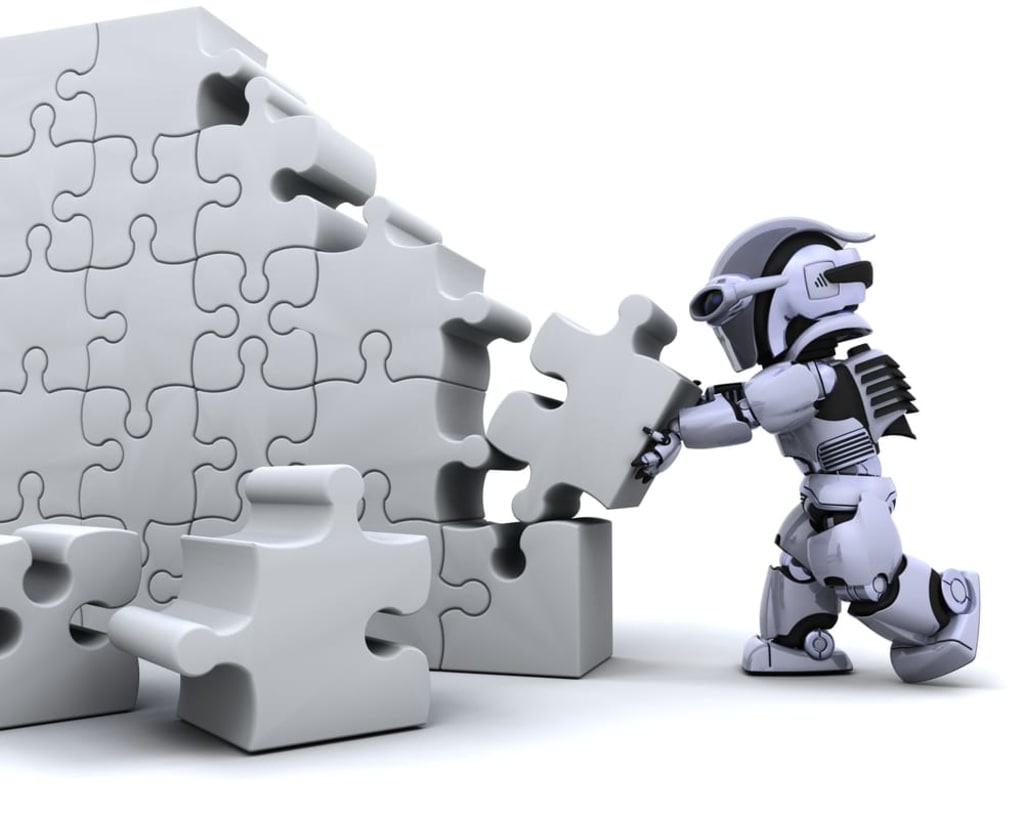
In recent years, artificial intelligence has made incredible advancements, challenging the way we understand human intelligence. One area where AI has shown impressive potential is in solving riddles and puzzles.
Traditionally, humans have been known for their ability to think critically, and creatively, and solve tricky problems. But with AI’s rise, these age-old capabilities are being tested in ways never seen before.
According to the US Department of State, AI achieves an accuracy rate of over 98% in logic-based problem-solving, surpassing the human average accuracy of 70–80%.
Let’s explore how AI could potentially outshine humans in solving riddles and puzzles.
The Power of Computational Thinking
AI’s strength in solving riddles and puzzles lies in its computational thinking. Unlike humans, who rely on a combination of intuition, experience, and logical reasoning, AI can process vast amounts of data at remarkable speeds. AI algorithms are built to scan through large datasets, identify patterns, and recognize structures that would be difficult for humans to detect in such a short time.
With an AI-driven PC, this processing capability is further enhanced, enabling the system to solve problems at a level of precision and speed that humans cannot match. Consider a jigsaw puzzle, for example. While a person might look at the pieces and try to place them based on experience, AI can instantly analyze thousands of possible combinations, narrowing down the choices with incredible speed.
Machine Learning: A Learning Curve
One of the core aspects that sets AI apart is its ability to learn. Machine learning (ML), a subset of AI, enables systems to improve over time. ML algorithms are trained using a wide variety of puzzles and riddles, allowing the AI to develop an understanding of various puzzle types, from word games to logic problems.
The more AI encounters puzzles, the better it gets at solving them. This continuous learning process means that the more challenges AI faces, the more refined its problem-solving strategies become. If you consider the example of AI learning to solve crossword puzzles, it would gradually build a library of patterns and solutions, allowing it to quickly recognize clues and complete the puzzle faster than a human. Over time, it can even learn to tackle puzzles with new, unfamiliar structures by leveraging the knowledge it has already gained.
Natural Language Processing: Cracking the Code
Another important capability of AI when it comes to solving riddles and puzzles is Natural Language Processing (NLP). NLP allows AI systems to interpret and understand human language, making it possible for the AI to grasp the nuances and complexities of puzzles that involve wordplay, riddles, or abstract concepts.
For instance, in riddles, there are often hidden meanings or double entendres that can throw off a human solver. AI, however, can sift through the words, identify patterns in language, and break down the clues systematically. By analyzing the structure of sentences, identifying keywords, and understanding the relationships between them, AI can piece together the information needed to reach the correct solution.
This is particularly useful when solving language-based puzzles like cryptic crosswords, word scrambles, or riddles where the clues are embedded in complex phrasing. AI’s ability to "read between the lines" allows it to excel in these areas.
AI’s Unique Advantages in Puzzle Solving
AI offers several key advantages over human puzzle solvers. These advantages make AI a powerful tool for solving riddles and puzzles, and they are particularly important when the puzzles are complex or require quick thinking.
1. Impartiality
Humans are often influenced by biases, prior experiences, or even emotions when solving problems. These biases can sometimes cloud judgment, leading to errors in reasoning. AI, on the other hand, is impartial and objective. It does not bring preconceived notions to the table. It solves puzzles purely based on logic and data analysis, making its solutions highly accurate.
2. Persistence
One of the most significant advantages of AI is its ability to work tirelessly. Humans get fatigued after prolonged focus or repetitive tasks, which can lead to mistakes or slower problem-solving. AI can continue working at full speed without needing breaks, which is especially beneficial when dealing with puzzles that require a lot of iterations or exploration of different possibilities.
For example, solving a complicated Sudoku puzzle may take time for a human, especially if they hit a dead-end. AI can explore different approaches, make adjustments, and continue solving without tiring.
3. Adaptability
AI is highly adaptable. It learns from its mistakes and improves over time. With each puzzle it encounters, AI refines its strategies and approaches. This means that it can quickly adapt to new types of puzzles, regardless of how they are presented. Over time, AI will be able to tackle problems with greater accuracy and efficiency.
4. Parallel Processing
Another powerful advantage of AI is its ability to analyze multiple aspects of a puzzle simultaneously. Humans generally tackle one part of the problem at a time, but AI can look at multiple factors at once. Whether it’s scanning through different clues in a riddle or evaluating various possible combinations in a logic puzzle, AI can perform parallel processing. This allows it to solve puzzles more quickly than a human could by simultaneously testing various scenarios and narrowing down possibilities faster.
According to Lenovo, advanced AI systems can simulate millions of scenarios per second, allowing them to test multiple solutions simultaneously.
5. Cybersecurity
In cybersecurity, AI is already being used to detect and prevent cyberattacks. By analyzing patterns in network traffic and looking for anomalies, AI can identify potential threats much faster than a human could. This ability to detect complex, hidden patterns is akin to solving a puzzle where the stakes are high.
6. Medical Diagnosis
AI's puzzle-solving skills can also play a crucial role in medicine. AI can analyze patient data, including medical imaging, genetic information, and test results, to identify potential health conditions. The puzzle here is finding the right diagnosis from a complex array of symptoms and medical data. AI’s ability to process and connect various data points can help doctors make more accurate diagnoses and even predict future health issues.
7. Financial Analysis
In finance, AI is increasingly used to predict stock prices, analyze market trends, and identify investment opportunities. Much like solving a puzzle, AI systems look for patterns in financial data and use that information to make predictions. This can give investors and financial analysts valuable insights into market behavior, helping them make informed decisions.
8. Game Development
AI is transforming the gaming industry by creating more intelligent and challenging game opponents. In games that involve strategy, problem-solving, or puzzles, AI can generate opponents that adapt to the player's actions and provide a more dynamic and engaging experience.
The Future of AI and Puzzle Solving
As AI continues to evolve, we can expect to see even more impressive feats of puzzle-solving. Advanced AI systems may one day surpass human capabilities in solving complex riddles, puzzles, and problems that require deep logical reasoning.
The combination of vast computational power, machine learning, and natural language processing will continue to push the boundaries of what AI can achieve.
However, it is essential to remember that AI is not a replacement for human intelligence. While AI may excel in many areas of puzzle-solving, humans still possess unique abilities that AI cannot replicate. Human creativity, intuition, and the ability to think abstractly are traits that are vital for tackling the most complex and ambiguous challenges.
The key to unlocking the full potential of AI lies in collaboration. By combining human ingenuity with AI’s computational power, we can solve problems that were once considered unsolvable. Whether it’s cracking codes, diagnosing diseases, or creating new technology, humans and AI together have the potential to achieve remarkable breakthroughs.
Conclusion
AI’s ability to solve riddles and puzzles is just one example of how it can surpass human capabilities in certain areas. Through computational thinking, machine learning, and natural language processing, AI is well-equipped to tackle even the most complex problems.
Its advantages, such as impartiality, persistence, adaptability, and parallel processing, make it a formidable force in puzzle-solving. As AI continues to evolve, its puzzle-solving prowess will only improve, leading to new opportunities in fields such as cybersecurity, medicine, and finance.
While AI may outshine humans in certain puzzle-solving tasks, it is clear that the future lies in the collaboration between human creativity and AI’s raw computational power. Together, humans and AI can unlock new realms of possibility and overcome challenges in ways never thought possible before.
About the Creator
Judy Watson
I’m Judy Watson, a content writer specializing in tech, marketing, and business. I focus on simplifying complex ideas and turning them into clear, engaging, and SEO-friendly content.
Keep reading
More stories from Judy Watson and writers in Futurism and other communities.
What Are the Applications of AI in Aerospace Technology?
Have you ever wondered how artificial intelligence is transforming the world of aerospace technology? From streamlining flight operations to enhancing the passenger experience, AI is making waves in this dynamic industry.
By Judy Watsonabout a year ago in Futurism
Australia Luxury Fashion Market: Rising Affluent Demand, Digital & Retail Expansion & Sustainability Trends
According to IMARC Group, the Australia luxury fashion market reached USD 5.2 Billion in 2025 and is projected to grow to USD 6.8 Billion by 2034, exhibiting a compound annual growth rate (CAGR) of 2.95% during 2026–2034. The steady expansion of the market reflects rising disposable incomes, growing affluent consumer segments, and evolving lifestyle aspirations across Australia. Luxury apparel, footwear, handbags, and accessories are increasingly viewed as lifestyle investments rather than occasional indulgences. As digital retail channels expand and sustainability becomes central to brand positioning, Australia luxury fashion market share continues to evolve within a competitive global landscape.
By Kevin Cooper5 days ago in Futurism




Comments
There are no comments for this story
Be the first to respond and start the conversation.