
What Are the Applications of AI in Aerospace Technology?
Let’s explore how AI is revolutionizing aerospace technology and shaping the future of air travel.

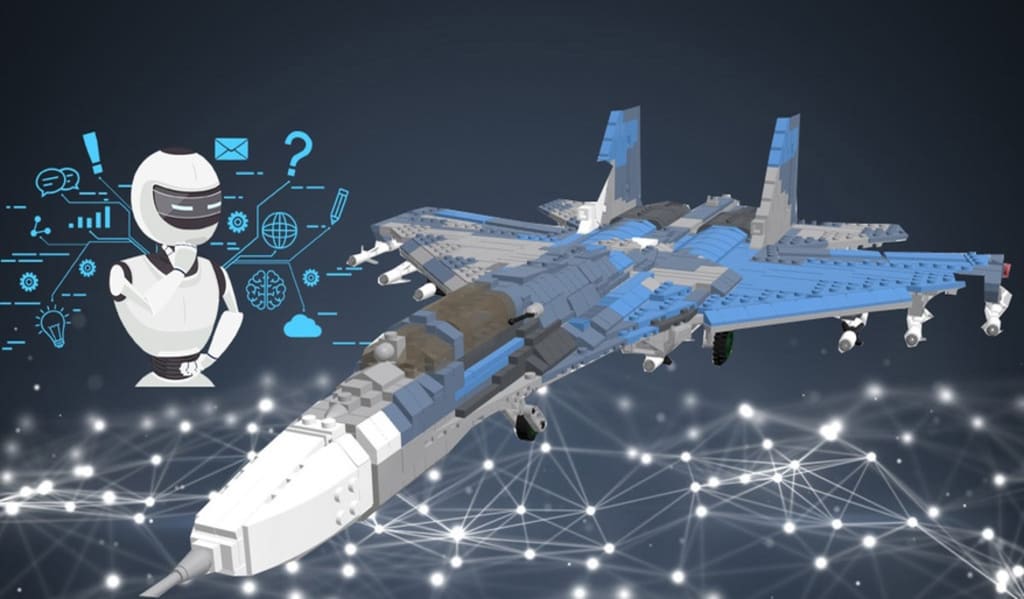
Have you ever wondered how artificial intelligence is transforming the world of aerospace technology? From streamlining flight operations to enhancing the passenger experience, AI is making waves in this dynamic industry.
AI has incredibly exciting potential in the aerospace industry, whether used to optimize flight paths, enhance safety, or create customized travel experiences.
According to Amtec, one of AI's most significant impacts on the aerospace sector is its application in the design and engineering phases.
Let’s explore how AI is revolutionizing aerospace technology and shaping the future of air travel.
Enhancing Aircraft Design with AI Precision
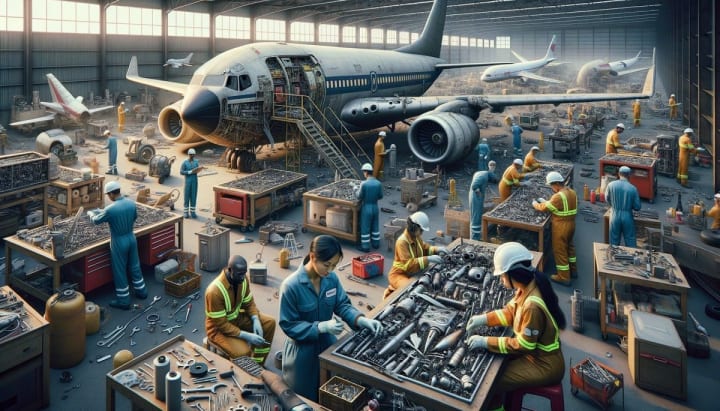
AI plays a vital role in the initial stages of aircraft design. Engineers use AI to simulate and analyze designs, identifying optimal shapes and materials to improve aerodynamics and efficiency.
AI-driven tools can evaluate numerous design configurations much faster than traditional methods. For instance, AI algorithms assess the airflow around a plane to minimize drag and fuel consumption.
Moreover, AI tools predict structural weaknesses, allowing designers to address potential issues early. This not only speeds up the design process but also reduces costs.
For example, AI powered devices, for example the AI computer, can process complex simulations with incredible precision, making evaluating numerous design possibilities easier and refining them faster. AI’s ability to process vast amounts of data ensures aircraft designs are safer, lighter, and more environmentally friendly.
Revolutionizing Air Traffic Management
Air traffic management has always been a complex task involving daily coordination between thousands of flights. AI is transforming this field by making the skies safer and more efficient. To optimize flight scheduling and routing, AI systems monitor real-time data, such as weather conditions, flight paths, and air traffic.
For example, AI-powered systems like NextGen in the United States provide controllers with predictive insights, reducing congestion and improving punctuality.
By analyzing flight patterns, AI can also predict potential collisions or delays, enabling proactive responses. This ensures smoother skies and reduces the stress on air traffic controllers.
Boosting Predictive Maintenance for Aircraft
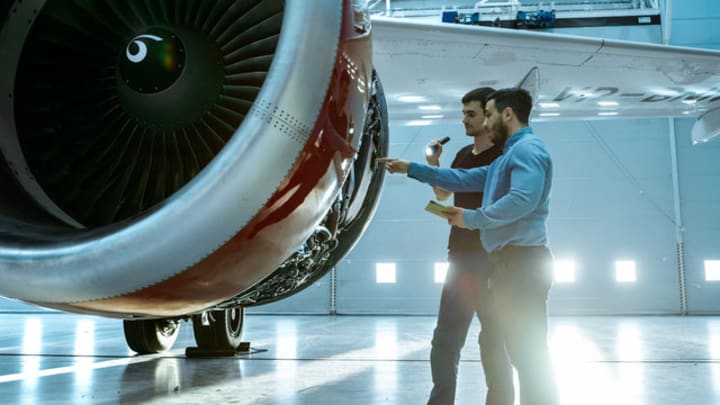
Maintenance is critical to aerospace safety, and AI is revolutionizing how it’s done. Traditional maintenance relies on scheduled inspections, but AI enables predictive maintenance. AI systems monitor aircraft performance in real time, identifying potential issues before they become serious.
For instance, sensors on aircraft collect data on engine performance, vibration levels, and temperature. AI analyzes this data to detect anomalies, such as unusual wear on a part. Airlines can then address these issues proactively, reducing the risk of delays or accidents. This approach improves safety and saves airlines millions of dollars annually.
Improving Flight Operations with Real-Time AI Insights
AI has become an essential tool for enhancing flight operations. Pilots and airlines use AI to make smarter decisions during flights. For example, AI systems analyze weather conditions, air traffic, and fuel levels to suggest the best flight paths.
In one notable case, an AI system helped pilots avoid a major storm, saving time and fuel. AI also plays a role in reducing fuel consumption by optimizing engine performance during flights. These real-time insights make flying more efficient, environmentally friendly, and cost-effective.
Enabling Autonomous Aircraft Systems
Autonomous systems are one of the most exciting applications of AI in aerospace. AI enables drones and aircraft to operate without human intervention. This technology is used in various fields, from commercial deliveries to military reconnaissance.
For example, AI-powered drones can use machine learning and computer vision to navigate challenging environments. They analyze their surroundings in real time, avoiding obstacles and adjusting their paths.
In the defense sector, autonomous aircraft are used for surveillance missions, reducing risks for human pilots.
While fully autonomous passenger planes are still in development, the progress in this area indicates a promising future for safer and more efficient air travel.
Advancing Space Exploration Missions
Space exploration has always relied on cutting-edge technology, and AI is now a crucial part of it. AI assists in planning missions, analyzing data, and operating spacecraft. NASA and other space agencies use AI to study planetary environments and search for signs of life.
According to NASA, AI is helping scientists to identify minerals within rocks studied on other planets.
For example, AI-powered rovers like Perseverance on Mars use machine learning to navigate the planet’s surface, avoiding hazards and selecting the best paths. AI also helps process massive amounts of data collected during space missions, identifying key findings that scientists might miss.
In the future, AI could play an even bigger role in interstellar travel, making autonomous decisions during long-duration missions far from Earth.
Enhancing Passenger Experience Through AI
AI is transforming aircraft and spacecraft and improving the passenger experience. From booking tickets to arriving at destinations, AI personalizes every step of the journey.
For instance, AI-powered chatbots assist passengers with flight information and travel updates. At airports, facial recognition technology powered by AI speeds up security checks, reducing waiting times. Onboard, AI systems offer personalized entertainment options and in-flight services based on passenger preferences.
Moreover, AI monitors customer feedback, helping airlines improve their services. These advancements ensure that passengers have a more comfortable and seamless travel experience.
Conclusion
The applications of AI in aerospace technology are both exciting and transformative. From designing efficient aircraft to advancing space exploration, AI is shaping the future of this industry.
Predictive maintenance ensures safer flights, while real-time insights enhance operations and fuel efficiency. Autonomous systems and improved air traffic management showcase AI’s potential to revolutionize the skies and beyond.
As AI continues to evolve, its impact on aerospace technology will only grow. It promises safer, smarter, and more innovative solutions for both passengers and industry professionals.
About the Creator
Judy Watson
I’m Judy Watson, a content writer specializing in tech, marketing, and business. I focus on simplifying complex ideas and turning them into clear, engaging, and SEO-friendly content.
Keep reading
More stories from Judy Watson and writers in Futurism and other communities.
How Edge Computing Is Related To Various Digitally Transmitted Technologies
Edge computing is a new computing model in which the data on the network is processed in the same source that generates data. This technology solves many bandwidth and latency issues, providing faster, more reliable, real-time data.
By Judy Watson2 years ago in Futurism
Saudi Arabia Lubricants Market: Industrial Expansion, Automotive Demand & Energy Sector Growth
Saudi Arabia lubricants market size reached USD 1,352.4 Million in 2025. Looking forward, IMARC Group expects the market to reach USD 1,717.4 Million by 2034, exhibiting a growth rate (CAGR) of 2.69% during 2026-2034. The expanding growth of industries, such as automotive, manufacturing, construction, and mining, along with the increasing demand for lubricants to keep machinery and equipment running efficiently, is primarily driving the market.
By Kishan Kumar5 days ago in Futurism
AI-Powered Insurance Underwriting Market to reach at USD 674.1 Billion By 2034
AI-Powered Insurance Underwriting Market Overview The global AI-Powered Insurance Underwriting Market is projected to expand significantly over the next decade as insurers increasingly adopt advanced analytics and automated decision systems. The market is estimated to grow from USD 2.85 Billion in 2024 to nearly USD 674.1 Billion by 2034, reflecting a strong 44.7% CAGR during the 2025 to 2034 period.
By Roberto Crum5 days ago in Futurism
Hottest in the Office
Dear Rafi, You’re very distracting to work around. For the first second I saw you the other day, I thought you were some type of executive. It took a moment to realize no, you were just the new guy, dressed up for the job he wants. Be still, my heart.
By Gabriel Shames5 days ago in Pride



Comments
There are no comments for this story
Be the first to respond and start the conversation.