
How AI Changed My Daily Routine — And My Life
From morning coffee to bedtime reflection, artificial intelligence quietly restructured the way I live — one app at a time.
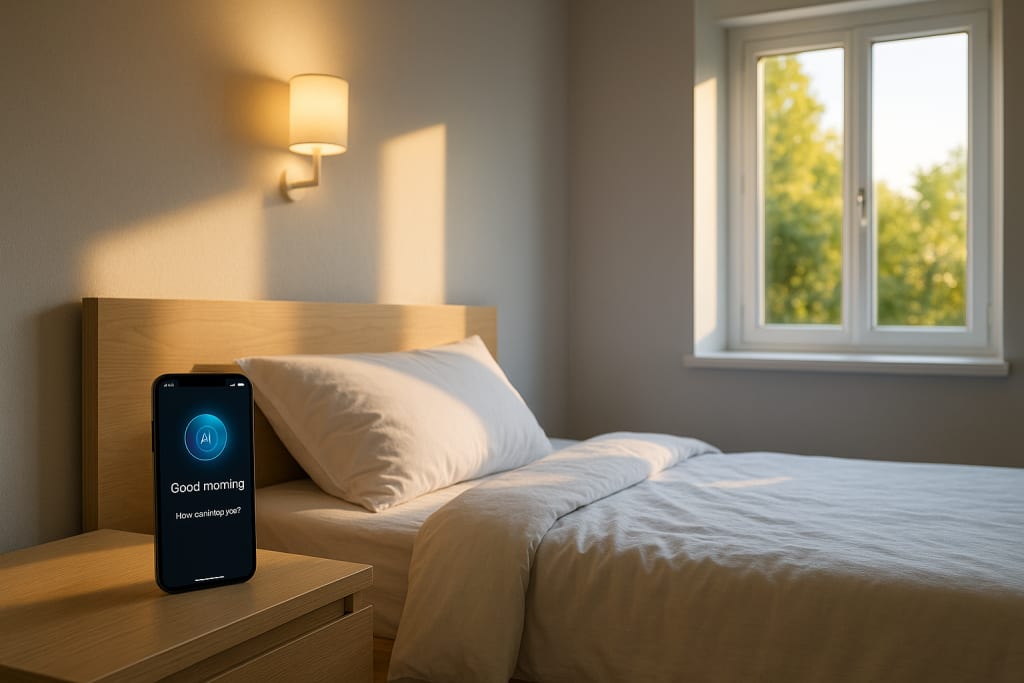
🌅 1. Mornings: Designed by Data
Gone are the days of harsh alarm clocks and groggy wakeups. These days, I start my morning with an AI-assisted routine that feels more like a personalized sunrise ritual than a wake-up call.
At 6:30 a.m., my smart light system gradually brightens, simulating the morning sun. Simultaneously, my window blinds open automatically, letting in the real light outside. My phone gently vibrates, displaying a calming greeting: “Good morning. Sleep quality was excellent. Mild weather today. Here’s your schedule.”
Instead of diving straight into social media chaos, I listen to a two-minute AI-generated audio briefing that summarizes news headlines, weather updates, and even stock market summaries — all tailored to my preferences. This small change alone has eliminated the morning anxiety I used to feel.
What used to be a battle to wake up has become a curated entry into my day.
⸻
💻 2. Workday: Augmented Efficiency
I start work at around 8:45 a.m., but not before checking in with my AI scheduling assistant. It automatically builds my day based on the previous week’s productivity trends — when I tend to focus best, how often I switch tasks, and how much rest I need in between.
For example, Monday mornings are reserved for deep work — writing articles, strategizing, and creative ideation. AI blocks notifications during these hours and gently reminds me to stay hydrated or take a walking break when my posture sensors detect prolonged inactivity.
When I sit down to write, I use Notion AI and ChatGPT to help outline my structure and brainstorm alternatives. What used to take me 3–4 hours now takes half the time, with better quality output.
In meetings, an AI-powered bot joins Zoom calls, takes real-time transcriptions, and emails a summary with key takeaways and next actions. This saves me from note-taking and allows me to be fully present.
⸻
☕ 3. Break Time: AI for Health & Balance
Around noon, my AI nutrition tracker analyzes my glucose levels, sleep data, and mood check-ins from the morning, then recommends a lunch based on energy balance. Sometimes it suggests protein-rich meals if I’ve had poor sleep. Sometimes a lighter, plant-based meal if I’ve been sedentary.
While waiting for lunch to be prepared (thanks to an AI meal plan sent to my smart kitchen), I practice a five-minute AI-guided meditation. The program adapts each day — sometimes focusing on stress relief, sometimes on motivation. It’s short, impactful, and honestly feels more human than some therapists I’ve tried.
I used to think AI couldn’t help with emotions. I was wrong. It’s not about replacing empathy, it’s about enabling awareness.
⸻
📱 4. Afternoon: Seamless Integration
Afternoons are often chaotic — a mix of emails, project updates, creative work, and interruptions. But now, AI manages my time blocks dynamically. If I finish early, it adjusts. If a call runs late, it reschedules downstream tasks.
One of my favorite tools is an AI inbox assistant that summarizes long email threads into bite-sized updates. No more email overwhelm.
In my project management dashboard, AI suggests risk areas, potential delays, and even assigns priorities based on urgency and team workload. It’s like having a silent project manager working behind the scenes.
⸻
🌇 5. Evenings: Digital Reflection & Intentional Unplugging
After sunset, things get more human again — thanks ironically, to AI.
At 7 p.m., my smart home dims lights automatically, shifts the ambient music to something calm, and displays a gentle reminder: “Evening reflection time. How are you feeling today?”
I open my digital journal app, which uses AI-generated prompts based on my day’s activities and mood reports. One day it might ask: “What challenged you today, and how did you handle it?” Another day: “List three things that went well, and why.”
This 15-minute session has become my mental reset. It prepares me emotionally for a good night’s sleep — something I never used to prioritize.
⸻
😴 6. Sleep: AI-Enhanced Recovery
By 10 p.m., my bedroom temperature is adjusted slightly cooler (the optimal sleep condition), lights go off gently, and an AI-powered sleep story plays through my speakers. The story adapts each night — fantasy, nature, soft narrative — depending on my mental fatigue level.
My smartwatch monitors sleep quality, and the next morning’s AI planner starts adjusting based on how well I’ve rested.
The cycle begins again, but better.
⸻
🔁 7. So, What Did I Learn?
At first, I feared that letting AI into every corner of my life would strip it of humanity — that I’d become overly automated or emotionally numb.
But it’s been the opposite.
AI helped me reclaim my time, reduce cognitive clutter, and restore balance. Instead of drowning in digital chaos, I now have a support system that enhances my creativity, health, and mental peace.
The key is conscious integration. I decide what AI handles, and what I keep analog. I still handwrite birthday cards. I still take walks without my phone. But I let AI handle the noise.
It’s not about replacing the human experience. It’s about freeing space so you can actually experience it.
About the Creator
About Binding Prometheus
I want to start actively advocating on behalf of my own work, and the most valuable part of my canon is, without a doubt, Binding Prometheus, the play I have been working on since 2019 and only finished in 2023 as part of my MA. The play itself is an amalgamation of a million different inspirations. On one end, it evokes the Ancient Greek myth-play, deriving its own title from the earliest extant work of Western drama we have, Aeschylus’s Prometheus Bound. On the other end, it borrows significantly from the sci-fi bulwarks from over the years, namely Mary Shelley’s Frankenstein and Karel Capek’s Rossum’s Universal Robots. The play could be an episode of Black Mirror, I fear. I don’t know. I’ve only ever seen one episode of Black Mirror.
By Steven Christopher McKnight19 days ago in Futurism
AI's Approach to Medical Device Software Design
The healthcare industry is undergoing a rapid digital transformation, driven by the increasing adoption of connected medical devices, smart diagnostics, and software-powered patient care systems. At the heart of this evolution lies medical device software design, a specialized discipline that blends healthcare expertise, regulatory compliance, and advanced engineering to create reliable, life-critical digital solutions.
By Steve Waugh4 days ago in Futurism




Comments
There are no comments for this story
Be the first to respond and start the conversation.