
How AI Brings Changes into Our Lives
Exploring the Real-World Impact of Artificial Intelligence on Society, Work, and Personal Growth

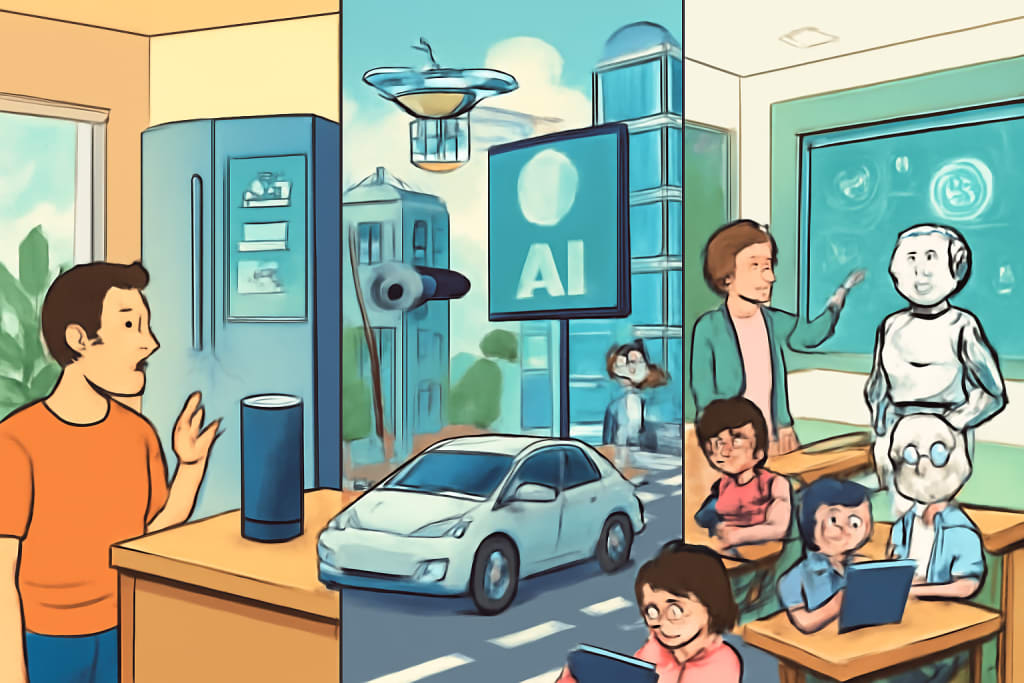
Artificial Intelligence, commonly known as AI, is no longer a term reserved for scientists and tech experts. It has become a transformative force that’s reshaping nearly every aspect of human life. From smart devices to healthcare, education to entertainment, AI is deeply embedded in our daily routines. As technology evolves, the role of AI continues to expand, bringing both convenience and innovation to our fingertips. The integration of AI into our world is one of the most significant shifts of the digital age.
AI is essentially the ability of machines to perform tasks that typically require human intelligence. These tasks include learning, reasoning, problem-solving, perception, and even language understanding. Today, AI applications are everywhere. Whether you're using Google Maps, asking Alexa to play your favorite song, or getting personalized Netflix recommendations, you're interacting with AI. The question now is not whether AI is influencing our lives—it’s how deeply and broadly it’s doing so.
The Everyday Revolution: AI in Our Daily Lives
The most visible impact of AI can be seen in our daily routines. Smartphones, virtual assistants, smartwatches, and home automation systems are all powered by artificial intelligence. AI algorithms help your phone recognize faces in photos, auto-correct your texts, and suggest responses in emails. They also manage smart thermostats that learn your preferences and optimize your home temperature for comfort and efficiency. Even your online shopping experience is enhanced by AI, as platforms like Amazon recommend products based on your browsing and purchasing history. This level of personalization has made daily tasks smoother, more enjoyable, and incredibly time-saving.
AI in Healthcare: A Revolution in Medicine
Artificial Intelligence has introduced groundbreaking changes in healthcare. AI-powered diagnostic tools can analyze medical images like X-rays and MRIs faster and more accurately than many human doctors. This technology helps detect diseases such as cancer, pneumonia, and diabetes in their early stages, significantly increasing chances of successful treatment. AI is also used in robotic surgeries, where precision and control surpass human capability. Chatbots assist patients by answering health-related questions, booking appointments, and sending reminders for medication. Wearable devices, powered by AI, monitor vital signs and alert users to potential health risks. With AI, healthcare is moving towards preventive models, ensuring better outcomes and improved quality of life.
Educational Transformation: Smart Learning with AI
The education sector has embraced AI to create personalized and efficient learning experiences. Platforms like Duolingo, Khan Academy, and Coursera use AI to assess students' strengths and weaknesses and adapt lessons accordingly. This means that learners can progress at their own pace, receiving targeted support where needed. AI also helps teachers by automating tasks such as grading and attendance, giving educators more time to focus on classroom engagement and instruction. Virtual tutors and AI chatbots are available round the clock to help students with queries, offering a more interactive and supportive learning environment. The use of AI in education is not just about convenience—it’s about expanding access and improving outcomes for students worldwide.
Reinventing the Workplace: AI’s Role in Modern Business
Artificial Intelligence is transforming industries and redefining the workplace. Businesses use AI to optimize operations, reduce costs, and improve decision-making. Data analytics, powered by AI, helps companies understand customer behavior and predict market trends. This allows them to tailor marketing campaigns, enhance customer service, and streamline inventory management. AI tools like chatbots and virtual assistants handle routine inquiries, freeing up human employees to focus on strategic tasks. In finance, AI algorithms detect fraud and manage investments with high accuracy. In HR, AI assists in screening resumes, scheduling interviews, and analyzing employee satisfaction. As automation increases, companies are reimagining job roles and fostering a workforce that collaborates with machines instead of competing against them.
AI in Entertainment: Creating Personalized Experiences
Entertainment has been deeply influenced by artificial intelligence. Music platforms like Spotify and video streaming services such as Netflix use AI to recommend content tailored to individual tastes. These systems analyze user preferences, viewing habits, and social behavior to curate personalized playlists and movie suggestions. In the gaming world, AI enhances character behavior, game difficulty, and storyline progression, creating immersive and adaptive gameplay. AI is also being used in scriptwriting, video editing, and special effects in film production, pushing the boundaries of creativity and storytelling. As AI continues to evolve, the entertainment industry is becoming more interactive, responsive, and engaging.
Smart Cities and AI: Building the Future of Urban Living
Cities around the world are integrating AI to become smarter and more sustainable. Traffic management systems powered by AI help reduce congestion by analyzing real-time data and adjusting traffic signals accordingly. AI monitors public transport to optimize routes and improve efficiency. In public safety, AI is used in surveillance systems to detect unusual activities and alert authorities, enhancing crime prevention. Environmental monitoring systems track air quality, water levels, and waste management, enabling quicker responses to issues. AI-driven urban planning helps design energy-efficient buildings and infrastructure. Smart cities leverage AI not only to improve efficiency but also to ensure a better quality of life for residents.
Agricultural Innovation: AI’s Role in Feeding the World
Agriculture is undergoing a silent revolution thanks to AI. Smart farming techniques use AI to monitor soil conditions, predict weather patterns, and optimize irrigation. Drones equipped with AI analyze crop health and detect pests or diseases early, reducing the need for harmful pesticides. AI-powered machinery automates tasks like planting, watering, and harvesting, increasing efficiency and reducing labor dependency. These innovations help farmers increase yields, lower costs, and make sustainable decisions. With the global population rising, AI plays a crucial role in ensuring food security and environmental conservation.
Finance and AI: Smarter Money Management
Artificial Intelligence has transformed the financial industry. Robo-advisors provide investment advice based on individual financial goals and risk profiles. These AI tools analyze market trends, portfolio performance, and economic data to offer smart investment strategies. AI algorithms are also used in fraud detection, analyzing spending patterns to identify suspicious transactions in real-time. Customer service in banks has been revolutionized through AI chatbots that handle account queries, loan applications, and payment processing. AI enhances credit scoring models by evaluating a broader range of data points, enabling more inclusive access to credit. The finance industry is now faster, more secure, and increasingly customer-centric thanks to AI.
Transportation and Mobility: Driving Toward Automation
Transportation has been one of the most visible beneficiaries of AI. Self-driving cars, developed by companies like Tesla and Waymo, use AI to interpret sensor data, recognize road signs, and navigate traffic. AI systems manage fleet logistics, optimize delivery routes, and ensure timely arrivals, revolutionizing supply chains. Public transportation systems use AI for scheduling, route optimization, and passenger management. AI also enhances aviation safety by assisting in flight planning, weather prediction, and fuel optimization. From autonomous vehicles to drone deliveries, AI is making mobility safer, faster, and more efficient.
Ethical Considerations: Navigating the Moral Maze
While AI offers numerous benefits, it also raises ethical concerns. Privacy is a major issue, as AI systems collect and analyze large amounts of personal data. Bias in AI algorithms can lead to unfair treatment in hiring, lending, or law enforcement decisions. The rise of deepfakes and misinformation created by AI threatens truth and accountability. There is also the risk of job displacement as machines take over certain tasks. Addressing these concerns requires transparency, regulation, and responsible AI development. Policymakers, developers, and users must work together to ensure that AI is used ethically and inclusively.
Preparing for an AI-Driven Future: The Need for Digital Literacy
As AI continues to evolve, it’s essential for individuals and communities to prepare for an AI-powered future. Digital literacy—the ability to understand and use technology—is more important than ever. Educational systems must incorporate AI-related subjects to equip students with the skills needed in a changing job market. Lifelong learning will be key to adapting to new roles and industries. Governments and organizations must invest in reskilling programs to help workers transition smoothly. Public awareness campaigns should educate citizens about how AI works, its benefits, and the potential risks. Empowering people with knowledge will enable society to harness AI's full potential responsibly.
The Future of AI: Limitless Possibilities and Responsibilities
Artificial Intelligence holds limitless potential to solve some of humanity’s biggest challenges—from climate change to disease eradication. But with great power comes great responsibility. As AI becomes more intelligent and autonomous, questions about control, accountability, and humanity’s role must be addressed. Will AI make our lives more meaningful, or will it alienate us from human connections? The future will depend on the choices we make today. Collaborative efforts between governments, tech companies, educators, and citizens will shape the future of AI. If guided ethically and inclusively, AI can lead us into a new era of innovation and prosperity.
Conclusion: Embracing AI with Awareness and Adaptability
Artificial Intelligence is no longer a futuristic fantasy—it’s a transformative force already embedded in our lives. From daily conveniences to life-saving innovations, AI is making our world smarter, faster, and more connected. However, it’s also reshaping the fabric of society, demanding new skills, ethical considerations, and a forward-thinking mindset. By embracing AI responsibly and proactively, we can ensure it serves as a tool for empowerment rather than disruption. The question isn’t whether AI will change our lives—it already has. The real question is: how prepared are we to shape its future?
About the Creator
Lana Rosee
🎤 Passionate storyteller & voice of raw emotion. From thoughts to tales, I bring words to life. 💫
Love my content? Hit Subscribe & support the journey! ❤️✨
Keep reading
More stories from Lana Rosee and writers in Futurism and other communities.
Strong Password That Cannot Be Hacked?
In today’s hyper-connected world, data is the new currency, and your passwords are the vaults guarding it. Yet, every day, we hear news of data breaches, hacked accounts, and identity theft. Despite advanced technologies, billions of people still use weak, guessable, or repeated passwords. But what if there was a way to create a strong password that cannot be hacked—even by the smartest hacker or the fastest AI bot? Let’s explore how to do that, and why it's more important now than ever before.
By Lana Rosee6 months ago in Futurism
About Binding Prometheus
I want to start actively advocating on behalf of my own work, and the most valuable part of my canon is, without a doubt, Binding Prometheus, the play I have been working on since 2019 and only finished in 2023 as part of my MA. The play itself is an amalgamation of a million different inspirations. On one end, it evokes the Ancient Greek myth-play, deriving its own title from the earliest extant work of Western drama we have, Aeschylus’s Prometheus Bound. On the other end, it borrows significantly from the sci-fi bulwarks from over the years, namely Mary Shelley’s Frankenstein and Karel Capek’s Rossum’s Universal Robots. The play could be an episode of Black Mirror, I fear. I don’t know. I’ve only ever seen one episode of Black Mirror.
By Steven Christopher McKnight12 days ago in Futurism
GCC Organic Food Market: Health Awareness, Clean Label Demand & Growth Outlook
According to IMARC Group's latest research publication, GCC organic food market size reached USD 4.4 Billion in 2024. The market is projected to reach USD 11.7 Billion by 2033, exhibiting a growth rate of 11.3% during 2025-2033.
By Abhay Rajputa day ago in Futurism



Comments
There are no comments for this story
Be the first to respond and start the conversation.