
How Africa Can Become the Next Global Manufacturing Hub
Africa is on the brink of an industrial transformation, with its vast resources, a rapidly growing workforce, and improving infrastructure setting the stage for it to become a global manufacturing powerhouse.


As industries shift towards new production hubs, the continent holds immense potential to rival established players like China and India in the global supply chain.
Unlocking Africa’s Manufacturing Potential
To realize this potential, strategic investments in infrastructure, workforce development, and trade policies are crucial. Companies and investors looking to capitalize on Africa’s industrial rise are focusing on key areas that will drive sustainable and large-scale manufacturing growth.
Strengthening Industrial Infrastructure
One of the biggest barriers to large-scale manufacturing in Africa has been the lack of industrial infrastructure. However, recent developments are changing this narrative through:
Development of Industrial Zones: Modern manufacturing parks equipped with advanced technology and streamlined logistics are attracting global companies looking for cost-effective production solutions.
Improved Transportation Networks: Investments in railways, highways, and ports are ensuring smoother supply chains, allowing manufacturers to efficiently move goods to domestic and international markets.
Energy Security and Sustainability: The integration of renewable energy solutions is helping overcome power supply challenges, making manufacturing operations more reliable and cost-effective.
Leveraging Africa’s Workforce
With the youngest population in the world, Africa has a unique labor advantage. Harnessing this workforce requires targeted efforts in:
Skill Development Programs: Collaborations between companies and universities are ensuring that graduates have industry-relevant skills.
Employment Opportunities: Large-scale projects in manufacturing, technology, and logistics are driving job creation across multiple sectors.
Knowledge Transfer and Innovation: Bringing expertise from established manufacturing economies is enhancing local production efficiency and fostering industrial innovation.
Enhancing Trade Agreements and Investment Policies
For Africa to fully integrate into global supply chains, trade policies and investment incentives must be structured to attract global manufacturers. Key areas of focus include:
Favorable Trade Agreements: By reducing tariffs and trade barriers, African economies can become more competitive in the global market.
Foreign Direct Investment (FDI) Incentives: Tax incentives, reduced bureaucratic hurdles, and streamlined approval processes encourage multinational companies to set up production in Africa.
Regional Economic Cooperation: Strengthening intra-African trade through initiatives like the African Continental Free Trade Area (AfCFTA) enhances the continent’s ability to scale production for both local and global markets.
Shifting to High-Value Manufacturing
Rather than relying solely on exporting raw materials, Africa is increasingly investing in value-added manufacturing. This shift is being driven by:
Technological Advancements: AI, automation, and advanced manufacturing techniques are improving production efficiency and product quality.
Development of Stronger Supply Chains: Localized manufacturing reduces reliance on imports, ensuring that production remains cost-effective and globally competitive.
Innovation and Research: The growth of industrial research and development centers is fostering homegrown solutions that cater to both African and international markets.From Raw Materials to High-Value Production
From Raw Materials to High-Value Production
Beyond infrastructure and policy, Africa is also making a shift towards high-value manufacturing. Rather than relying solely on exporting raw materials, the continent is investing in value-added production. The adoption of AI, automation, and advanced manufacturing techniques is improving efficiency and product quality. Localized manufacturing is reducing reliance on imports, ensuring that production remains cost-effective and globally competitive. At the same time, industrial research and development centers are fostering homegrown solutions that cater to both African and international markets.
Sustainability: The Competitive Edge
Sustainability is becoming a key factor in Africa’s industrial growth. As global industries move towards environmentally friendly manufacturing, Africa has the opportunity to position itself as a leader in sustainable production. Manufacturing hubs powered by solar, wind, and hydro energy are reducing carbon footprints while ensuring energy reliability. Circular economy initiatives that emphasize recycling and waste reduction are making African-manufactured goods more attractive to global markets. Additionally, adherence to fair labor practices and environmental regulations is boosting Africa’s reputation as a responsible and ethical manufacturing destination.

The Role of Strategic Investments in Africa’s Industrial Future
Major investment firms and industrial pioneers are leading efforts to transform Africa’s manufacturing landscape. By aligning large-scale projects with government initiatives and international partnerships, these entities are ensuring that Africa’s industrial expansion is not just a vision but a reality. With a data-driven approach, collaborative frameworks, and a long-term commitment to industrial growth, Africa is well-positioned to become a dominant force in global manufacturing. The combination of innovation, strategic investment, and policy support will define the continent’s trajectory as the next major manufacturing hub.
Final Thoughts: The Time for Action is Now
Africa’s potential to lead the next global manufacturing wave is undeniable. With the right infrastructure, policies, and investment strategies, the continent can establish itself as a critical player in global supply chains. As industrial transformation accelerates, businesses and investors who recognize this opportunity early will be at the forefront of shaping Africa’s economic future. For those seeking to be part of this historic shift, now is the time to explore opportunities in Africa’s evolving industrial landscape.
About the Creator
Marion Brown
Head of Marketing at Skynet Global Investment | Expert in strategic branding, investor engagement, and high-impact market positioning.
Keep reading
More stories from Marion Brown and writers in Futurism and other communities.
Revolutionizing Manufacturing in South Africa: How Skynet Global Investment is Pioneering a New Era in Bed Production
Through strategic partnerships and a commitment to innovation, the company is shaping the future of manufacturing in South Africa. One of its latest ventures involves a collaboration with Project X, a company dedicated to developing cutting-edge products, to bring a new approach to the bed industry.
By Marion Brown about a year ago in Futurism
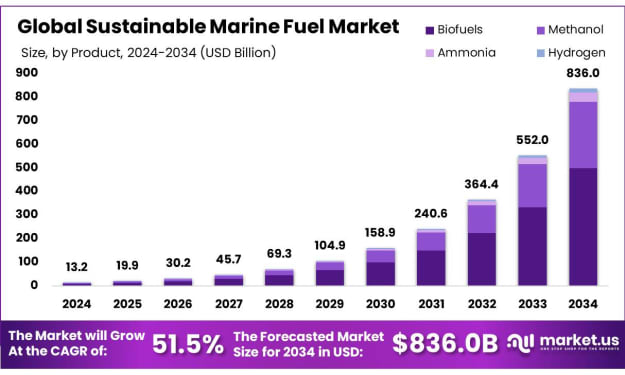
Sustainable Marine Fuel Market To Reach USD 836.0 Billion by 2034 at 51.5% CAGR
The global Sustainable Marine Fuel Market is projected to grow rapidly, increasing from USD 13.1 billion in 2024 to around USD 836.0 billion by 2034, representing a compound annual growth rate (CAGR) of 51.5% between 2025 and 2034. In 2024, Europe led the market with more than 51.0% of the global share, generating approximately USD 6.7 billion in revenue. This expansion is largely driven by the maritime sector’s urgent need to reduce emissions, as shipping currently accounts for about 2.5% of global greenhouse gas (GHG) emissions, a figure that could rise to nearly 17% by 2050 without effective mitigation measures.
By Hayden Kulas5 days ago in Futurism
Saudi Arabia Poultry Market: Food Security, Domestic Production & Growth Outlook
According to IMARC Group's latest research publication, Saudi Arabia poultry market size reached USD 19.0 Billion in 2024. The market is projected to reach USD 26.6 Billion by 2033, exhibiting a growth rate of 3.4% during 2025-2033.
By Shubham Sharma 2 days ago in Futurism



Comments
There are no comments for this story
Be the first to respond and start the conversation.