
Group Health Insurance Policy: Ensuring Comprehensive Coverage for Organizations and Employees
Group Health Insurance Policy: Ensuring Comprehensive Coverage for Organizations and Employees

Introduction:
In today's dynamic business landscape, organizations strive to provide their employees with a supportive and secure work environment. One crucial aspect of ensuring employee well-being is offering a comprehensive group health insurance policy. This article explores the significance of group health insurance, its benefits for both organizations and employees, and the essential details to consider while selecting the right policy.
Understanding Group Health Insurance:
a) Defining Group Health Insurance: Group health insurance is a policy that provides medical coverage to a group of individuals, typically employees of an organization. It offers a range of benefits, including hospitalization, outpatient treatments, prescription drugs, and preventive care.
b) Coverage for Employees and Dependents: Group health insurance policies extend coverage not only to employees but also to their dependents, such as spouses and children. This inclusive coverage promotes employee satisfaction and loyalty, fostering a positive work environment.
Benefits for Organizations:
a) Attracting and Retaining Talent: Offering a robust group health insurance policy enhances an organization's ability to attract and retain top talent. It demonstrates a commitment to employee welfare, serving as a competitive advantage in recruitment.
b) Improved Productivity and Morale: When employees have access to comprehensive healthcare, they experience greater peace of mind, resulting in improved productivity and higher morale. By investing in their employees' well-being, organizations create a more engaged and motivated workforce.
Benefits for Employees:
a) Financial Protection: Group health insurance shields employees from the financial burden of unexpected medical expenses. It provides coverage for hospitalization, surgeries, diagnostic tests, and other medical treatments, reducing out-of-pocket costs.
b) Access to Quality Healthcare: With a group health insurance policy, employees gain access to a network of healthcare providers and facilities. This enables them to receive timely medical attention, leading to better health outcomes.
Key Considerations for Selecting a Group Health Insurance Policy:
a) Coverage and Network: Evaluate the extent of coverage provided by the policy, including hospitalization, outpatient care, prescription drugs, and preventive services. Also, assess the network of hospitals, clinics, and doctors available within the insurance provider's network.
b) Cost and Affordability: Consider the premium costs, deductibles, copayments, and any additional expenses associated with the policy. Striking a balance between comprehensive coverage and affordability is crucial.
c) Customization Options: Look for flexibility in tailoring the insurance plan to meet the specific needs of the organization and its employees. The ability to add or remove coverage options can ensure a more personalized approach.
Compliance with Regulatory Requirements:
a) Group health insurance policies must adhere to applicable regulatory requirements, such as those set forth by government bodies or industry standards. It is crucial for organizations to ensure that the selected policy complies with these regulations, protecting both the organization and its employees.
Additional Benefits and Wellness Programs:
a) Some group health insurance policies offer additional benefits and wellness programs aimed at promoting employee health and well-being. These can include preventive screenings, health risk assessments, mental health support, fitness programs, and access to telemedicine services. Considering these additional offerings can further enhance the value of the policy.
Claims Process and Customer Support:
a) Assess the efficiency and reliability of the insurance provider's claims process and customer support. A streamlined claims process and responsive customer service can greatly simplify the administrative aspects of managing the policy and provide peace of mind to employees.
Communication and Employee Education:
a) Effective communication and employee education are crucial in ensuring that employees understand the benefits and coverage details of the group health insurance policy. Organizations should invest in comprehensive communication strategies and resources to educate employees about the policy, its features, and the steps required to access healthcare services.
Regular Policy Evaluation and Renewal:
a) Group health insurance policies should be periodically evaluated to ensure they continue to meet the evolving needs of the organization and its employees. Organizations should review the policy annually, considering factors such as claim history, employee feedback, and market trends. This evaluation process enables organizations to make informed decisions during policy renewal.
Conclusion:
By implementing a well-structured group health insurance policy, organizations prioritize the health and well-being of their employees while reaping numerous benefits themselves. It is crucial to carefully evaluate the coverage, cost, customization options, compliance, additional benefits, claims process, and employee communication when selecting a policy. Regular policy evaluation ensures that the insurance coverage remains relevant and effective over time. Ultimately, a robust group health insurance policy serves as a cornerstone for organizations that value their employees' welfare and strive for a productive and thriving workforce.
Group health insurance policies play a vital role in safeguarding the well-being of employees and promoting organizational success. By offering comprehensive coverage, organizations can attract and retain talent, enhance productivity, and foster a positive work environment. When selecting a policy, organizations must carefully consider coverage details, cost factors, and customization options to find the best fit. By prioritizing employee health and welfare, organizations pave the way for a brighter and more secure future for both their employees and themselves.
About the Creator
About Binding Prometheus
I want to start actively advocating on behalf of my own work, and the most valuable part of my canon is, without a doubt, Binding Prometheus, the play I have been working on since 2019 and only finished in 2023 as part of my MA. The play itself is an amalgamation of a million different inspirations. On one end, it evokes the Ancient Greek myth-play, deriving its own title from the earliest extant work of Western drama we have, Aeschylus’s Prometheus Bound. On the other end, it borrows significantly from the sci-fi bulwarks from over the years, namely Mary Shelley’s Frankenstein and Karel Capek’s Rossum’s Universal Robots. The play could be an episode of Black Mirror, I fear. I don’t know. I’ve only ever seen one episode of Black Mirror.
By Steven Christopher McKnight16 days ago in Futurism
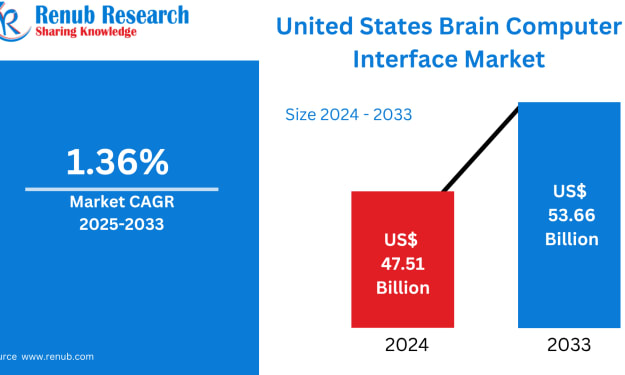
United States Brain Computer Interface Market Size and Forecast 2025–2033
United States Brain Computer Interface Market The United States Brain Computer Interface (BCI) Market is expected to reach US$ 53.66 billion by 2033, up from US$ 47.51 billion in 2024, growing at a CAGR of 1.36% from 2025 to 2033, according to Renub Research. While the growth rate may appear modest compared to other emerging technologies, the strategic importance of BCIs continues to rise as healthcare, defense, rehabilitation, and consumer wellness converge around neurotechnology.
By Janine Root 7 days ago in Futurism



Comments
There are no comments for this story
Be the first to respond and start the conversation.