
God, Devil, and the Cosmic Interplay: How Metaphysics and Science Shape Reality
Battle of Supremacy between Order and Chaos

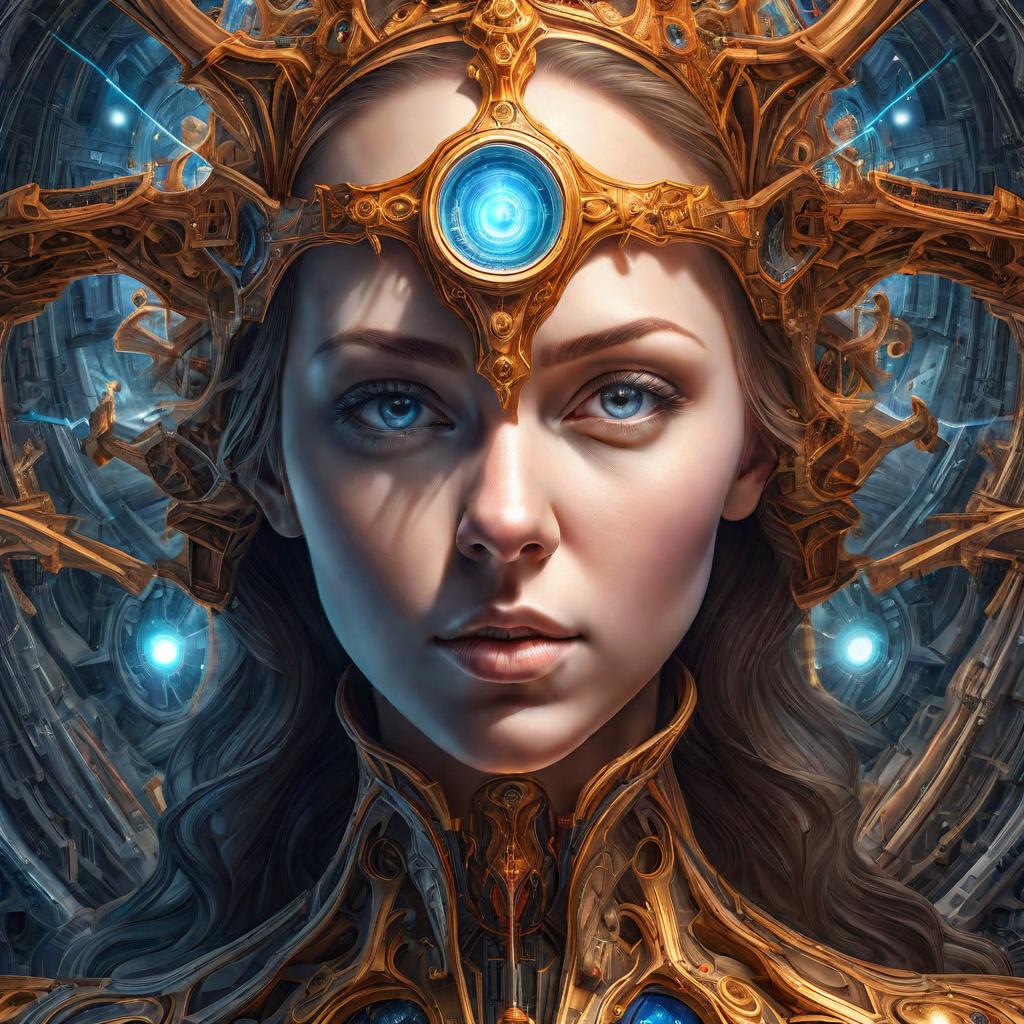
Throughout human history, our quest for understanding has spanned across numerous realms of thought, from metaphysics to science, religiosity to magic, and witchcraft to faith. Embedded within these inquiries are the rich configuration of culture and tradition, which serve as frameworks that guide, shape, and preserve these beliefs across generations. The interplay between these activities and influence reveals a complex interconnectivity of inquiry and practice that continuously evolves, reflecting the diversity of human experience and understanding. Each offers a different lens for interpreting reality, yet they often intertwine, creating a multi-dimensional approach to understanding the universe and our place within it.
1. Metaphysics: The Foundation of Existential Inquiry
Imagine you’re standing at the edge of reality, staring into the void. Metaphysics is your guide to the questions beyond the material world: What is real? What does it mean to exist? What lies beyond the material world? As the foundation of many intellectual pursuits, metaphysics intersects with all forms of spiritual and scientific inquiry, attempting to explain the unseen and the abstract. Like an invisible web, metaphysics connects every form of inquiry, from ancient tribal myths to cutting-edge quantum theories. It asks the ultimate questions that hover in the back of our minds, whether we’re studying atoms or souls.
Across time and cultures, metaphysics has been the foundation upon which religion, science, and even witchcraft have built their interpretations of the universe, laying the groundwork for debates on the nature of God, the soul, the afterlife, and the forces that govern the cosmos. It’s the thread that binds our need to understand what’s beyond what we can see, whether it's the nature of God or the unseen forces that shape reality by addressing the universal questions that have occupied humanity across all societies and traditions blending with cultural beliefs to create worldviews that govern societal norms and individual behaviors. But what happens when these threads unravel? That’s where the cosmic tension begins.
2. Religiosity: Structured Belief and Devotion
Religiosity gives structure to the chaos of existence, and it refers to the organized systems of belief and practice that revolve around faith in a higher power or divine principles. Religions provide structured answers to metaphysical questions, offering sacred texts, rituals, moral codes, and community practices. These structures are deeply influenced by the culture and traditions in which they are embedded. For instance, the religious practices of indigenous tribes often emphasize the interconnectedness of nature and spirit, while monotheistic religions like Christianity and Islam introduce a hierarchical relationship between humanity and a singular deity. Religiosity, like the matter in the universe, is the tangible expression of faith—a structured system that gives form to the formless.
Religiosity is shaped by culture, but it also shapes culture in return. In many societies, religious festivals, holidays, and rituals mark important life events such as births, marriages, and deaths, integrating spiritual beliefs into the very fabric of community life. It reflects humanity’s need for order, meaning, and connection to something greater than the material world. Religiosity brings structure to spiritual inquiry, framing the chaotic, existential questions of metaphysics within a system of moral and divine order.
3. Spiritism: The Fluidity of Soul and Afterlife
Step beyond the boundaries of formal religion, and you enter the realm of spiritism— where the lines between life and death, matter and spirit, blur into a fluid continuum. Spiritism isn't confined to churches or temples; it’s found in personal encounters with the spirit world. Spiritism, distinct from structured religious practices, focuses on the belief in spirits, the afterlife, and communication with non-physical entities. It crosses cultural boundaries, with variations found in practices like ancestral worship in African traditions, shamanism in indigenous cultures, and séances in Western occultism.
Spiritism is often a blend of personal spirituality and cultural heritage, where individuals connect with the spirits of their ancestors or the broader spiritual world. Unlike formal religions, spiritism is more experiential, often relying on personal encounters with spiritual entities or phenomena. In many traditional cultures, the boundaries between the living and the dead are fluid, with rituals performed to honor the deceased or seek their guidance. These practices reinforce cultural beliefs about life, death, and the continuation of the soul, often mingling with metaphysical questions about the nature of existence beyond the physical realm.
4. Magic and Witchcraft: Harnessing Hidden Forces
Now, let’s step further into the mystical. Magic and witchcraft, often seen as fringe practices, represent a different kind of knowledge—one that taps into the hidden and unseen forces of the universe with the belief that unseen forces can be manipulated through rituals, spells, or knowledge of arcane practices, bending reality to our will.
Witchcraft, in particular, has ancient roots and varies greatly depending on cultural context. While mainstream religions might view magic with suspicion or condemnation, in other cultural contexts, magic and witchcraft are integral to daily life from protective charms in African traditions to Wiccan practices in Western paganism, it can be practiced as a form of healing, protection, or communication with spiritual forces. In some societies, witches are seen as keepers of sacred knowledge, blending elements of religion, spiritism, and metaphysics. Magic’s metaphysical nature challenges conventional understandings of cause and effect, especially when it is practiced within cultures that place value on hidden or esoteric knowledge.
5. Faith: Belief Beyond Evidence
Amid all these systems—metaphysics, religiosity, magic—there’s one thing that remains constant: faith. Faith is the glue that holds belief systems together, offering hope and certainty in the face of the unknown. Whether it’s faith in God, faith in spirits, or faith in the scientific method, it all boils down to trust in something we cannot see or measure.
Faith operates across all systems of belief, religious or otherwise. It is the trust in something beyond what can be empirically proven or physically seen. In many ways, faith represents humanity's response to uncertainty, offering hope and conviction where there may be no concrete answers. Whether it is faith in a higher power, faith in spiritual practices, or faith in the scientific process, it serves as a foundation for personal and collective worldviews.
Faith is influenced by both individual experience and cultural tradition. In religious contexts, faith often sustains belief in divine providence or cosmic justice, even when the material world offers little evidence. This trust becomes a cornerstone for cultural practices, such as praying to ancestors or gods for rain in agrarian societies, or engaging in rites of passage that emphasize faith in the cyclical nature of life and death.
Faith becomes the foundation upon which cultures build their spiritual worlds. But here’s the paradox: Faith exists where evidence does not. It’s the ultimate gamble, a wager that the unseen forces of the universe will align in your favor. Could faith itself be a force—an unseen energy that shapes the cosmos?
6. Science: The Empirical Exploration of Reality
While faith and magic seek to explain the unseen through belief or ritual, science demands evidence. Yet, as science delves deeper into the mysteries of the universe, it begins to sound eerily like metaphysics. Quantum physics, for example, suggests that reality may be far more fluid and interconnected than we once believed.
Science is often viewed as distinct from metaphysical, spiritual, or religious systems, yet it shares with them a common pursuit: understanding reality. Where metaphysics and spiritism might rely on speculation or belief in unseen forces, science demands empirical evidence and observable phenomena. However, even science is influenced by culture. Historically, many early scientific endeavors were intertwined with religious or magical beliefs, as scholars sought to understand divine order through the study of nature.
Today, science is seen as the dominant paradigm for explaining the natural world, yet it increasingly intersects with metaphysical questions. Quantum physics, for example, challenges conventional notions of reality, suggesting that the universe may be more mysterious and interconnected than previously thought. As science delves into the unknown, it begins to echo metaphysical and spiritual ideas about the nature of existence and consciousness.
What if the universe operates not on fixed laws but on a delicate balance of forces—creation and destruction, matter and antimatter? And what if science, despite its reliance on empirical evidence, is simply another way of grappling with the same cosmic questions that religion and magic have been asking for millennia?
7. Culture and Tradition: The Binding Fabric
Culture and tradition play crucial roles in shaping how metaphysics, religiosity, spiritism, magic, and science are understood and practiced. Every society has its own traditions that explain the mysteries of life, from creation myths to rites of passage, from shamanic rituals to scientific discovery. These traditions are passed down through generations, often preserving a blend of metaphysical speculation, religious faith, and practical knowledge about the world.
For example, in many African and indigenous cultures, the practice of spiritism and ancestral worship is deeply embedded in the cultural fabric, providing a way to maintain continuity between the living and the dead. In contrast, Western cultures have largely secularized science, removing it from its historical connection to metaphysical or religious inquiry. However, even in secular societies, traditions of faith and spirituality persist, often reemerging in new forms of spiritualism or alternative healing practices.
Culture serves as the framework through which these different systems of belief and inquiry coexist and interact. It dictates how we approach the unknown—whether through the lens of magic, science, or faith—and influences how these approaches are validated or contested within society.
8. The Interplay: A Cosmic Dance of Understanding
At the intersection of metaphysics, religiosity, spiritism, magic, witchcraft, faith, science, culture, and tradition lies a cosmic dance—a dynamic interplay of thought, belief, and inquiry. No one system holds all the answers, but together they offer a multi-faceted approach to understanding the universe and our place within it.
In this cosmic dance, science provides us with the tools to explore the material world, while metaphysics opens the door to abstract and philosophical questions. Religiosity offers structured paths to divine understanding, while spiritism and witchcraft give voice to more fluid and experiential approaches to the spiritual realm. Culture and tradition, like invisible threads, weave these systems into the fabric of our societies, shaping how we engage with the mysteries of existence through debate between science and faith, with a tendency to view the two as irreconcilable opposites—one rooted in empirical fact, the other in metaphysical belief. But what if the greatest mysteries of existence lie at the intersection of both? What if the eternal battle between good and evil, as depicted in religious texts, mirrors the cosmic struggle between matter and antimatter?
Buckle up and Brace yourself, because this is not your typical theological discussion, it is more than a philosophical inquiry—it’s a mind-bending exploration into the nature of existence, morality, and the forces that govern the universe.. This is a bold and daring exploration into the mechanics of creation, the nature of chaos, and the divine forces that shape reality itself. Are God and the devil not just moral opposites, but also metaphysical forces akin to positive and negative charges in the cosmic interplay of creation and destruction?
Matter vs. Antimatter: The Battle Begins
We all know the basics: Matter is everything that makes up the physical world. It has mass, occupies space, and is made up of atoms and particles. Antimatter, on the other hand, is its mirror image but with opposite charges. When matter and antimatter meet, they annihilate each other in a burst of energy. In the world of physics, this collision is a delicate balance of creation and destruction, order and chaos - typically described as equal and opposite.
But let’s take this scientific principle and apply it to the realm of spirituality. What if this cosmic interaction is more than just a physical phenomenon? What if the clash between matter and antimatter mirrors the eternal battle between God and the devil?
Picture this: God as the positive charge, the source of life, light, and order. God represents the divine energy that brought the universe into being. Now imagine the devil as the antimatter—not a creator, but a force of rebellion, decay, and destruction, whose sole purpose is to undo what God has made. This isn’t just a spiritual struggle; it’s a metaphysical duel, waged across galaxies, dimensions, and perhaps even within our own souls.
If this idea is unsettling, that’s because it’s meant to be. It turns the traditional narrative of good and evil on its head and asks us to rethink the very nature of existence itself.
Creation from Chaos: A Theological Twist
To fully grasp this concept, we need to travel back to the beginning—before there was anything. The Bible tells us that “in the beginning, God created the heavens and the earth.” But before creation, the earth was “formless and void,” with darkness covering the surface of the deep. This state of chaos represents the antimatter of creation—unformed potential, waiting to be shaped.
In this formlessness, God’s Spirit hovered over the waters, and with a single command, “Let there be light,” the universe was born. Matter emerged from nothingness, shaped by divine order. But here’s the catch: before God spoke, the universe was in a state of chaos—a raw, unshaped potential that could easily be likened to the realm of antimatter.
This chaotic void wasn’t evil, but it was incomplete, unformed, and lacking the touch of the divine. It’s only when God’s Word—the ultimate positive charge—was spoken that chaos was pushed back, and order began to take shape.
Now, let’s consider the devil’s role in this cosmic story. Could the devil be the force that seeks to undo what God has created? Could his rebellion represent the antimatter that constantly strives to return the universe to its original state of formlessness and destruction? This concept isn’t just provocative; it’s downright unsettling. It's redefines the devil as not merely an opposing entity but a metaphysical force akin to the chaos that existed before creation—a negative charge seeking to unravel the universe.
This isn’t just a theological debate. It’s a cosmic battle, one that rages across the stars, within the deepest corners of our minds, and in the very fabric of existence.
Religiosity vs. Spiritualism: The Battle for Meaning
Religiosity and spiritualism are often discussed in relation to how individuals approach faith, belief systems, and the pursuit of a higher understanding, but they differ in focus and expression.
- eligiosity: This refers to the formal and organized practice of religion, which often includes adherence to doctrines, rituals, practices, and traditions. It tends to emphasize communal worship, membership in a religious institution, and following prescribed moral codes and rituals set by that religious framework. Religiosity offers structure and a shared sense of identity with others in the community, often revolving around sacred texts, religious leaders, and specific places of worship. For many, religiosity provides moral guidance, a sense of belonging, and an established path for connecting with the divine.
- piritualism: On the other hand, spiritualism is typically more personal and individualistic. It focuses on the individual's direct experience of the divine, the sacred, or a higher purpose. Spiritualists may or may not follow an organized religion. Instead, they often seek inner growth, enlightenment, or a personal connection to something beyond the physical realm, whether it be through meditation, nature, or other introspective practices. Spiritualism often emphasizes personal transformation, inner peace, and connection to the universe, without the necessity of a religious institution or dogma.
Key Differences:
- Structure vs. Personal Freedom: Religiosity tends to be more structured with established rituals and rules, while spiritualism allows for more personal exploration and interpretation.
- Community vs. Individualism: Religiosity usually involves a communal practice, where people share beliefs and practices. Spiritualism, by contrast, is often a solitary or personal journey.
- Doctrine vs. Experience: Religiosity often revolves around belief in a specific doctrine or set of teachings. Spiritualism focuses more on personal experiences and finding one's path to transcendence or understanding.
Despite these differences, religiosity and spiritualism can overlap. Many religious people also describe themselves as spiritual, seeing their religious practices as a path to deeper spiritual awareness. Conversely, some spiritual people might engage in religious practices as part of their personal spiritual journey.
At their core, both religiosity and spiritualism strive to answer fundamental questions about existence, meaning, and purpose, but they differ in how those answers are sought and practiced.
In this cosmic framework, where do religiosity and spiritualism fit in? These aren’t mere philosophical concepts; they represent two fundamentally different ways of engaging with the divine.
Religiosity is the formal, structured approach to faith. It’s the rituals, sacred texts, and traditions that provide a material form to spiritual practice. In essence, religiosity is like matter—structured, organized, and tangible. Just as God brought order to the chaos of the universe, religiosity seeks to channel divine energy into a structured, understandable form.
But spiritualism is something entirely different. It’s formless, like the void before creation. It doesn’t adhere to strict rules or institutions. It seeks a direct, often personal connection with the divine. In this sense, spiritualism is more akin to antimatter—a fluid, boundless energy that resists containment. It exists in the spaces between rituals, in the moments of transcendence that can’t be easily explained.
What happens when these two collide? Like matter and antimatter, they create an explosive tension. Religiosity provides structure and order, while spiritualism offers freedom and mystery. Both are valid ways of engaging with the divine, but they represent radically different perspectives on faith. And at the core of this tension is the eternal question: Do we seek structure, or do we chase freedom?
The Devil in the Details: Chaos as Antimatter
The devil’s role in this cosmic equation becomes even more intriguing when we delve deeper. If God is the force of creation and order, then the devil is the embodiment of chaos and corruption. But let’s push this idea further—what if the devil isn’t just a fallen angel or an evil being, but the very antimatter of creation?
Every act of evil, every moment of destruction, every instance of chaos could be seen as the manifestation of the devil’s antimatter energy, constantly seeking to pull the universe back toward formlessness, destruction, and nothingness. In this sense, the devil isn’t a creator. He is an unmaker, the opposing force in the cosmic balance.
This reframes the entire battle between good and evil. It’s not just a moral conflict; it’s a cosmic balancing act between God’s creative energy and the devil’s destructive force. The universe itself isn’t static. It’s always in flux, always teetering between order and chaos, matter and antimatter. This battle isn’t something that happened in the past—it’s happening right now, in the fabric of the universe and within the depths of our own souls.
Religiosity and Spiritualism: Two Sides of the Same Cosmic Coin
This cosmic battle between creation and destruction mirrors our own internal struggles with religiosity and spiritualism. Religiosity is the realm of order, structure, and adherence to established forms of worship. It is like the matter that holds the universe together—tangible, reliable, and constant.
On the other hand, spiritualism defies boundaries. It’s the antimatter of faith—a force that resists being contained by rituals or dogma. Spiritualism thrives in the unexplained, the mystical, the formless. It represents the personal journey of connection with the divine, free from the structures of organized religion.
And just like matter and antimatter, when religiosity and spiritualism collide, they create a powerful tension. It’s a clash between the desire for structure and the yearning for freedom. This internal conflict plays out in every believer’s soul. We seek the comfort of rituals, yet we are drawn to the freedom of spiritual experience.
The Cosmic Choice: Order or Chaos?
This leads us to the final question: Which side are you on? Do you align yourself with the forces of creation, the structured, ordered cosmos that God brought into being? Or are you drawn to the chaos, the formless, untamed energy that threatens to undo everything?
The cosmic dance between God and the devil, between matter and antimatter, isn’t just an ancient myth or a scientific curiosity. It’s a reflection of the very nature of existence, and you are part of that dance. Every decision, every belief, every action you take is part of this greater cosmic struggle.
In the end, the battle for creation isn’t over—it’s ongoing. It’s happening within you, around you, and across the universe. The question is: Which force do you align with?
Navigating The interwoven pathways where Science Meets Spirit
The interplay between metaphysics, religiosity, spiritism, magic, witchcraft, faith, science, culture, and tradition challenges the boundaries of human understanding. Each of these domains offers a different perspective on the same fundamental questions: What is real? How do we interact with the universe? What is our purpose?
Ultimately, this cosmic interplay reflects humanity’s enduring quest for knowledge, meaning, and connection with the forces—both seen and unseen—that shape our existence. As we continue to explore these pathways, the boundaries between them become less defined, revealing the rich complexity of human thought and the ways in which culture, belief, and inquiry intersect to shape our collective reality.
If you think you’ve heard it all before, think again. This is where science and spirit intersect, where theology collides with quantum theory, and where YOU decide what force shapes your reality. This isn’t just about belief; it’s about how we understand the cosmic forces that govern our existence.
So go ahead—dive into the void and see what awaits you on the other side. Or stay rooted in the safety of structure. Either way, the choice is yours, and the cosmic dance of creation and chaos will continue to unfold around you. Each decision you make contributes to the grand configuration of existence, pulling you closer to the light or deeper into the shadows. The universe is listening; what story will you choose to tell?
About the Creator
Keep reading
More stories from Honsby Orji and writers in Futurism and other communities.
Unsettling Mystery Facts That Keep Us Up at Night
In the tumultuous landscape of America's history, certain events have left an indelible mark, shrouded in mystery and intrigue. From the enigmatic Zodiac Killer to the eerie disappearance of Amelia Earhart, these unresolved enigmas continue to captivate our collective imagination, beckoning us to delve deeper into the shadows of the unknown
By Honsby Orji2 years ago in 01
About Binding Prometheus
I want to start actively advocating on behalf of my own work, and the most valuable part of my canon is, without a doubt, Binding Prometheus, the play I have been working on since 2019 and only finished in 2023 as part of my MA. The play itself is an amalgamation of a million different inspirations. On one end, it evokes the Ancient Greek myth-play, deriving its own title from the earliest extant work of Western drama we have, Aeschylus’s Prometheus Bound. On the other end, it borrows significantly from the sci-fi bulwarks from over the years, namely Mary Shelley’s Frankenstein and Karel Capek’s Rossum’s Universal Robots. The play could be an episode of Black Mirror, I fear. I don’t know. I’ve only ever seen one episode of Black Mirror.
By Steven Christopher McKnight20 days ago in Futurism
Saudi Arabia Commercial Construction Market: Vision 2030 Projects & Growth Momentum
According to IMARC Group's latest research publication, Saudi Arabia commercial construction market size reached USD 37,031.21 Million in 2025. The market is projected to reach USD 73,357.10 Million by 2034, exhibiting a growth rate of 7.89% during 2026-2034.
By Faisal Al-Harbia day ago in Futurism


Comments
There are no comments for this story
Be the first to respond and start the conversation.