
Global Palm Oil Market Poised to Reach USD 88.84 Billion by 2033: Balancing Growth, Sustainability, and Innovation
Driven by growing food and biofuel demand, fortified oil innovations, and industrial versatility, the palm oil market is expanding — but environmental and ethical challenges remain central to its future.


Global Palm Oil Market Overview
The Palm Oil Market is expected to reach US$ 88.84 billion by 2033, rising from US$ 61.19 billion in 2024, registering a CAGR of 4.23% from 2025 to 2033, according to Renub Research.
Palm oil is among the most vital and versatile edible oils globally, derived from the fruit of the oil palm tree. Its widespread use in food, cosmetics, pharmaceuticals, industrial products, and biofuels makes it indispensable to modern economies. As a result, palm oil represents one of the largest segments of the global vegetable oil market.
Indonesia and Malaysia dominate the world’s palm oil production, collectively accounting for nearly 85% of total output. Due to its high yield per hectare and cost efficiency, palm oil is preferred over soybean, sunflower, or rapeseed oils, enabling producers to meet rising global demand efficiently. The industry supports millions of jobs, particularly across Southeast Asia, and contributes substantially to national GDPs.
Yet, the market faces a pressing paradox — economic prosperity versus environmental responsibility. Rapid plantation expansion has led to deforestation, biodiversity loss, and carbon emissions, drawing global scrutiny. As a countermeasure, sustainability initiatives like the Roundtable on Sustainable Palm Oil (RSPO) are working to ensure ethical, traceable, and eco-friendly production.
Despite challenges, global demand continues to rise — bolstered by its broad utility, affordability, and evolving sustainable practices.
Recent Developments in the Palm Oil Industry
The palm oil market is witnessing a wave of innovation and modernization to meet both demand and sustainability goals:
May 2024: AI firm Dabeeo launched an AI-based monitoring project covering 765 square kilometers of Indonesian palm plantations, partnering with Tunas Sawa Erma Group to optimize sustainable cultivation.
May 2024: India’s 3F Oil Palm began operations at its first integrated oil palm processing unit in Arunachal Pradesh under the National Mission on Edible Oils – Oil Palm (NMEO-OP) initiative.
January 2024: M11 Industries and MK Agrotech started a new oil palm plantation project in Odisha, India, under a memorandum with the Government of Odisha, supporting self-sufficiency in edible oils.
These initiatives highlight the sector’s transformation towards technology-driven efficiency and eco-conscious growth.
Growth Drivers of the Palm Oil Market
1. Rising Demand for Fortified Palm Oil
Health-conscious consumers are increasingly turning to fortified edible oils enriched with vitamins A and D. Fortified palm oil contributes to improved nutrition and immunity — particularly vital in developing nations combating micronutrient deficiencies.
Countries like India, through its Food Safety and Standards Authority (FSSAI), have proposed mandatory fortification policies to strengthen public health. Global companies are following suit:
KTC Edibles (UK) launched Planet Palm in 2023 — a certified sustainable, traceable palm oil range.
BASF West Africa and EDCEL Limited introduced Vitamin A premix for edible oils in 2021 to improve nutrition levels across the region.
Such initiatives not only drive market growth but also align the palm oil sector with the global health and sustainability agenda.
2. Increasing Production of Biofuel
Palm oil is emerging as a key feedstock for biodiesel, offering a renewable alternative to fossil fuels. The move toward energy diversification and emissions reduction has amplified palm oil’s strategic importance.
Government initiatives like India’s National Policy on Biofuels (2022 revision) aim to reduce crude oil imports and promote indigenous biofuel generation. Similarly, Eni Kenya B.V. began operations in 2022 at its agri-hub in Makueni, producing vegetable oil for bio-refineries.
The push for bio-based economies in Asia, Africa, and Europe ensures consistent demand for palm oil in the renewable energy sector — a trend expected to accelerate through 2033.
3. Versatility Across Industries
Palm oil’s chemical stability and versatility make it indispensable across industries:
Food & Beverages: Used in margarine, bakery fats, chocolates, and instant noodles.
Personal Care & Cosmetics: Common in soaps, shampoos, lotions, and lipsticks due to its moisturizing properties.
Pharmaceuticals: Serves as a stabilizer and excipient in drug formulations.
Industrial Uses: Integral to detergents, lubricants, candles, and biodiesel.
This cross-sector demand ensures the palm oil market remains resilient, even during economic slowdowns.
Challenges Confronting the Palm Oil Market
1. Environmental Sustainability
Deforestation linked to palm oil plantations, particularly in Indonesia and Malaysia, poses a significant ecological challenge. The loss of tropical rainforests threatens species like orangutans and tigers, while land clearing releases large volumes of carbon dioxide, exacerbating climate change.
Global consumer brands and governments are increasingly enforcing sustainability standards and traceable supply chains. The RSPO certification, although not flawless, plays a crucial role in promoting responsible sourcing practices.
Still, implementing sustainability across thousands of smallholder farms remains a major hurdle — one that will define the industry's reputation in the coming decade.
2. Price Volatility
The palm oil market is highly sensitive to weather patterns, policy shifts, and geopolitical tensions. Events like droughts, floods, or export restrictions can quickly destabilize prices.
For instance, unpredictable climate events in Southeast Asia have repeatedly affected yields, while global trade policies, such as export bans or tariffs, add further uncertainty. Such volatility impacts both producers and buyers, challenging long-term planning and profit stability.
Regional Insights
United States Palm Oil Market
The U.S. palm oil market continues to expand, driven by demand in food manufacturing, cosmetics, and biofuels. Palm oil’s cost-effectiveness and shelf stability make it a staple in processed foods and personal care products.
Growing consumer awareness of sustainability has led to a preference for RSPO-certified palm oil, with major corporations like Unilever and Nestlé integrating responsible sourcing into their supply chains.
United Kingdom Palm Oil Market
In the UK, palm oil is widely used across snacks, bakery goods, and packaged foods. The nation’s stringent environmental regulations and eco-aware consumers have made certified sustainable palm oil (CSPO) a norm.
Brands are actively reducing deforestation-linked sourcing, reinforcing the UK’s role as a leader in ethical palm oil consumption. Despite challenges, the oil remains critical to many industrial and food applications.
India Palm Oil Market
India stands as one of the world’s largest consumers of palm oil, primarily for cooking oils and processed foods. The country’s heavy reliance on imports from Malaysia and Indonesia underscores the need for domestic palm cultivation initiatives, such as NMEO-OP, which aims to increase self-reliance.
The market is also witnessing a gradual shift toward fortified and sustainable palm oils, with both government and private players investing in awareness and production capacity.
Saudi Arabia Palm Oil Market
In Saudi Arabia, palm oil demand is rising rapidly, particularly for food processing, packaged snacks, and cosmetics. While the nation is a key importer rather than a producer, sustainability initiatives are gaining ground as part of broader efforts to support green sourcing and bio-based industries under Vision 2030.
Palm Oil Market Segmentation
By Application:
Household Cooking
Food & Beverages
Oleo Chemicals
Personal Care
Animal Feed
Bio-fuel
By Region:
North America: United States, Canada
Europe: France, Germany, Italy, Spain, United Kingdom, Belgium, Netherlands, Turkey
Asia-Pacific: China, Japan, India, Australia, South Korea, Thailand, Malaysia, Indonesia, New Zealand
Latin America: Brazil, Mexico, Argentina
Middle East & Africa: South Africa, Saudi Arabia, UAE
Leading Companies in the Palm Oil Market
Archer-Daniels-Midland Company
Boustead Holdings Berhad
IJM Corporation Berhad
IOI Corporation Berhad
Kulim Malaysia Berhad (Johor Corporation)
Sime Darby Plantation Berhad
United Plantations Berhad
Univanich Palm Oil Public Company Ltd.
Wilmar International Ltd.
These firms are actively investing in sustainability certification, traceability systems, and renewable energy projects, ensuring compliance with environmental standards while maintaining profitability.
Final Thoughts
The global palm oil market stands at a defining crossroads — between sustained economic expansion and environmental accountability. With demand set to soar past US$ 88.84 billion by 2033, the challenge is not just to meet consumption needs but to do so ethically and sustainably.
Advancements in AI-driven agriculture, fortified oils, and biofuel innovations point toward a promising, more responsible future. However, ensuring transparency across supply chains, supporting smallholder farmers, and enforcing sustainability standards will remain the key to transforming the industry into a model of inclusive and green growth.
About the Creator
Renub Research
Renub Research is a Market Research and Consulting Company. We have more than 15 years of experience especially in international Business-to-Business Researches, Surveys and Consulting. Call Us : +1-478-202-3244
Keep reading
More stories from Renub Research and writers in Futurism and other communities.
Global Surgical Robots Market Poised to Reach USD 15.81 Billion by 2033: Technological Advances and Rising Demand for Minimally Invasive Procedures Drive Growth
Global Surgical Robots Market Overview According to Renub Research, the Surgical Robots Market, valued at USD 7.24 billion in 2024, is projected to reach USD 15.81 billion by 2033, expanding at a CAGR of 9.07% during 2025–2033. The rapid shift toward minimally invasive surgeries (MIS), combined with technological advancements in robotics, artificial intelligence (AI), and automation, is driving this remarkable growth.
By Renub Research3 months ago in Futurism
About Binding Prometheus
I want to start actively advocating on behalf of my own work, and the most valuable part of my canon is, without a doubt, Binding Prometheus, the play I have been working on since 2019 and only finished in 2023 as part of my MA. The play itself is an amalgamation of a million different inspirations. On one end, it evokes the Ancient Greek myth-play, deriving its own title from the earliest extant work of Western drama we have, Aeschylus’s Prometheus Bound. On the other end, it borrows significantly from the sci-fi bulwarks from over the years, namely Mary Shelley’s Frankenstein and Karel Capek’s Rossum’s Universal Robots. The play could be an episode of Black Mirror, I fear. I don’t know. I’ve only ever seen one episode of Black Mirror.
By Steven Christopher McKnight19 days ago in Futurism
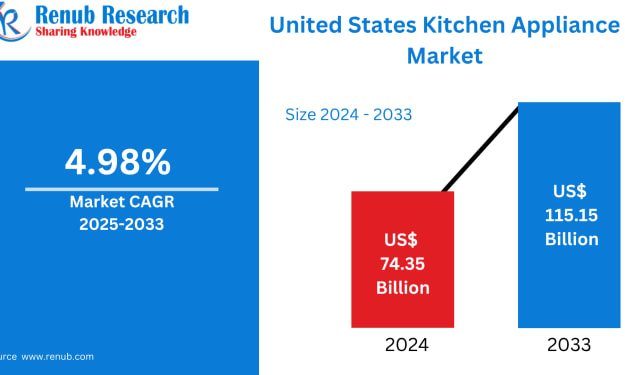
United States Kitchen Appliance Market Size and Forecast 2025–2033
The United States kitchen appliance market is entering a defining decade shaped by innovation, sustainability, and evolving consumer lifestyles. According to Renub Research, the market is projected to reach US$ 115.15 billion by 2033, rising from US$ 74.35 billion in 2024, at a compound annual growth rate (CAGR) of 4.98% during 2025–2033.
By Marthan Sir4 days ago in Futurism
Wild Card Weekend Recap: What Happens Now?
I think I figured out why I love Wild Card Weekend so much. It's because it's the first playoff anything of the calendar year. The NFL season starts in the fall, and once upon a time, the champion was crowned either on or slightly before New Year's. The evolution of the NFL schedule has resulted in the playoffs starting just into the New Year, and currently, the final week of the season falls on the first weekend of the New Year, with Wild Card Weekend coming a week after that. So yes, chronologically, the NFL's Wild Card Weekend serves as the first playoff anything of the calendar year.
By Clyde E. Dawkins7 days ago in Unbalanced



Comments
There are no comments for this story
Be the first to respond and start the conversation.